Adults
Ages 18+
The definitive canon of books and films everyone should experience
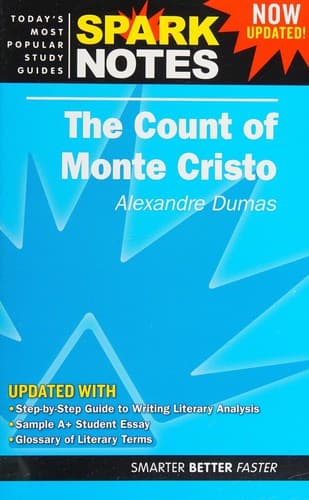
A young sailor is betrayed by jealous friends, imprisoned for fourteen years in a fortress on a tiny island, and upon escaping discovers a vast hidden fortune that allows him to reinvent himself and systematically destroy the men who ruined his life. Alexandre Dumas wrote the ultimate revenge fantasy, a story so satisfying in its payoffs that you will read its 1,200 pages faster than most 300 page novels.
Dumas understood that the pleasure of revenge lies not in violence but in patience, and Edmond Dantès' elaborate schemes against each of his betrayers are constructed with the precision of a watchmaker and the cruelty of a man who has had fourteen years to plan. The novel's structure is itself a feat of engineering: dozens of characters, multiple cities, layered identities, and interlocking plots all converge toward a series of climaxes that reward every page of setup. Dantès' transformation from naive sailor to the all knowing Count is one of literature's great character arcs, complicated by the moral question the novel gradually raises: at what point does justified revenge become its own form of evil? The prison chapters, where Dantès befriends the Abbé Faria and receives an education that transforms him from an illiterate sailor into a polymath, are among the most gripping in all of adventure literature. Few novels written in the nineteenth century feel this modern in their pacing and emotional punch.
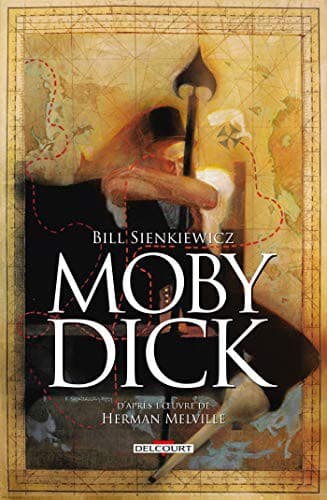
Moby-Dick
(1851)A young man ships out on a whaling vessel commanded by Captain Ahab, a monomaniac who has sacrificed everything to hunt the great white whale that took his leg, and the voyage becomes a meditation on obsession, nature, God, race, and the limits of human knowledge. Herman Melville wrote a novel so vast and strange that it failed on publication and was not recognized as America's greatest literary achievement until the 1920s.
Melville embedded within his whaling adventure a philosophical encyclopedia that ranges from cetology to theology, from Shakespeare to the physics of rope, and the result is a book that contains multitudes in the Whitman sense: every reading reveals new layers. Ahab is one of literature's supreme creations, a figure of Shakespearean grandeur whose speeches crackle with the energy of a mind consumed by a single idea, and Melville's refusal to reduce him to mere madness is what gives the novel its tragic power. The relationship between Ishmael and Queequeg, the Polynesian harpooner, is one of the most tender and radical friendships in nineteenth century literature, a genuine interracial partnership presented without condescension decades before the Civil War. The chapters on whaling technique, often cited by reluctant readers as obstacles, are actually Melville's way of insisting that the physical world matters as much as the symbolic one. The final chase sequence is one of the greatest action set pieces in literature.
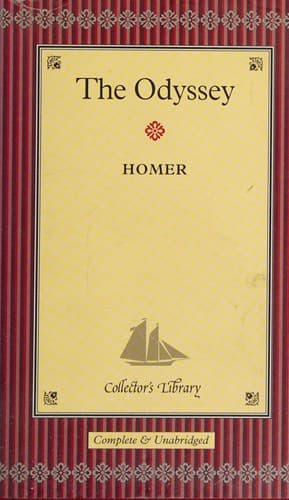
The Odyssey
(-700)After fighting at Troy for ten years, Odysseus spends another ten trying to get home to his wife and son, encountering a one eyed giant, a witch who turns men into pigs, the land of the dead, singing monsters, and a sea god who wants him drowned. Homer composed the foundational adventure story of Western civilization, and three thousand years later, every journey home in fiction still echoes this one.
Homer invented the idea that the journey is more important than the destination, and each of Odysseus' encounters functions as both a thrilling adventure and a test of the qualities needed to survive: cunning, patience, self-restraint, and the ability to tell a good story. The poem's structure, which begins in medias res and uses flashbacks narrated by Odysseus himself, established storytelling techniques that novelists and filmmakers still rely on. Penelope, waiting in Ithaca and fending off a hundred suitors with her own brand of cleverness, is one of literature's great characters, whose intelligence matches her husband's in ways that ancient audiences recognized even if modern adaptations sometimes forget. The Cyclops episode, in which Odysseus escapes by calling himself 'Nobody' so the blinded giant cannot name his attacker, is the prototype for every clever trickster scene in fiction. The homecoming, when Odysseus returns disguised as a beggar and is recognized only by his old dog, remains one of the most emotionally devastating moments in all of literature.
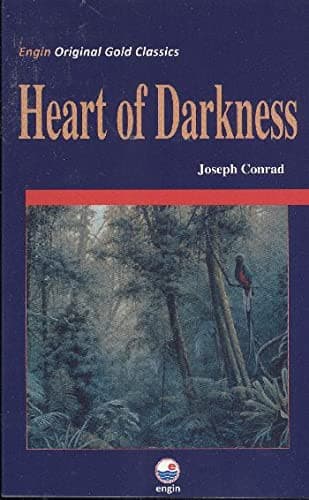
Heart of Darkness
(1899)A steamboat captain travels up the Congo River into the interior of Africa to retrieve a brilliant ivory trader named Kurtz who has abandoned civilization and established himself as a god among the local people, and what he finds there forces a confrontation with the violence at the core of European colonialism. Joseph Conrad wrote a novella so dense with meaning that it has generated more critical debate than novels ten times its length.
Conrad's prose style, layered and hallucinatory, mirrors the journey itself: the further Marlow travels upriver, the more the language dissolves into ambiguity, as if the certainties of European civilization are literally evaporating in the heat. Kurtz's final words, 'The horror! The horror!', have become one of literature's most quoted and debated phrases, capable of referring to colonialism, to human nature, to Kurtz's own actions, or to the impossibility of articulating what he has seen. The novella is remarkable for being simultaneously a critique of imperialism (Conrad saw Belgian rule in the Congo firsthand and was appalled) and a product of its era's racial assumptions, a tension that Chinua Achebe famously addressed in his 1977 essay calling the book racist. This duality makes it one of the most productive texts for classroom discussion in the Western canon. Francis Ford Coppola's Apocalypse Now transposed the story to Vietnam, demonstrating the narrative's adaptability to any context where civilized people discover their own capacity for savagery.
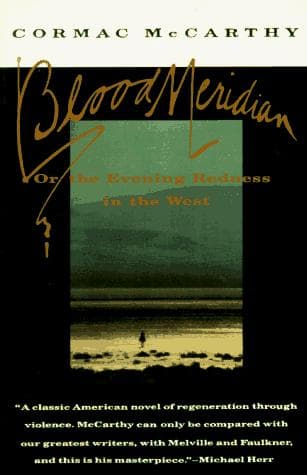
Blood Meridian
(1985)A nameless teenager known only as 'the kid' joins a gang of scalp hunters roaming the American-Mexican borderlands in the 1850s, led by a massive, hairless, eerily learned figure called the Judge who seems to embody violence itself. Cormac McCarthy wrote the most brutal and linguistically beautiful novel in American literature, a book that reads like the Old Testament rewritten by a war correspondent.
McCarthy's prose operates at a level of sustained intensity that has no real comparison in American fiction: his sentences combine the cadences of the King James Bible with the precision of a naturalist's field notes, and the landscapes of the Sonoran Desert are rendered with such hallucinatory vividness that they become characters in the novel. Judge Holden is one of literature's most terrifying creations, a figure who dances and fiddles, speaks multiple languages, sketches botanical illustrations, and murders children, all while articulating a philosophy of war as the fundamental activity of human existence. The violence in the novel is not gratuitous; it is McCarthy's central argument, a refusal to let readers look away from the reality of American expansion and the genocide of Indigenous peoples. Harold Bloom called it 'the greatest single book since Faulkner's As I Lay Dying,' and while not everyone agrees, the novel's influence on subsequent American fiction is undeniable. The final scene in the jakes is one of the most debated endings in literature.
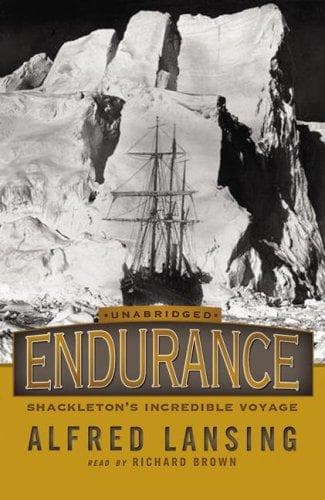
In 1914, Ernest Shackleton and his crew set out to cross Antarctica on foot, but their ship, the Endurance, is trapped and crushed by pack ice, stranding twenty-eight men on the frozen sea with no means of communication and no hope of rescue. What follows is the greatest survival story ever documented, a two year ordeal in which every man survived through a combination of leadership, endurance, and sheer refusal to die.
Alfred Lansing's account, drawn from diaries and interviews with the surviving crew members, reads with the pacing and tension of a thriller despite the reader knowing the outcome from the first page. Shackleton emerges as one of history's great leaders, a man whose decisions (when to march, when to wait, when to attempt an 800 mile open boat journey across the most dangerous ocean on earth) were consistently brilliant under pressure that would have broken most people. The sixteen day journey of the James Caird, a twenty-two foot lifeboat, across the Southern Ocean to South Georgia Island is one of the most harrowing passages in adventure literature, described by Lansing with a precision that makes you feel the spray and the cold. The book's power lies in its relentless accumulation of physical hardship: frostbite, starvation, blizzards, ice floes splitting beneath sleeping men, and through it all, the crew's refusal to surrender. No fiction writer would dare invent a survival story this extreme, because no reader would believe it.
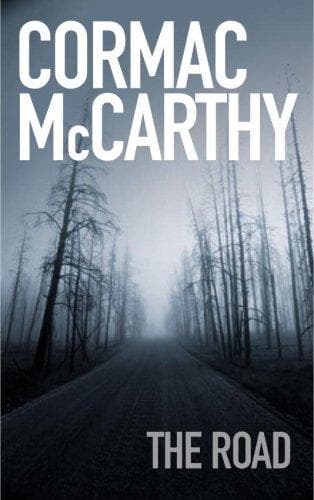
The Road
(2006)A father and his young son walk through the ashen ruins of a post-apocalyptic America, pushing a shopping cart containing everything they own, heading south toward the coast in the hope of finding warmth and safety. Cormac McCarthy stripped his prose to its barest elements to tell the most primal story imaginable: a parent trying to keep a child alive in a world that has ended.
McCarthy achieved something remarkable: a novel about the end of the world that is ultimately about love. The father's devotion to his son, his willingness to do anything to protect the boy while also trying to preserve the boy's moral compass ('carrying the fire,' as they call it), gives the novel an emotional force that cuts through its apocalyptic setting. The prose is McCarthy's most pared down, short declarative sentences and sentence fragments that mirror the stripped world they describe, and the absence of quotation marks and apostrophes creates a visual flatness on the page that reinforces the landscape. The unnamed catastrophe that destroyed civilization is never explained, because McCarthy understood that the cause matters less than the question: how do you remain human when humanity has collapsed? The ending, which provides a sliver of hope without betraying the novel's honesty about suffering, is one of the most debated and discussed in contemporary fiction. The Pulitzer Prize committee recognized it as a masterwork immediately upon publication.
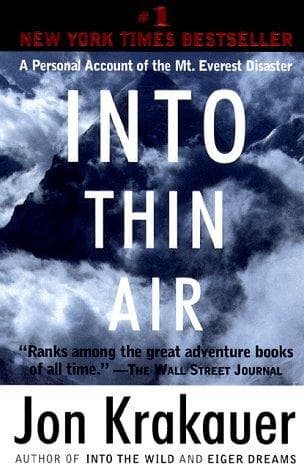
Into Thin Air
(1997)Jon Krakauer, a journalist assigned to write about the commercialization of Everest, was climbing the mountain on May 10, 1996, when a sudden storm killed eight people, and his account of the disaster is both a gripping survival narrative and a meditation on the hubris of believing you can buy your way up the world's tallest peak. The book will make you cold, breathless, and grateful to be at sea level.
Krakauer brought two rare qualities to the story: the climbing expertise to understand exactly what went wrong technically and the journalistic skill to reconstruct the disaster from multiple perspectives while acknowledging his own compromised memory and possible culpability. The book's power comes from its accumulation of small decisions, each one rational in isolation, that combine into catastrophe: the late summit times, the depleted oxygen supplies, the failure to turn back when conditions deteriorated. The portraits of the guides, particularly Rob Hall and Scott Fischer, are drawn with empathy and honesty, showing experienced mountaineers who made mistakes under pressure and paid for them with their lives. Krakauer's own guilt over the death of Andy Harris, whom he may have unwittingly failed to help, gives the narrative a confessional dimension that elevates it beyond adventure journalism. The book sparked a debate about the ethics of commercial Everest expeditions that continues to this day.
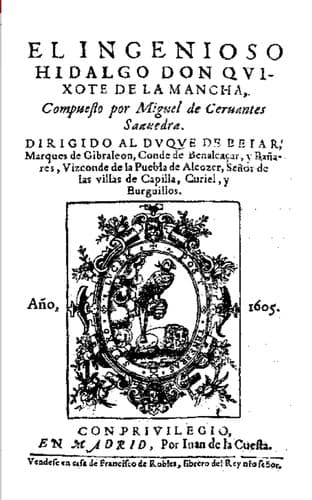
Don Quixote
(1605)An aging Spanish gentleman reads so many chivalric romances that he loses his grip on reality, dubs himself a knight errant, recruits a bewildered farmer named Sancho Panza as his squire, and rides out to right wrongs and fight giants that turn out to be windmills. Miguel de Cervantes wrote the first modern novel, and its four-hundred-year-old comedy about the collision between imagination and reality has never stopped being funny, sad, and true.
Cervantes invented the novel as we know it by doing something no writer before him had attempted: he placed an idealist inside a realistic world and let the friction between the two generate comedy, tragedy, and philosophical insight simultaneously. Don Quixote's madness is not simple delusion; it is a commitment to living as if the world were better than it is, and as the novel progresses, Cervantes shifts the reader's sympathies until the knight's foolishness becomes indistinguishable from nobility. Sancho Panza, who begins as a comic foil motivated by the promise of an island to govern, develops into one of literature's most beloved characters, his practical wisdom providing a counterpoint to his master's idealism that neither character could function without. The novel's second part, published in 1615, is even more remarkable than the first, because Cervantes makes Don Quixote and Sancho aware that the first part has been published, turning them into characters who know they are characters. This metafictional device was three centuries ahead of its time.
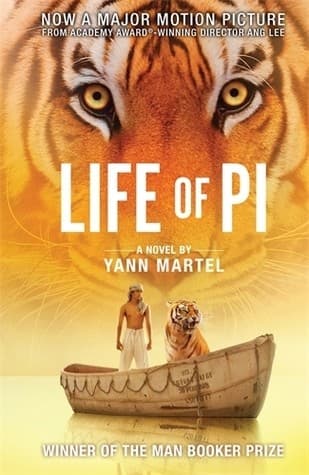
Life of Pi
(2001)A sixteen year old boy survives 227 days on a lifeboat in the Pacific Ocean with a 450 pound Bengal tiger named Richard Parker, and the story of how he kept himself and the tiger alive is both a gripping survival tale and a philosophical puzzle about the nature of truth, faith, and storytelling itself. Yann Martel won the Booker Prize with a novel that asks whether the better story is the truer one.
Martel constructed the novel as a trap for the reader: the survival narrative with the tiger is so vivid, so inventive, and so emotionally satisfying that when Pi offers an alternative, realistic version of events near the end, the reader is forced to choose which story to believe, and that choice reveals something about the reader rather than the text. The physical details of survival at sea, from collecting rainwater to fishing to establishing territorial boundaries with a tiger, are researched with meticulous care and described with such specificity that the fantastical premise becomes entirely believable. Pi's religious eclecticism (he practices Hinduism, Christianity, and Islam simultaneously, to the consternation of his elders) provides the philosophical framework: the novel suggests that faith, like fiction, is a choice to embrace a version of reality that gives life meaning. The carnivorous island episode, which introduces surrealism into an otherwise realistic survival story, signals Martel's deeper intentions: this is not just an adventure but a fable about why human beings tell stories.
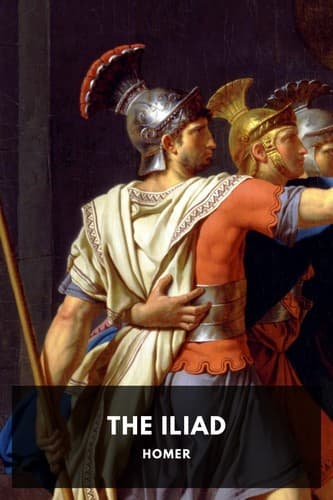
The Iliad
(-750)In the tenth year of the Trojan War, the greatest Greek warrior Achilles withdraws from battle after being publicly dishonored by his commander, and the consequences of his rage reshape the course of the war, the lives of gods and mortals, and the meaning of glory, mortality, and compassion. Homer's war epic is the oldest work of Western literature and still one of its fiercest and most moving.
Homer's achievement is presenting war in all its dimensions simultaneously: the glory of individual combat, the waste of young lives, the grief of families, and the arbitrary cruelty of gods who treat human suffering as entertainment. Achilles is not a simple hero; he is a man who knows he will die young and must decide whether a short, glorious life is worth the price, and his journey from rage to grief to a devastating moment of compassion with his enemy's father (Priam, begging for Hector's body) constitutes one of the great emotional arcs in all of literature. The battle scenes are shockingly visceral for a poem composed nearly three thousand years ago: Homer describes wounds with the clinical precision of a field surgeon, and the effect is to strip away any romantic abstraction from the violence. The similes, comparing warriors to lions, storms, and forest fires, create a bridge between the human world and the natural world that makes the poem feel cosmic in scope. The poem's final image, the funeral of Hector, is not a Greek triumph but a moment of shared grief that transcends the division between enemies.
Dune
(1965)A young nobleman is thrust into the politics, ecology, and religious fervor of a desert planet that produces the most valuable substance in the universe, and his journey from exile to messiah is both thrilling and deeply unsettling in its examination of how heroes become tyrants. Frank Herbert created science fiction's most intricate and fully realized world, a novel that rewards rereading the way few genre works ever do.
Herbert wove together ecology, religion, politics, and psychology into a narrative so densely layered that readers have spent sixty years excavating its meanings. The planet Arrakis is science fiction's most complete creation: its sandworms, its water economy, its Fremen culture, and its spice cycle form an ecosystem so internally consistent that it functions as a genuine thought experiment about how environment shapes civilization. Paul Atreides' arc is a deliberate subversion of the chosen one narrative; Herbert designed Paul not as a hero to admire but as a warning about the dangers of following charismatic leaders, a theme that becomes explicit in the sequels. The Bene Gesserit, a sisterhood that has spent millennia manipulating bloodlines and planting religious myths to serve their long-term plans, anticipated real-world discussions about institutional power and social engineering decades before they became mainstream. The novel's influence extends far beyond literature: Star Wars, Game of Thrones, and countless other franchises bear its fingerprints.
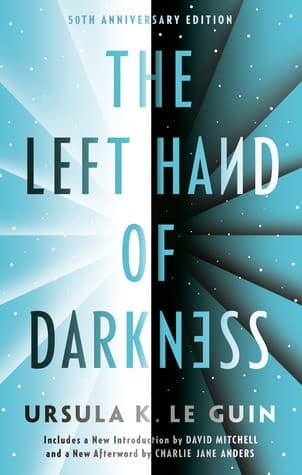
An envoy from an interstellar collective arrives on a planet whose inhabitants have no permanent gender, shifting between male and female states during their reproductive cycle, and his attempt to understand this society while navigating a political crisis forces him to confront assumptions about identity that he did not even know he held. Ursula K. Le Guin wrote science fiction's most profound exploration of gender and otherness.
Le Guin used the planet Gethen not as a thought experiment about biology but as a way of asking what human society would look like if the concept of gender were removed from its foundations: there is no division of labor by sex, no structural sexism, and no permanent sexual roles, and the envoy Genly Ai's struggle to perceive the Gethenians as fully human without gendering them reveals how deeply sex shapes perception. The central relationship between Ai and the Gethenian politician Estraven is one of science fiction's great partnerships, a bond that develops through shared hardship during a harrowing journey across a glacier and that transcends the categories either character would normally use to define intimacy. Le Guin's prose is precise and restrained, creating a world that feels physically real, from the bitter cold of Gethen's winter to the political maneuvering of its rival nations. The novel has been critiqued for defaulting to masculine pronouns for the Gethenians, a limitation Le Guin herself later acknowledged and attempted to address in subsequent work, which only deepens the conversation the novel opens.
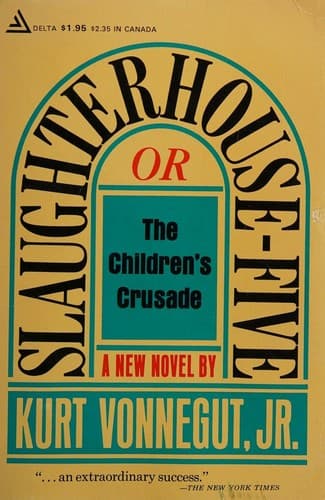
Slaughterhouse-Five
(1969)Billy Pilgrim, a chaplain's assistant in World War II, becomes 'unstuck in time' and experiences his life in nonlinear fragments: his survival of the firebombing of Dresden, his postwar career as an optometrist, his abduction by aliens from the planet Tralfamadore, and his eventual assassination. Kurt Vonnegut wrote the definitive antiwar novel by refusing to tell a war story in any conventional way.
Vonnegut's genius was recognizing that the horror of Dresden, where an estimated 25,000 civilians were killed in Allied firebombing raids, could not be captured by a traditional war narrative, so he shattered the story into fragments and reassembled it as science fiction, autobiography, and dark comedy simultaneously. The phrase 'So it goes,' repeated after every mention of death, becomes both a coping mechanism and an indictment: by the time the reader has encountered it a hundred times, the words have accumulated a weight that makes them feel like either the wisest or the most helpless response to mass death imaginable. Billy Pilgrim's passivity, his inability to prevent or resist anything that happens to him, is Vonnegut's commentary on the individual's powerlessness in the face of mechanized warfare. The Tralfamadorian philosophy that all moments exist simultaneously and death is just one of them reads as both a genuine comfort and a devastating critique of fatalism. The novel's opening chapter, in which Vonnegut writes about himself trying to write the book, is a masterclass in the difficulty of representing atrocity.
1984
(1949)In a totalitarian superstate where the government rewrites history daily, a low-ranking party member named Winston Smith begins a forbidden love affair and a secret rebellion against Big Brother, knowing that the Thought Police will eventually find him. George Orwell wrote the twentieth century's most influential political novel, and the vocabulary he invented for it, doublethink, thoughtcrime, Newspeak, Big Brother, has become the language we use to discuss surveillance and authoritarianism.
Orwell's achievement was not predicting specific technologies but understanding the psychological mechanisms of totalitarianism: the constant rewriting of the past to serve the present, the use of language to make dissent literally unthinkable, and the way that a sufficiently powerful state can make you believe that two plus two equals five. The love story between Winston and Julia is not a romantic subplot but the novel's central act of resistance: their physical relationship is political because the Party claims ownership of their bodies, and the betrayal that ends it is the novel's most devastating demonstration of the regime's power. The torture scenes in Room 101, where O'Brien breaks Winston not through pain alone but through the patient demolition of his capacity for independent thought, remain the most frightening depiction of institutional power in fiction. The novel's final sentence, in which Winston accepts Big Brother, is not a warning about what might happen but a statement about what has already happened in numerous societies throughout the twentieth century.
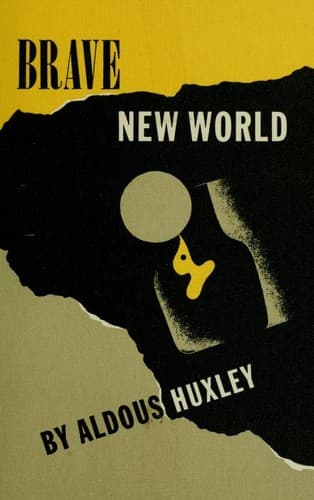
Brave New World
(1932)In a future society where humans are genetically engineered into castes, conditioned from birth to accept their roles, and kept docile through a pleasure drug called soma, a 'savage' raised outside the system arrives and finds that happiness without freedom is no happiness at all. Aldous Huxley wrote a dystopia that turned out to be more prophetic than Orwell's: the danger was not that we would be oppressed but that we would be entertained into submission.
Huxley's insight was that totalitarianism does not require jackboots and surveillance; it can be achieved through pleasure, distraction, and the elimination of anything that causes discomfort, including art, religion, genuine emotion, and the capacity for solitude. The World State has solved every problem that has ever plagued humanity (war, poverty, disease, unhappiness) and the cost is everything that makes human life meaningful. Bernard Marx, the misfit Alpha who senses something is wrong but lacks the courage or clarity to articulate it, is a more realistic portrait of dissent than most dystopian heroes: he wants to feel important, not to liberate anyone. John the Savage, raised on Shakespeare and Pueblo customs, provides the outsider perspective that exposes the World State's emptiness, but Huxley is honest enough to show that the alternative he offers (suffering, self-flagellation, and puritanism) is not a viable solution either. The novel refuses to provide a comfortable answer.
The Lord of the Rings
(1954)A hobbit inherits a ring of absolute power and must carry it across a world of elves, dwarves, wizards, and men to the one volcano where it can be destroyed, while the Dark Lord who created it sends his armies to reclaim it. J.R.R. Tolkien spent twelve years writing the work that would define modern fantasy, creating not just a story but an entire mythology complete with languages, histories, and geographies.
Tolkien's achievement goes beyond storytelling: he invented the genre of epic fantasy as it exists today, and virtually every fantasy novel, game, and film produced since 1954 exists in conversation with his work. The depth of his world building is unmatched; Middle-earth has its own languages (Tolkien was a professional linguist and created Elvish before he wrote the story), its own creation myth, its own thousands of years of history, and its own internal consistency that rewards close attention. The narrative's emotional power comes from its theme of decline: the beautiful things of Middle-earth, the Elves, the Ents, the old magic, are passing away regardless of the war's outcome, and the victory over Sauron is tinged with loss. Frodo's failure at Mount Doom, where he claims the Ring for himself and is saved only by Gollum's obsession, is one of the great reversals in fiction: the hero does not triumph through strength of will but through an earlier act of mercy. Sam Gamgee, the loyal gardener who carries Frodo when Frodo can no longer walk, is Tolkien's true hero and one of the most beloved characters in all of literature.
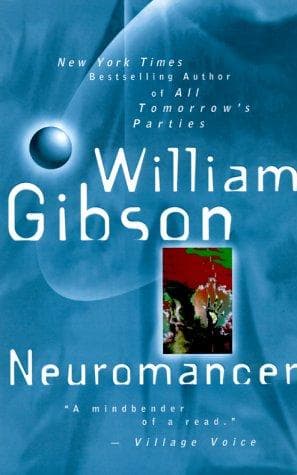
Neuromancer
(1984)A washed up computer hacker named Case is recruited by a mysterious employer to pull off the ultimate hack, a job that takes him from the urban sprawl of the Chiba City black market to an orbital playground of the ultra-rich, and the virtual reality he jacks into feels more alive than the physical world he inhabits. William Gibson wrote the novel that invented cyberpunk and predicted the internet, virtual reality, and the digital economy decades before they existed.
Gibson coined the word 'cyberspace' and described it as 'a consensual hallucination experienced daily by billions,' a phrase written in 1984 that reads like a description of the modern internet. The novel's vision of a future dominated by multinational corporations, digital addiction, body modification, and a permanent underclass living in the ruins of industrial civilization has proved so prescient that it no longer reads as science fiction but as slightly exaggerated reportage. Case is an anti-hero in the truest sense: a junkie and a thief whose only virtue is his skill, and Gibson refuses to sentimentalize him or his world. The prose style, dense with neologisms and sensory overload, mirrors the information-saturated environment it describes, and the novel's refusal to slow down and explain itself was deliberately disorienting, forcing readers to assemble meaning from fragments the way a hacker assembles data. Molly Millions, the razorgirl with retractable blades beneath her fingernails and surgically implanted mirror shades, became one of science fiction's most iconic characters.
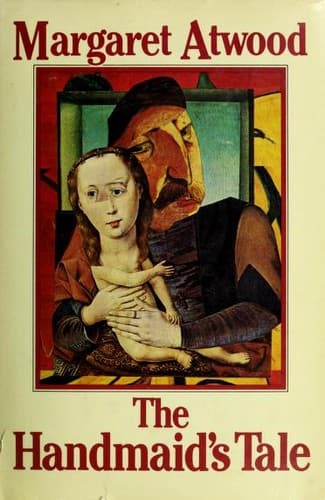
The Handmaid's Tale
(1985)In the Republic of Gilead, a theocratic regime that has replaced the United States, women are stripped of all rights and fertile women are forced to bear children for the ruling class in a ritualized form of state-sanctioned rape. Offred, a handmaid assigned to a Commander's household, narrates her captivity with a voice that shifts between numbness, fury, dark humor, and desperate longing for the life she lost. Margaret Atwood wrote a dystopia built entirely from things that have actually happened somewhere in the world.
Atwood's power lies in her restraint: she has said that she included nothing in the novel that had not already occurred in some society at some point in history, and this grounding in reality is what makes Gilead so chilling. Offred's narration is remarkable for what it reveals about the psychology of survival under totalitarianism: she is not a heroic resistance fighter but a woman trying to stay alive, and her small acts of rebellion (a glance, a hidden word, a memory) are presented as genuinely courageous precisely because they risk everything. The regime's use of biblical language to justify its oppression is Atwood's most incisive observation: the Ceremony, in which the Commander's Wife holds the Handmaid down during the act of conception, is derived from the story of Rachel and Bilhah in Genesis, and the novel demonstrates how scripture can be weaponized against the people it claims to protect. The ending, which shifts to an academic conference centuries later where scholars discuss Offred's testimony with clinical detachment, is one of the most unsettling framing devices in modern fiction.
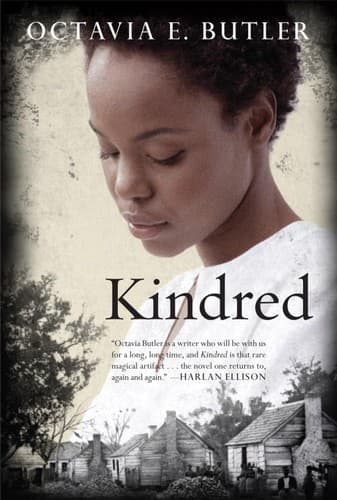
Kindred
(1979)Dana, a Black woman living in 1976 Los Angeles, is suddenly and repeatedly pulled back in time to antebellum Maryland, where she must protect a white slaveholder's son who is her own ancestor, knowing that if he dies before fathering her family line, she will cease to exist. Octavia Butler used time travel not as a genre device but as a way of forcing a modern reader to experience slavery firsthand, with no protective distance.
Butler's genius was making the horror of slavery tangible by placing a contemporary protagonist inside it: Dana arrives in the past with modern knowledge and modern values, and the novel methodically demonstrates how quickly those values erode under the pressure of a system designed to destroy them. Each trip to the past strips away more of Dana's autonomy, and the physical toll accumulates (she loses an arm in the novel's opening pages, told in flashforward), making the violence of slavery literal and inescapable. The relationship between Dana and Rufus, the white boy she must keep alive, is one of the most complex in American fiction: she watches him grow from a frightened child into a slaveholder who embodies the casual cruelty the system produces, and her inability to change him despite knowing the future is the novel's most devastating insight. Butler refused to provide the comfort of a heroic narrative; Dana survives, but survival under slavery is not the same as triumph.
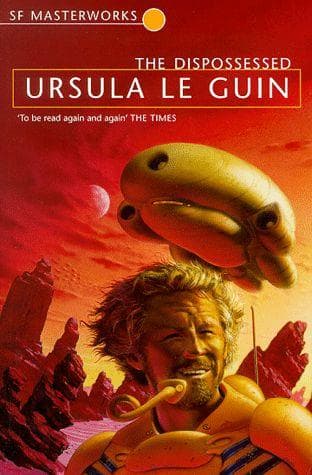
The Dispossessed
(1974)A brilliant physicist from an anarchist society on a barren moon travels to the wealthy, capitalist planet it orbits, and alternating chapters follow his life in both worlds, revealing the compromises and failures of each system. Ursula K. Le Guin subtitled the novel 'An Ambiguous Utopia' and spent 340 pages demonstrating exactly why the ambiguity matters.
Le Guin accomplished something rare in political fiction: she presented two contrasting societies with genuine fairness, showing the failures of both anarchism and capitalism without declaring either one the winner. Shevek's anarchist home of Anarres is free from government, private property, and formal hierarchy, but it has developed its own forms of social coercion, intellectual suppression, and conformist pressure that are all the more insidious for being unofficial. The capitalist planet Urras is rich, beautiful, and intellectually vibrant, but its wealth is built on exploitation, and its freedom is available only to those who can afford it. Shevek himself is a genuinely great literary creation: a physicist whose work on temporal theory mirrors the novel's own structure (chapters alternate between past and present, between the two worlds), and whose personal journey embodies the question of whether individual genius can transcend the limitations of any social system. The novel's refusal to endorse a simple answer is its greatest strength.
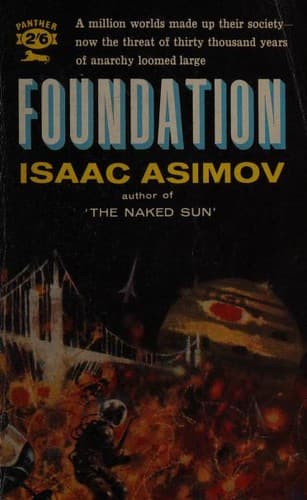
Foundation
(1951)A mathematician named Hari Seldon develops a science called psychohistory that can predict the behavior of large populations over centuries, and when his calculations show that the Galactic Empire will collapse into thirty thousand years of barbarism, he creates a Foundation designed to shorten the dark age to a single millennium. Isaac Asimov built the grandest thought experiment in science fiction: a story that spans centuries and asks whether history can be engineered.
Asimov's central conceit, that the behavior of billions of people could be predicted mathematically even though individual actions cannot, was inspired by the kinetic theory of gases and represents one of science fiction's most ambitious intellectual gambits. The novel's structure, covering several centuries through a series of connected crises, creates a sense of historical sweep that few novels achieve, and each crisis is resolved not through military force or heroism but through the economic and political forces that Seldon predicted. The Foundation stories challenged the genre's fixation on individual heroes by insisting that historical forces are bigger than any single person, a perspective that was radical in the pulp era and remains provocative. The concept of the Seldon Crisis, a moment when historical forces converge to create a situation with only one viable solution, is Asimov's most elegant narrative device: it generates suspense from inevitability. The novel inspired real scientists and technologists, and the concept of psychohistory has been seriously discussed as a forerunner of computational social science.
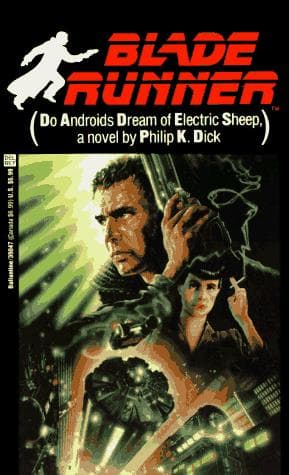
In a post-nuclear San Francisco where most animals are extinct and replaced by robotic replicas, a bounty hunter named Rick Deckard is assigned to 'retire' six escaped androids who are physically indistinguishable from humans, and the job forces him to question what separates the authentic from the artificial. Philip K. Dick wrote the novel that became Blade Runner and that anticipated our era's deepest anxiety: the fear that nothing is real.
Dick's genius was asking philosophical questions through pulp fiction premises, and this novel's central question, how do you identify and empathize with something that perfectly mimics humanity, has become the defining question of the artificial intelligence era. The Voigt-Kampff test, which measures empathic response to detect androids, is the novel's most brilliant invention: it suggests that what makes us human is not intelligence or consciousness but the capacity to feel for another being, and the novel systematically undermines even this definition. Deckard's growing sympathy for the beings he is supposed to kill, his uncertainty about his own authenticity, and the novel's refusal to provide a clean answer create a reading experience of escalating philosophical vertigo. Dick's depiction of a world where real animals are status symbols and artificial ones are substitutes for genuine connection anticipated the era of social media, where the performance of authenticity has replaced the thing itself.
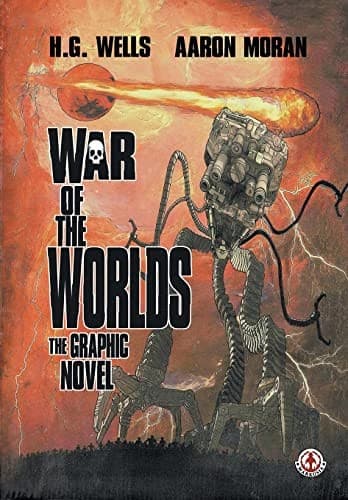
The War of the Worlds
(1898)Martians land in the English countryside and proceed to devastate Victorian civilization with heat rays and tripod war machines, and an unnamed narrator flees across a landscape of burning cities and panicking crowds, witnessing the total collapse of the society that believed itself the pinnacle of progress. H.G. Wells invented the alien invasion story and used it to force the British Empire to imagine what colonization feels like from the other side.
Wells deliberately structured the novel as an inversion of British imperialism: the Martians treat humanity exactly as the British treated the peoples they colonized, arriving with superior technology, viewing the natives as inferior, and exploiting resources without moral consideration. This allegory gives the novel a political edge that elevates it above mere adventure. The narrator's journey through a destroyed England, from initial curiosity to abject terror to near-madness, is one of the great survival narratives in fiction, and Wells' descriptions of the Martian machines striding across the landscape created images so powerful that they have defined how science fiction visualizes alien invasion ever since. The ending, in which the Martians are defeated not by human ingenuity but by bacteria, is both a plot twist and a philosophical statement: humanity is saved by the smallest and most humble forms of life, a fact that cuts human pretensions down to size.
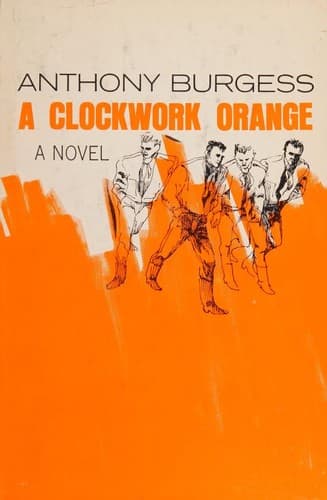
A Clockwork Orange
(1962)Alex, a charismatic teenage delinquent who commits acts of horrifying violence for the pure joy of it, is captured by the state and subjected to a radical conditioning program that makes him physically ill at the thought of violence, and the novel asks whether a man who is forced to be good is truly good at all. Anthony Burgess wrote the ultimate thought experiment about free will, wrapping it in a language, Nadsat, that he invented from scratch.
Burgess posed a question that has no comfortable answer: if a society can eliminate evil by eliminating the capacity for choice, should it? Alex is deliberately designed to make this question as hard as possible; he is not a sympathetic criminal but a genuinely vicious one who rapes, beats, and kills for pleasure, and yet the novel insists that removing his ability to choose evil also removes his humanity. The invented slang Nadsat, a fusion of Russian, English, and Cockney rhyming slang, forces the reader to learn Alex's language and thereby enter his worldview, a structural trick that makes the novel's moral argument experiential rather than abstract. The novel's twenty-first chapter, omitted from the American edition and from Kubrick's film, shows Alex maturing naturally out of violence, and Burgess considered this chapter essential: without it, the novel is a thesis about conditioning, but with it, the novel argues that genuine moral growth is possible only through freedom. The debate between the two versions continues.
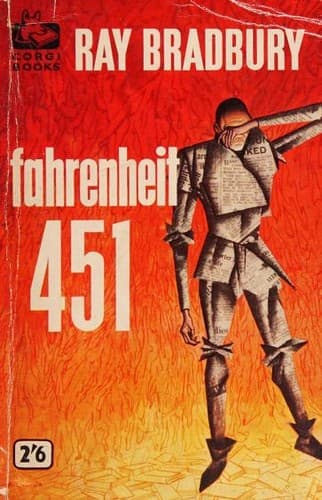
Fahrenheit 451
(1953)In a future America where books are banned and firemen burn any that are found, a fireman named Guy Montag begins to question his work after meeting a teenager who asks him whether he is happy, and his rebellion against a society addicted to screens, speed, and distraction takes him from conformist enforcer to fugitive intellectual. Ray Bradbury wrote a warning about censorship that has aged into a warning about something worse: voluntary ignorance.
Bradbury's most prescient insight was that books would not be banned by a tyrannical government but abandoned by a population that preferred faster, easier, more passive forms of entertainment, and the novel's depiction of wall-sized interactive television screens, seashell earbuds, and a populace that cannot tolerate silence or complexity reads as almost documentary today. Montag's awakening is rendered with genuine emotional force: his first experience of reading, tentative and halting, is one of literature's most moving depictions of intellectual discovery. The Mechanical Hound, a robotic predator programmed to track and kill dissidents, is a brilliant symbol of technology repurposed for oppression. Captain Beatty, Montag's fire chief, is one of the great literary antagonists because he is not ignorant; he has read extensively and chosen to reject books, making him a far more formidable opponent than simple censorship. The novel's ending, in which fugitive intellectuals preserve books by memorizing them, is both hopeful and elegiac.
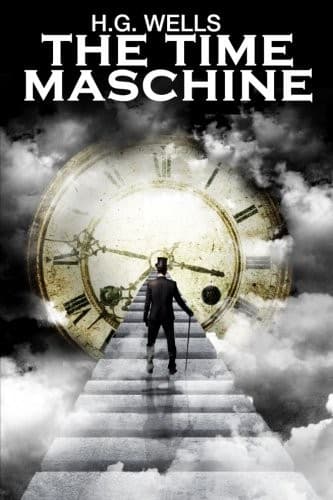
The Time Machine
(1895)A Victorian inventor builds a machine that carries him to the year 802,701, where he discovers that humanity has split into two species: the childlike, helpless Eloi who live on the surface and the brutal, subterranean Morlocks who farm the Eloi for food. H.G. Wells wrote the first great time travel story and embedded within it a horrifying allegory about where the class divisions of his own era might lead.
Wells took the Victorian class system to its logical evolutionary conclusion: the leisured upper classes, freed from all need to work or think, have devolved into the helpless Eloi, while the laboring classes, forced underground, have evolved into predatory Morlocks who literally consume the class that once exploited them. The allegory is savage and its implications uncomfortable: Wells is suggesting not that the poor will rise up in revolution but that both classes will be degraded by their respective positions until neither is recognizably human. The Time Traveller's journey further into the future, past the age of the Eloi and Morlocks to a dying Earth where giant crabs scuttle across a blood-red beach beneath a swollen sun, is one of the most haunting passages in science fiction, a vision of cosmic entropy that makes human concerns seem trivially brief. The novella's brevity (roughly 100 pages) is a strength: Wells says everything he needs to say and stops.
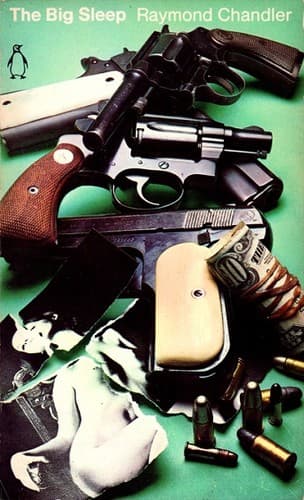
The Big Sleep
(1939)Private detective Philip Marlowe is hired by a dying millionaire to handle a blackmail case involving his wayward daughter, and the investigation pulls him through a Los Angeles underworld of pornographers, gamblers, killers, and corrupt cops, each more dangerous and deceitful than the last. Raymond Chandler wrote prose so sharp it could cut glass, creating the template for every cool, cynical detective who followed.
Chandler elevated the detective novel from puzzle to literature by caring more about language, atmosphere, and character than about plot mechanics. His Los Angeles is a city of gorgeous surfaces hiding rot, where the wealth of the hills depends on the exploitation of the flatlands, and Marlowe moves between these worlds with a wisecracking independence that masks genuine moral seriousness. Marlowe's code, that he will not be bought or bullied and will tell the truth even when lying would be easier, made him the prototype for every hard-boiled detective in fiction and film. Chandler's similes ('She had a face like a Sunday School picnic') became famous because they did more than decorate: they revealed character and milieu in a single image. The plot of The Big Sleep is famously convoluted (even Chandler could not explain who killed one of the characters when asked), but the novel demonstrates that in detective fiction, atmosphere and voice matter more than the solution.

And Then There Were None
(1939)Ten strangers are invited to an isolated island under various pretexts, and once assembled, a recorded voice accuses each of them of causing a death that went unpunished by law. One by one, they begin to die according to the verses of a nursery rhyme, and since the island is cut off from the mainland, the killer must be one of them. Agatha Christie wrote the most ingenious locked room mystery ever conceived.
Christie's structural achievement is staggering: she created a mystery in which there are no detectives, no investigators, and no one the reader can trust, because every character is both a potential victim and a potential murderer, and the tension of not knowing who will die next or who is responsible is sustained across the entire novel without a single false note. The nursery rhyme device ('Ten Little Soldiers went out to dine; one choked his little self and then there were nine') provides a countdown structure that generates suspense mechanically: every reader instinctively tracks the verses against the diminishing cast. Christie's character work is deceptively accomplished; each of the ten guests is drawn quickly but distinctly enough that their deaths register as individual losses rather than mere plot mechanics. The solution, revealed in an epilogue, is so elegantly constructed that it explains everything while violating none of the rules Christie established. The novel has sold over 100 million copies, making it the bestselling mystery of all time.
In the Woods
(2007)Dublin detective Rob Ryan is assigned to investigate the murder of a twelve year old girl found on an archaeological site at the edge of a housing estate, and the case forces him to confront his own buried trauma: twenty years earlier, he was one of three children who walked into those same woods, and he was the only one who came out, with no memory of what happened. Tana French wrote a mystery that is as much about the unreliability of memory as it is about the crime.
French achieved something unusual in crime fiction: she made the detective's psychological damage as compelling as the case itself, and the two mysteries (who killed the girl, what happened to Rob's friends) interact in ways that complicate and ultimately frustrate the reader's desire for neat resolution. The partnership between Rob and his fellow detective Cassie Maddox is one of the great professional relationships in the genre, built on trust, shared humor, and an intimacy that the novel examines without sentimentalizing. French's prose is literary without being precious; her descriptions of the Dublin suburbs, the archaeological dig, and the claustrophobic interview rooms create a sense of place that is inseparable from the emotional atmosphere. The novel's ending, which resolves one mystery while deliberately leaving the other unanswered, divided readers and announced French as a writer more interested in psychological truth than in the satisfactions of the puzzle. The Dublin Murder Squad series that followed confirmed her as one of the most important crime writers of her generation.
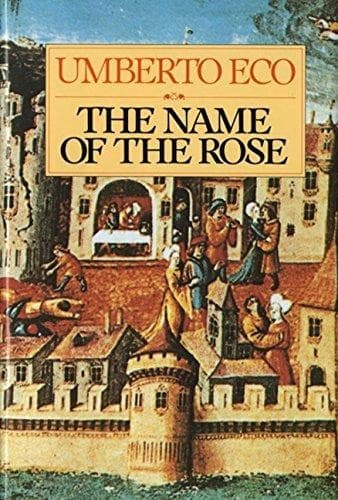
The Name of the Rose
(1980)In 1327, a Franciscan friar and his young apprentice arrive at a wealthy Italian monastery to participate in a theological debate, and when monks begin dying in ways that echo the Book of Revelation, the friar applies Aristotelian logic to unravel a mystery that leads to a secret library and a lost text that powerful men will kill to keep hidden. Umberto Eco, a professor of semiotics, wrote a detective novel that is also a treatise on medieval philosophy, the politics of laughter, and the nature of interpretation.
Eco demonstrated that intellectual density and narrative suspense are not only compatible but mutually reinforcing: the theological debates, the discussions of Aristotelian logic, and the political intrigues of the Franciscan-papal conflict provide both the motive for murder and the method of detection. Brother William of Baskerville (a name that tips its hat to both Sherlock Holmes and William of Ockham) is one of fiction's great detectives, a man whose commitment to reason puts him in opposition to a Church that values authority over inquiry. The labyrinthine library, which physically embodies the novel's themes about the organization and suppression of knowledge, is one of literature's most memorable settings. Eco's use of multiple narrative frames (a modern introduction, a medieval narrator, texts within texts) transforms the novel into a demonstration of the very semiotic theories he taught at the University of Bologna. The debate about whether laughter is acceptable to God, which drives the plot, is both a genuine medieval controversy and Eco's commentary on the politics of controlling what people find funny.
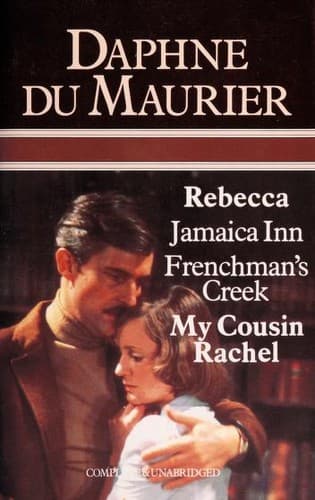
Rebecca
(1938)A shy, unnamed young woman marries the wealthy widower Maxim de Winter and moves to his grand estate Manderley, where the memory of his first wife Rebecca pervades every room, every conversation, and every interaction with the sinister housekeeper Mrs. Danvers. Daphne du Maurier wrote the ultimate gothic romance, a novel about jealousy, identity, and the terror of feeling inadequate in the shadow of a woman you never met.
Du Maurier's stroke of genius was never naming her narrator, making her a blank onto which the reader projects their own insecurities while Rebecca, who is dead before the novel begins, fills every space with her presence, her taste, her handwriting, and her reputation. Mrs. Danvers is one of fiction's most unsettling antagonists, a woman whose devotion to the dead Rebecca crosses from loyalty into something obsessive and destructive, and her tour of Rebecca's preserved bedroom is one of the great scenes of psychological horror. The novel's twist, when Maxim reveals the truth about Rebecca, recontextualizes everything that came before and forces the reader to reconsider who is victim and who is villain. Du Maurier's Manderley is a character in its own right, a house so vividly described that its loss at the novel's end registers as a death. The opening line, 'Last night I dreamt I went to Manderley again,' is one of the most haunting in English literature.
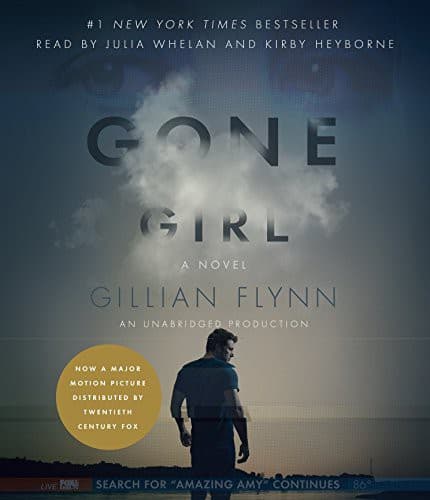
Gone Girl
(2012)On the morning of their fifth wedding anniversary, Amy Dunne disappears and suspicion immediately falls on her husband Nick, whose behavior under media scrutiny is suspicious enough to make everyone, including the reader, wonder whether he did it. Then the novel's midpoint twist detonates everything you thought you knew. Gillian Flynn wrote the thriller that redefined the marriage novel for the twenty-first century.
Flynn's structural innovation was using dueling unreliable narrators to make the reader complicit in a manipulation that mirrors the characters' manipulation of each other and of the media. The first half of the novel, which alternates between Nick's present-tense defense and Amy's diary entries, is a masterful exercise in misdirection, and the revelation that arrives at the midpoint does not merely surprise: it forces the reader to reread every preceding chapter with new eyes. Amy Elliott Dunne is one of modern fiction's most memorable creations, a woman whose intelligence, rage, and willingness to destroy herself to punish her husband make her simultaneously terrifying and, in her own twisted way, admirable. Flynn's dissection of modern marriage, media culture, and the performance of identity in a surveillance society gives the thriller a social dimension that elevates it beyond genre. The novel's ending, which refuses to provide the satisfaction of resolution, is its most provocative gesture.
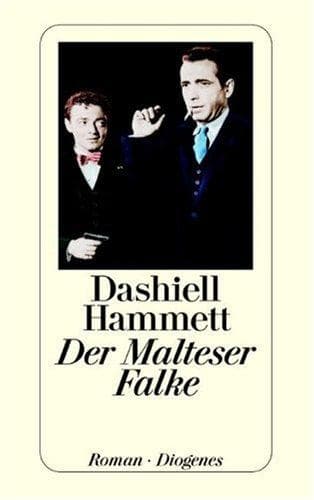
The Maltese Falcon
(1930)San Francisco private detective Sam Spade takes on a case from a beautiful woman who is lying about everything, and the search for a jewel-encrusted statuette worth a fortune draws him into a web of double-crosses involving a fat man, a gunsel, and a desperate cast of schemers, each more untrustworthy than the last. Dashiell Hammett wrote the novel that invented the hardboiled detective and established the rules of the genre.
Hammett, a former Pinkerton detective, brought a verisimilitude to crime fiction that distinguished it from the drawing-room puzzles of the English mystery tradition: his San Francisco is a real city where real violence has real consequences, and Spade operates in it not as an intellectual superior but as a pragmatist who understands how criminals think because he occupies a moral gray zone himself. Spade's code is never stated explicitly; it must be inferred from his actions, and the novel's final confrontation with Brigid O'Shaughnessy, where Spade sends the woman he may love to face a murder charge because 'when a man's partner is killed, he's supposed to do something about it,' defines a kind of honor that is all the more powerful for being inarticulate. Hammett's prose style, spare and objective, describes only what can be seen or heard, never entering characters' minds, creating a narrative surface as hard and polished as the falcon itself. Ernest Hemingway acknowledged Hammett's influence, and the entire tradition of American crime fiction, from Chandler to Ellroy, begins here.
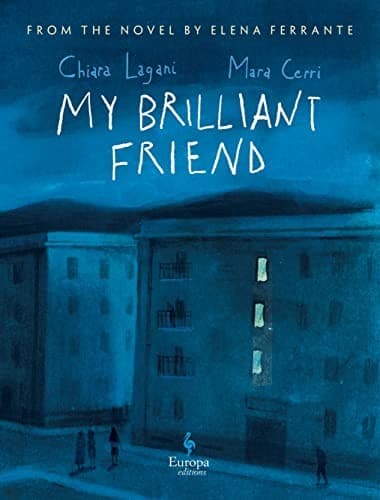
My Brilliant Friend
(2011)In a poor, violent neighborhood on the outskirts of Naples in the 1950s, two girls form a fierce, competitive friendship that will shape every aspect of their lives for the next sixty years. Elena, the narrator, is diligent and successful; Lila is brilliant and unpredictable, and their relationship oscillates between devotion and jealousy with an intensity that encompasses love, rivalry, and mutual dependency. Elena Ferrante began a four-novel cycle that became a global literary phenomenon.
Ferrante achieved something that had rarely been attempted with such depth in fiction: a comprehensive depiction of female friendship as the central relationship of two women's lives, more formative than their marriages, careers, or motherhood. The Naples neighborhood, with its feuding families, petty cruelties, and suffocating social hierarchies, functions as a microcosm of Italian society, and the two girls' attempts to escape it through education and ambition reveal how class, gender, and geography constrain even the most talented people. The narrative voice, Elena's measured retrospection, is complicated by the reader's growing awareness that Elena may be an unreliable narrator whose account of Lila's brilliance serves her own need to define herself against a more talented friend. Ferrante's prose (in Ann Goldstein's translation) is direct and absorbing, building across four novels into an epic portrait of postwar Italy through the lens of two women's intertwined lives. The pseudonymous author's refusal to reveal her identity added a metafictional dimension that mirrors the novel's own exploration of authorship and storytelling.
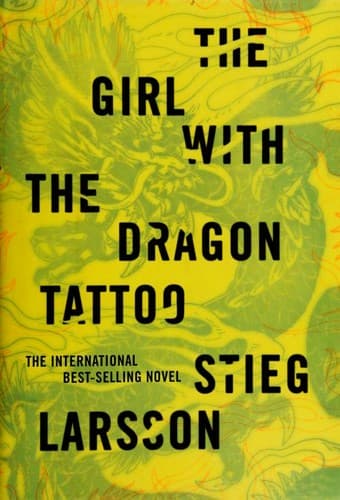
A disgraced journalist and a brilliant but deeply troubled computer hacker are hired to investigate the forty-year-old disappearance of a teenage girl from one of Sweden's wealthiest families, and what they uncover is a history of sexual violence, Nazism, and corruption hidden behind the respectable facade of Swedish industrial society. Stieg Larsson wrote the thriller that launched a global sensation and introduced one of the most compelling heroines in modern fiction.
Lisbeth Salander is the novel's greatest achievement: a survivor of institutional abuse who has transformed her trauma into a weapon, a hacker of extraordinary skill whose tattoos, piercings, and antisocial behavior mark her as an outsider by choice, and whose refusal to be a victim drives the narrative with more force than any plot twist. The novel's Swedish title, 'Men Who Hate Women,' announces its real subject more directly than the English title: this is a book about sexual violence as a systemic feature of society rather than an aberration, and Larsson, a lifelong journalist and activist, embedded a polemic within his thriller without sacrificing narrative momentum. The locked room mystery of Harriet Vanger's disappearance provides the structural framework, but the novel's power comes from the way the investigation peels back layers of respectability to reveal the violence underneath. The cold Swedish landscape, the isolated family estate, and the labyrinthine corporate and familial connections create an atmosphere of claustrophobic menace.
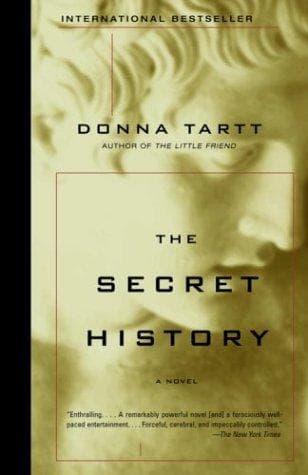
The Secret History
(1992)A group of elite classics students at a small Vermont college, led by a charismatic professor, become so immersed in their study of ancient Greek that they attempt a Dionysian ritual that results in a death, and the psychological unraveling that follows consumes them all. Donna Tartt reversed the mystery formula: you know who committed the crime from the first page, and the suspense lies in watching why and how they fall apart.
Tartt took the academic novel and infused it with the structure of a Greek tragedy, creating a story in which characters who believe themselves to be above conventional morality discover that the consequences of violence are inescapable regardless of how many languages you speak. The narrator, Richard Papen, is a scholarship student from a California background that he is desperate to escape, and his seduction by the wealth, erudition, and exclusivity of the Greek class is rendered with such precision that the reader is seduced alongside him. Julian Morrow, the professor whose influence over his students borders on cultish, is a masterful creation: charming, brilliant, and fundamentally irresponsible, a man who fills his students with dangerous ideas and then abandons them when those ideas produce consequences. The novel's deliberate pacing, which mirrors the slow accumulation of guilt, rewards patient readers with a psychological depth that more plot-driven thrillers rarely achieve. The setting, a fictionalized Bennington College where Tartt herself was a student, is evoked with sensory richness.
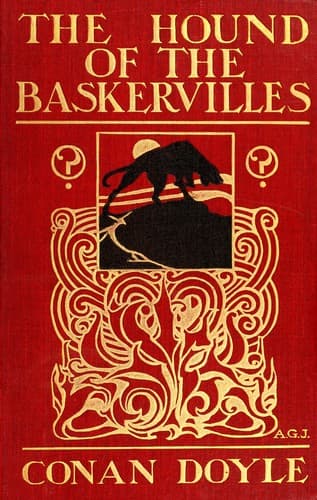
Sherlock Holmes and Dr. Watson investigate a family curse that supposedly unleashes a spectral, fire-breathing hound upon the heirs of Baskerville Hall on the desolate moors of Devon, and for the first time in the Holmes canon, the great detective is not merely solving a crime but confronting an atmosphere of supernatural dread that tests even his rationalism. Arthur Conan Doyle wrote his most atmospheric and suspenseful Holmes adventure.
Doyle set the story on Dartmoor, and the landscape, with its fogs, bogs, and granite tors, becomes as much an antagonist as any human villain: the moor is a place where civilization's certainties dissolve and the boundary between natural and supernatural blurs. Holmes is absent for a significant portion of the novel, leaving Watson to narrate the investigation alone, and this structural decision reveals Watson's courage and competence while also generating suspense through the reader's knowledge that the case needs Holmes. The hound itself, when it finally appears, is one of the great moments of terror in English literature, precisely because Doyle has spent the preceding chapters making the rational and supernatural explanations equally plausible. The novel works both as a detective story, with clues fairly planted and a solution that satisfies, and as a gothic horror tale, with an atmosphere of menace that the rational explanation never quite dispels. Holmes' investigation of the Baskerville family portrait is a classic scene of deductive reasoning.
Four people arrive at Hill House, a notorious mansion with a history of death and madness, to participate in a paranormal investigation, and the house begins to work on them, particularly on Eleanor Vance, a lonely woman whose need to belong makes her vulnerable to whatever Hill House is offering. Shirley Jackson wrote the definitive haunted house novel, a book that is terrifying not because of what it shows but because of what it suggests.
Jackson's opening paragraph, which personifies Hill House as a living entity that holds 'darkness within,' is one of the most famous in horror literature, and the novel fulfills its promise by never resolving the central ambiguity: is the house genuinely haunted, or is Eleanor's unstable psychology projecting its terrors onto the architecture? This refusal to choose between supernatural and psychological explanations is the novel's deepest source of horror, because it means there is no safe interpretation. The writing on the wall ('HELP ELEANOR COME HOME'), the cold spot, the pounding on the doors, and Eleanor's growing sense that the house wants her are all rendered with Jackson's characteristically precise, cool prose, which makes the uncanny feel all the more invasive. Eleanor's character arc, from shy outsider desperate for connection to a woman who has found the place where she belongs, is tragic and terrible, and Jackson's final sentence echoes the first in a structural circle that mirrors Eleanor's entrapment. Stephen King has called it one of the two greatest horror novels of the twentieth century.
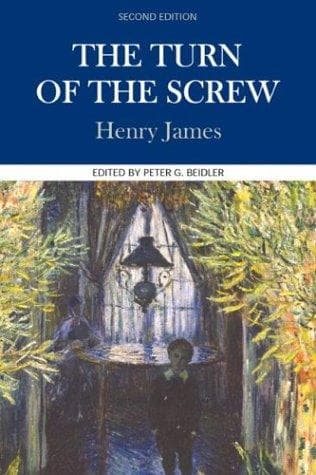
The Turn of the Screw
(1898)A young governess takes charge of two beautiful children at a remote English country estate and gradually becomes convinced that the ghosts of two former servants are returning to corrupt the children's souls, but the story is told in such a way that the reader can never be certain whether the ghosts are real or whether the governess is descending into madness. Henry James wrote the most ambiguous ghost story in the English language.
James constructed the narrative as a trap: the governess is the sole narrator, and her account is presented within a frame story that provides no external corroboration, so the reader must either trust a narrator who may be insane or accept the existence of ghosts on the testimony of someone who may be insane. This impossibility of resolution is the story's central achievement. The children, Miles and Flora, are disturbing precisely because they are presented as supernaturally well-behaved, and the governess's interpretation of their perfection as evidence of corruption is either perceptive or paranoiac, and the text supports both readings equally. The prose is Jamesian at its most elaborate: long, winding sentences that defer meaning and create an atmosphere of mounting claustrophobia. The story has generated more critical debate per page than perhaps any other work of fiction in English, with Freudian, feminist, queer, and structuralist readings all finding ample textual support. The final scene, in which the governess confronts Miles and the ghost of Peter Quint, is one of literature's most shocking and contested endings.
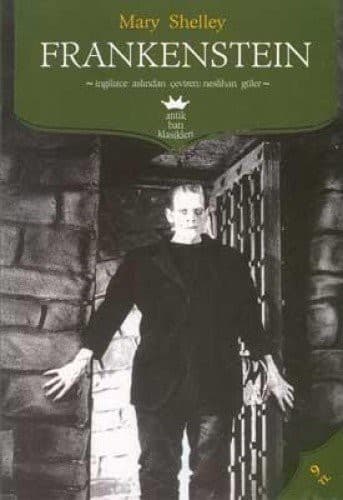
Frankenstein
(1818)A brilliant young scientist discovers how to animate dead matter, creates a being of superhuman size and strength, and then abandons it in horror, setting in motion a tragedy of rejection, loneliness, and escalating revenge that destroys everyone the scientist loves. Mary Shelley was eighteen years old when she wrote the novel that invented science fiction, and its questions about creation, responsibility, and what we owe the beings we bring into existence have only grown more urgent.
Shelley's most radical achievement was making the creature articulate: when the monster tells his story in the novel's central section, describing how he taught himself to read, how he observed a family from hiding and learned to love them, and how their rejection when he revealed himself drove him to violence, the reader's sympathy shifts entirely, and Frankenstein transforms from the hero of a horror story into the villain of a tragedy. The novel is structured as a series of nested narratives (Walton's letters contain Frankenstein's story, which contains the creature's story), and this layering emphasizes how perspective determines whose suffering matters. Shelley embedded within her gothic tale a genuine philosophical argument about the ethics of creation: Victor Frankenstein's sin is not creating life but refusing to take responsibility for it, and this theme resonates with every subsequent debate about scientific ethics, from nuclear weapons to genetic engineering to artificial intelligence. The novel's subtitle, 'The Modern Prometheus,' places the story within a mythological tradition that gives it weight far beyond its gothic origins.
Wuthering Heights
(1847)On the windswept Yorkshire moors, a foundling named Heathcliff and the daughter of the house that raised him, Catherine Earnshaw, form a bond so absolute and so destructive that it consumes not only their own lives but the lives of their children and everyone who comes near them. Emily Brontë wrote the most passionate and savage love story in the English language, a novel that refuses to apologize for the extremity of its emotions.
Brontë's achievement was creating a love story that is genuinely disturbing rather than merely romantic: Heathcliff and Catherine's relationship is not tender, not gentle, and not healthy, but it is rendered with such ferocity that its emotional truth is undeniable. Catherine's declaration, 'I am Heathcliff,' expresses a merging of identities that is more terrifying than romantic, and Heathcliff's response to her death, a grief so violent that it becomes indistinguishable from rage, is one of the most raw emotional performances in fiction. The novel's structure, narrated through the unreliable servant Nelly Dean to a befuddled visitor named Lockwood, adds layers of distortion that make the truth of events perpetually uncertain. The Yorkshire landscape is not backdrop but extension of the characters: the moors, the storms, and the exposed stone of Wuthering Heights itself all mirror the emotional extremity of its inhabitants. The novel shocked Victorian readers with its refusal to moralize, and it continues to shock readers who expect a love story to be reassuring.
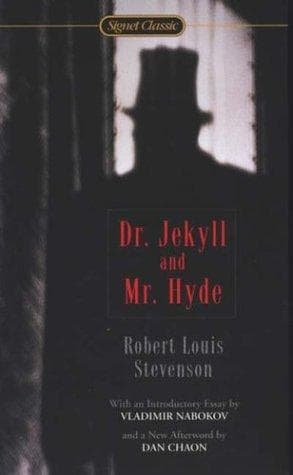
A respected London lawyer investigates the connection between his friend Dr. Henry Jekyll, a respected physician, and Mr. Edward Hyde, a small, repulsive man who commits acts of terrible violence, and the truth, when it comes, reveals that the respectable and the monstrous are not two people but two aspects of one. Robert Louis Stevenson wrote a story so culturally pervasive that 'Jekyll and Hyde' became a phrase everyone knows, even people who have never read it.
Stevenson understood something about Victorian society that Freud would not articulate for another decade: that respectability is a performance, and the impulses it suppresses do not disappear but find other outlets. Jekyll's experiment is not a failure; it works exactly as designed, separating his 'good' and 'evil' natures, and the horror is that the evil nature, once freed, is more vital, more energetic, and more pleasurable than the good one. Hyde is described as physically small and repulsive, producing an instinctive revulsion in everyone who sees him, and Stevenson's refusal to specify what exactly makes him repulsive is a brilliant narrative strategy that lets each reader project their own fears. The novella's structure, which withholds the twist until the final chapters despite its being one of the most famous spoilers in literary history, is a reminder that Stevenson was also a superb storyteller. The fog-shrouded London streets, the locked laboratory door, and the transformations themselves have become the iconography of Gothic horror.

A stunningly beautiful young man sits for a portrait and, influenced by a cynical aristocrat's philosophy of pleasure, wishes that the painting would age while he remains forever young. The wish is granted, and as Dorian Gray pursues a life of sensation without consequence, the portrait in the locked attic grows increasingly hideous, recording every sin its owner commits. Oscar Wilde wrote a gothic fable about vanity, corruption, and the price of living without moral accountability.
Wilde embedded within his sensational gothic plot a genuine philosophical debate between three positions: Lord Henry's aesthetic hedonism (live for pleasure, avoid commitment, treat life as art), Basil Hallward's moral idealism (beauty reflects goodness, and art is a window to truth), and Dorian's discovery that separating action from consequence does not eliminate consequence but merely postpones and concentrates it. Lord Henry's epigrams ('The only way to get rid of a temptation is to yield to it') are so brilliantly quotable that they risk making evil attractive, which is precisely Wilde's point: the seductive surface of wit can conceal the deepest moral rot, and Dorian's corruption begins with his acceptance of Lord Henry's charming philosophy. The portrait itself is one of literature's most powerful symbols: a mirror that shows not appearance but truth, growing more hideous as Dorian's face remains untouched, until the final scene reveals the horror that beauty has been hiding. Wilde was tried and imprisoned for gross indecency three years after publication, and the novel's themes of secret lives and hidden truths resonate with his own biography.
Dracula
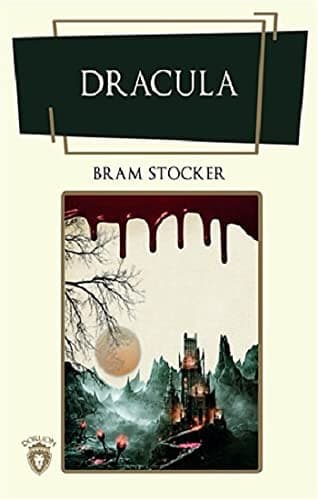
(1897)A young English solicitor travels to Transylvania to assist a nobleman with a real estate transaction and discovers that his client is a centuries-old vampire who intends to move to England and establish a new hunting ground among the teeming population of London. A band of determined men and one extraordinary woman must track and destroy the Count before he spreads his curse across the modern world. Bram Stoker created the vampire myth as we know it, and every vampire in film, television, and fiction since is a descendant of this novel.
Stoker's epistolary structure, which tells the story entirely through diary entries, letters, newspaper clippings, and phonograph recordings, was a stroke of genius that gave the novel an atmosphere of documentary authenticity and allowed multiple perspectives to build a composite picture of a threat that no single character can fully comprehend. Count Dracula is one of fiction's supreme creations: courteous, intelligent, aristocratic, and utterly predatory, a figure who embodies Victorian anxieties about immigration, sexuality, disease, and the collision between ancient aristocratic power and modern democratic society. The novel's first act, Jonathan Harker's imprisonment in Castle Dracula, is one of the great horror sequences in literature, building dread through accumulating details (the absence of mirrors, the Count crawling down the castle wall, the three female vampires). Mina Harker, who brings modern technology (typewriters, train schedules, shorthand) to bear against an ancient evil, is a more complex and capable heroine than popular culture's reduction of her to a damsel in distress suggests. The novel invented or codified virtually every trope of vampire fiction: the stake through the heart, the garlic, the inability to cast a reflection, the seductive bite.

A king, betrayed by his wife, vows to marry a new woman each day and execute her the next morning, until Scheherazade volunteers as his bride and saves her life by telling him a story so captivating that he must keep her alive to hear the ending, only for her to begin another story within it. Over a thousand and one nights, she weaves tales of Aladdin, Ali Baba, Sinbad, and hundreds of others, embedding stories within stories until the king's heart is healed by the very act of listening.
The collection's frame narrative, in which storytelling is literally a matter of life and death, is the most powerful metaphor for the importance of narrative ever devised: Scheherazade does not fight or flee; she survives through the power of imagination. The tales themselves span every genre (romance, adventure, comedy, horror, allegory) and draw from Arabic, Persian, Indian, and Egyptian traditions, creating a literary universe of staggering range and invention. The structure of stories nested within stories, where a character in one tale begins telling another tale whose character begins telling yet another, anticipates postmodern narrative techniques by a thousand years. The collection's influence on world literature is immeasurable: its plot devices (genies in bottles, magic carpets, secret passwords) have entered the global imagination, and writers from Borges to Barth to Rushdie have drawn on its formal innovations. The best translations convey both the sensuality and the wit of the originals.
The Divine Comedy
(1320)Lost in a dark wood at the midpoint of his life, the poet Dante is guided through Hell by the Roman poet Virgil, witnessing the punishments of the damned in descending circles of increasing severity, then climbs the mountain of Purgatory, and finally ascends through the celestial spheres of Paradise to behold the face of God. Dante Alighieri mapped the afterlife for the Western imagination, creating a poem so vast and detailed that seven centuries of readers have found themselves inside it.
Dante did something unprecedented: he wrote a poem that encompassed the entire cosmos, from the lowest pit of Hell to the highest heaven, and populated it with real people, historical figures, mythological characters, and personal enemies, all judged according to a moral framework so internally consistent that it functions as a complete philosophical system. The Inferno is the most widely read section because its punishments are so inventively appropriate (the contrapasso, or law of symbolic retribution, ensures that each sinner's punishment mirrors their sin), but the poem's true achievement is the journey from darkness to light, from Dante's despair in the dark wood to his vision of divine love 'that moves the sun and the other stars.' The language itself was revolutionary: Dante wrote in Italian (the Tuscan vernacular) rather than Latin, essentially creating literary Italian and making the case that a vernacular language could achieve the grandeur previously reserved for classical tongues. The three-line stanza form, terza rima, creates an interlocking pattern that mirrors the poem's theological structure.
Paradise Lost
(1667)Satan, cast out of Heaven after a failed rebellion against God, journeys through Chaos to the newly created Earth, where he corrupts Adam and Eve in the Garden of Eden, bringing sin, death, and suffering into the world. John Milton wrote an epic poem that was supposed to 'justify the ways of God to men' and instead created literature's most compelling villain, a figure whose defiant grandeur has captivated readers for nearly four centuries.
Milton gave Satan the best lines, the most memorable speeches, and the most psychologically complex interior life in the poem, and whether this was deliberate subversion or unintentional brilliance has been debated since William Blake observed that Milton was 'of the Devil's party without knowing it.' Satan's opening address to his fallen angels ('Better to reign in Hell than serve in Heaven') established the template for every charismatic, sympathetic villain in Western fiction. The poem's depiction of the Garden of Eden, rendered in some of the most beautiful blank verse in the English language, creates a world of sensory richness that makes the Fall feel like a genuine loss rather than an abstract theological concept. Milton's God, by contrast, is a rhetorical problem: he speaks in syllogisms and justifications that can seem cold and authoritarian compared to Satan's passionate eloquence. The poem's exploration of free will, disobedience, and the relationship between creator and creation resonates with every subsequent narrative about rebellion against authority.
War and Peace
(1869)Five aristocratic Russian families navigate love, death, ambition, and spiritual searching against the backdrop of Napoleon's invasion of Russia in 1812, and the novel moves between intimate domestic scenes and vast battlefield panoramas with a fluidity that makes its 1,200 pages feel like a complete representation of human life. Leo Tolstoy wrote what many consider the greatest novel ever written, a work so comprehensive in its vision that it seems to contain the entire world.
Tolstoy's achievement was creating a novel in which the personal and the historical are inseparable: Prince Andrei's battlefield epiphany at Austerlitz, Natasha's first ball, Pierre's search for meaning through Freemasonry and marriage, and the burning of Moscow are all rendered with the same meticulous attention to physical and psychological detail, and the effect is a fictional universe that operates on every scale simultaneously. The battle scenes, particularly Borodino, are the most realistic in literature because Tolstoy insisted on showing war from the soldier's perspective: confusion, smoke, fear, and the impossibility of understanding what is happening even as it happens around you. Natasha Rostova's transformation from an irrepressible teenager to a mature woman is one of fiction's great character arcs, and her near-elopement with Anatole Kuragin is a scene of such emotional intensity that it feels like something the reader is witnessing rather than reading. Tolstoy's philosophical chapters on history, which argue that great men do not shape events but are carried along by forces beyond anyone's control, are either the novel's deepest insights or its most frustrating interruptions, depending on the reader.
Ulysses
(1922)On a single day in Dublin, June 16, 1904, a middle-aged Jewish advertising canvasser named Leopold Bloom walks through the city, eats, drinks, attends a funeral, visits a newspaper office, debates in a pub, and eventually encounters a young writer named Stephen Dedalus, while the novel shifts between styles, voices, and levels of consciousness with a freedom that no previous novel had attempted. James Joyce did not just write a novel; he reinvented what the novel could be.
Joyce's method was to take the most ordinary day in the most ordinary life and reveal it to be as vast, as complex, and as mythologically rich as Homer's Odyssey, which provides the novel's structural framework. Each of the eighteen episodes corresponds to an episode of The Odyssey, and each is written in a different style: stream of consciousness, newspaper headlines, a play script, a series of questions and answers, a musical fugue, and finally Molly Bloom's unpunctuated interior monologue that closes the book. Bloom himself is one of literature's great characters: decent, curious, sensual, lonely, and fully alive to the physical world in a way that makes his wanderings through Dublin feel like a complete human experience compressed into a single day. The novel's difficulty is real, but it is also the source of its inexhaustible richness; there is always more to find, and readers who return to it over a lifetime discover new layers with each reading. Molly Bloom's 'yes I said yes I will Yes' is one of the great affirmations in literature.
Crime and Punishment
(1866)A brilliant but impoverished former student in St. Petersburg murders a pawnbroker, convinced that his intellect places him above conventional morality, and the novel follows his psychological disintegration as guilt, paranoia, and a relentless detective close in on him. Fyodor Dostoevsky wrote the first great psychological crime novel, a book that gets inside a murderer's mind with such precision that it changed how fiction approached consciousness itself.
Dostoevsky's innovation was making the crime almost incidental; the murder happens early and is bungled, and the novel's real subject is the storm inside Raskolnikov's mind as his rationalized theory of himself as a 'superman' exempt from moral law collides with the inescapable reality of what he has done. The cat-and-mouse dynamic between Raskolnikov and the detective Porfiry Petrovich is one of literature's great intellectual contests: Porfiry knows Raskolnikov is guilty but cannot prove it, and their conversations are masterclasses in indirection, where every sentence carries double meaning. Sonya, the prostitute who represents faith and self-sacrifice, provides the novel's moral counterweight, and her quiet insistence that Raskolnikov confess is as powerful as any of the novel's more dramatic scenes. Dostoevsky's St. Petersburg, with its cramped rooms, stifling heat, and labyrinthine streets, externalizes Raskolnikov's claustrophobic psychology so completely that setting and character become indistinguishable. The novel anticipated existentialist philosophy by decades.
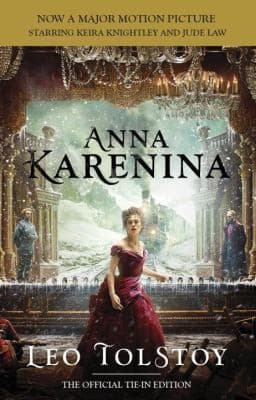
Anna Karenina
(1877)A married Russian aristocrat begins an affair with a dashing cavalry officer, and the passion that initially liberates her gradually destroys her as society closes ranks against a woman who refuses to hide her transgression. Meanwhile, a landowner named Levin searches for meaning through farming, philosophy, and a love that is everything Anna's is not: stable, domestic, and quietly transcendent. Tolstoy wrote the greatest novel about love, marriage, and society, and its first sentence, 'All happy families are alike; each unhappy family is unhappy in its own way,' remains the most famous opening line in fiction.
Tolstoy's genius was refusing to reduce Anna's story to a morality tale: she is not simply a fallen woman or a victim of society, but a fully realized human being whose passion for Vronsky is simultaneously her greatest vitality and her destruction. The novel follows Anna's increasing isolation and paranoia with clinical precision, showing how jealousy, social ostracism, and morphine addiction combine to narrow her world until the only exit she can imagine is the one she takes. Levin's parallel story, based closely on Tolstoy's own life, provides a counterpoint that is less dramatic but equally profound: his struggles with the meaning of work, his relationship to the peasants on his estate, and his eventual discovery of faith are rendered with a honesty that makes the reader feel they are witnessing someone think through the deepest questions in real time. The scene at the horse race, where Anna's reaction to Vronsky's fall publicly exposes their affair to her husband, is one of the most masterfully constructed set pieces in fiction. Dostoevsky called it 'flawless as a work of art.'
The Brothers Karamazov
(1880)Three brothers with violently different temperaments, the intellectual atheist Ivan, the passionate sensualist Dmitri, and the gentle novice monk Alyosha, are drawn into a crisis when their contemptible father is murdered and the question of which brother committed the crime becomes inseparable from the question of which brother's philosophy of life is true. Dostoevsky wrote his final and greatest novel, a murder mystery that is also the most ambitious exploration of faith, doubt, and morality in all of fiction.
Dostoevsky constructed the novel as a philosophical arena in which competing worldviews fight for supremacy through character and action rather than abstract argument. Ivan's chapter 'The Grand Inquisitor,' in which he tells Alyosha a parable about Jesus returning to earth during the Spanish Inquisition and being rejected by the Church, is the single most famous passage in Russian literature and one of the great challenges to religious faith ever composed. Dmitri's story is the novel's emotional engine: his explosive passion, his capacity for both tenderness and violence, and his wrongful conviction for his father's murder create a tragedy that is both personal and philosophical. Alyosha, the youngest brother, represents Dostoevsky's answer to Ivan's atheism, but Dostoevsky was honest enough to make Ivan's arguments stronger than Alyosha's rebuttals, which gives the novel its intellectual integrity. The courtroom scenes in the final section are riveting drama, and the verdict forces the reader to confront the gap between justice and truth. Freud called it 'the most magnificent novel ever written.'
Middlemarch
(1871)In the fictional English town of Middlemarch during the period of the Reform Bill of 1832, a young woman with grand ideals makes a disastrous marriage to a pedantic scholar, a young doctor with ambitious plans encounters the obstacles of provincial society, and a web of interconnected lives reveals how individual aspiration is shaped, limited, and sometimes crushed by the society in which it operates. George Eliot wrote the most psychologically rich and morally intelligent novel in the English language.
Eliot's narrator is one of the great achievements of Victorian fiction: a voice of extraordinary empathy and penetrating intelligence that moves between characters' inner lives with such fluidity that the reader comes to understand not just what people do but why they do it, and how their reasons, however inadequate, make sense from the inside. Dorothea Brooke's disastrous marriage to Casaubon, a man whose life's work turns out to be a catalogue of dead knowledge, is one of the most devastating depictions of a young person's idealism meeting reality's immovable limitations. Lydgate, the idealistic doctor whose medical ambitions are undermined by his marriage to the beautiful, materialistic Rosamond Vincy, provides a parallel study of how good intentions are destroyed by the wrong partnership. Eliot's moral vision is neither cynical nor sentimental: she shows her characters making mistakes, suffering consequences, and occasionally finding grace, and she treats every one of them, even the failures, with a generosity that makes the reader more humane. Virginia Woolf called it 'one of the few English novels written for grown-up people.'
Great Expectations
(1861)A poor orphan named Pip, raised by his abusive sister and her gentle blacksmith husband in the Kent marshes, receives a fortune from an anonymous benefactor and moves to London to become a gentleman, only to discover that the identity of his patron is not what he assumed, and that the class he aspired to join is not what he imagined. Charles Dickens wrote his most autobiographical and most perfectly constructed novel, a story about the gap between what we want to be and what we are.
Dickens channeled his own experience of class mobility (from poverty to fame) into Pip's story, and the result is a novel that understands both the seductiveness and the emptiness of social ambition with an honesty that his earlier, more optimistic novels lacked. Miss Havisham, frozen in time in her decaying wedding dress amid a rotting feast, is one of literature's most unforgettable images, a woman who has turned her own trauma into a weapon against the next generation. The convict Magwitch, whose terrifying appearance in the opening chapter gives way to a revelation of extraordinary tenderness, is the novel's moral center: his love for Pip, expressed through the fortune he sends from Australia, is the purest emotion in the book, and Pip's initial revulsion when he learns the truth is the novel's most painful moment of self-recognition. Dickens originally wrote a happy ending but was persuaded by Bulwer-Lytton to change it, and both endings exist, each casting a different light on the novel's themes.
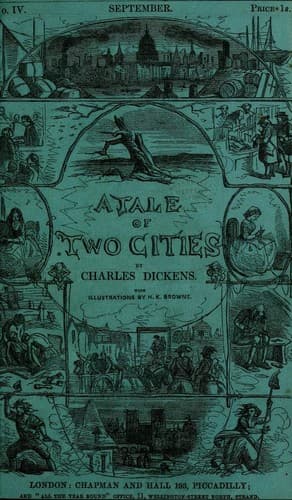
A Tale of Two Cities
(1859)Against the backdrop of the French Revolution, a French aristocrat imprisoned for eighteen years is reunited with his daughter in London, while a dissolute English lawyer discovers that love might give his wasted life meaning, and the terror of the guillotine draws all of them back to Paris for a climax of sacrifice and redemption. Charles Dickens opened with literature's most famous first line and closed with its most famous last.
Dickens understood the French Revolution as both a justified response to aristocratic cruelty and a descent into collective madness, and the novel holds both truths simultaneously without flinching from either. Madame Defarge, who knits the names of those condemned to die into a register she carries everywhere, is one of the great figures of implacable vengeance, a woman whose personal trauma has been transmuted into revolutionary fury that cannot be satisfied. Sydney Carton's final sacrifice ('It is a far, far better thing that I do, than I have ever done') is one of the most emotionally devastating moments in all of fiction, a redemption earned not through reform but through a single act of absolute selflessness. The novel's structure, cutting between London's stability and Paris's chaos, creates a sense of historical momentum that sweeps the reader along, and the scenes of mob violence during the Revolution are among the most vivid in English literature. The novel has sold over 200 million copies, making it one of the bestselling books ever published.
Les Misérables
(1862)An ex-convict named Jean Valjean, released after nineteen years of hard labor for stealing a loaf of bread, is transformed by an act of mercy and spends the rest of his life trying to do good, while the relentless Inspector Javert pursues him across decades, unable to accept that a criminal can become a saint. Victor Hugo wrote an epic of justice, mercy, revolution, and redemption that encompasses all of French society in the early nineteenth century.
Hugo created in Valjean and Javert one of literature's greatest moral contrasts: Valjean represents the possibility of redemption through grace, while Javert represents the cold logic of a legal system that cannot accommodate moral transformation, and their confrontation is a philosophical argument about whether justice or mercy should govern human affairs. The novel's scope is staggering: Hugo devoted entire sections to the Battle of Waterloo, the Paris sewers, the history of convents, and the argot of the criminal underclass, creating a portrait of French society so comprehensive that it functions as a social history. Cosette, Fantine, and Éponine are among the most memorable women in fiction, each representing a different face of suffering under systemic injustice. The 1832 Paris uprising, during which the students build barricades and fight against the National Guard, is one of the most stirring and heartbreaking sequences in all of literature. The musical adaptation, which has run continuously since 1985, has made the story's themes accessible to audiences worldwide.
A boy fakes his own death to escape his abusive father and rafts down the Mississippi River with Jim, an escaped slave, and their journey through the antebellum South forces both of them to confront the distance between what their society calls right and what their consciences tell them is true. Mark Twain wrote the novel that Ernest Hemingway said all American literature comes from, and its use of vernacular voice and its moral clarity about America's original sin remain revolutionary.
Twain's greatest achievement was Huck's moral crisis in Chapter 31, when he decides to help Jim escape despite believing he will go to hell for it. The scene is one of the most important in American literature because it dramatizes the conflict between a corrupt society's rules and an individual's moral instinct, and Huck chooses correctly while believing he is choosing damnation. Twain wrote the entire novel in Huck's voice, a frontier vernacular that no previous American novel had attempted to sustain, and the result is a prose style of such naturalness and vitality that it liberated American fiction from its imitation of English models. The river itself is one of the great symbols in literature: a space of freedom and possibility that contrasts with the violence and hypocrisy of the shore communities Huck and Jim pass through. The novel's final section, where Tom Sawyer turns Jim's escape into an elaborate game, is the most controversial passage in American literature, with critics debating whether Twain was satirizing romantic adventurism or simply losing control of his material.
The Great Gatsby
(1925)A mysterious millionaire throws extravagant parties at his Long Island mansion every weekend, all for the purpose of attracting the attention of a woman he loved and lost five years earlier, and the story of his pursuit is narrated by his neighbor, a young bond salesman from the Midwest who is simultaneously fascinated and repelled by the world of wealth he has entered. F. Scott Fitzgerald wrote the definitive novel about the American Dream and its failure, in prose so beautiful that every sentence feels like it was carved rather than written.
Fitzgerald's prose style, which combines lyrical beauty with absolute precision, is the novel's primary achievement: sentences like 'So we beat on, boats against the current, borne back ceaselessly into the past' are not merely quotable but structurally essential, encoding the novel's themes of nostalgia, loss, and the impossibility of recapturing the past in their very rhythm. Jay Gatsby is the American Dream personified: a self-invented man who believes that with enough money and enough will, he can erase the past and remake reality, and his destruction reveals that the Dream itself is a beautiful lie. Nick Carraway's narration is deceptively simple; he presents himself as an honest observer, but careful readers notice his complicity, his attraction to Gatsby's romanticism, and his own moral evasions. The green light at the end of Daisy's dock, the eyes of Doctor T.J. Eckleburg on the billboard above the Valley of Ashes, and the parties that no one remembers being invited to have all entered the American symbolic vocabulary. The novel was a commercial disappointment in Fitzgerald's lifetime and only achieved its current status after World War II, when it was distributed to soldiers in Armed Services Editions.
Mrs Dalloway
(1925)On a single June day in London, Clarissa Dalloway, a society hostess, prepares for a party while memories, regrets, and encounters carry her back through decades of choices made and paths not taken, and her story is intercut with that of Septimus Warren Smith, a shell-shocked war veteran whose suffering the official world cannot or will not acknowledge. Virginia Woolf invented a new way of capturing consciousness on the page.
Woolf's stream-of-consciousness technique does not merely represent thought; it demonstrates how consciousness actually works: associatively, non-linearly, with sensory impressions triggering memories that trigger other memories in an unbroken flow that the novel reproduces with uncanny fidelity. Clarissa's single day becomes a vessel for an entire life, as the sound of Big Ben, the sight of an old friend, and the scent of flowers in a shop carry her back to a summer at Bourton where she chose the safe, conventional Richard Dalloway over the passionate, demanding Peter Walsh, and the novel asks whether that choice was wise, cowardly, or both. Septimus Warren Smith, the counterpart Clarissa never meets, provides the novel's darkest truth: his traumatic experiences in the war have left him in a state of anguish that the medical establishment addresses with rest cures and condescension, and his fate reveals the violence that lies beneath the polished surface of postwar London. The final scene, where Clarissa learns of Septimus' death and feels a strange kinship with a man she never knew, is one of the most mysterious and moving moments in modern fiction.
The Sun Also Rises
(1926)A group of American and British expatriates drink, argue, and wander through 1920s Paris and Pamplona, trying to find meaning after the World War that destroyed their assumptions about civilization, and the narrator, a journalist rendered impotent by a war wound, watches the woman he loves move between other men while the bullfights of Spain provide the only authentic ritual left in a world stripped of purpose. Ernest Hemingway defined the Lost Generation and invented a prose style that changed how English could sound.
Hemingway's prose style, developed in this novel, was a revolution: short sentences, simple words, and a deliberate suppression of emotion that forces the reader to feel what the characters cannot express. The 'iceberg theory,' as he later called it, means that the most important things in the novel are never stated directly, and the reader must infer them from what is left out. Jake Barnes' war wound, which makes physical love impossible, is the novel's central metaphor: the war damaged an entire generation in ways that are invisible but permanent, and the expatriates' drinking, traveling, and romantic entanglements are all attempts to fill a void they cannot name. The Pamplona sections, with their vivid descriptions of bullfighting, are Hemingway's attempt to find an art form that still has authenticity: the matador risks his life, and the result, unlike a novel or a painting, cannot be faked. Brett Ashley, the novel's magnetic, self-destructive woman, is both a character and a symbol of the era's chaotic sexuality, and her final exchange with Jake ('Oh, Jake, we could have had such a damned good time together.' 'Yes, isn't it pretty to think so?') is one of the great last lines in American fiction.
The Metamorphosis
(1915)Gregor Samsa, a traveling salesman who supports his entire family, wakes up one morning to discover he has been transformed into a giant insect, and the story follows his family's response to this impossible situation with a matter-of-factness that is simultaneously funny, horrifying, and heartbreaking. Franz Kafka wrote a novella so culturally pervasive that 'Kafkaesque' became the word for any situation in which the absurd is treated as normal.
Kafka's genius was refusing to explain the transformation or treat it as metaphor: Gregor simply is an insect, and the story proceeds from that premise with the logic of a bureaucratic report, which makes the emotional impact all the more devastating. The real horror is not Gregor's physical change but his family's gradual withdrawal: his sister, who initially cares for him, grows disgusted; his mother cannot look at him; and his father throws apples at him, one of which lodges in his back and rots. Kafka captured the experience of being made alien by the people who are supposed to love you, and the novella's resonance with anyone who has felt like a burden to their family is immediate and lasting. The prose, in its clipped, precise, emotionally flat delivery of grotesque events, creates a tone that has become one of the defining modes of modern literature. The novella is only about sixty pages long, and not a word is wasted.
Janie Crawford, a Black woman in early twentieth century Florida, tells the story of her three marriages and her journey from a girl who dreamed of love under a blossoming pear tree to a woman who has survived a hurricane, a shooting, and a trial, and has found her own voice along the way. Zora Neale Hurston wrote the novel that was lost for decades before being rescued and recognized as one of the greatest achievements in American literature.
Hurston's prose style, which blends literary English with the rhythms, vocabulary, and poetry of Black Southern vernacular speech, was revolutionary: she captured a voice that had been excluded from serious American fiction and demonstrated that it could carry the full weight of a major novel. Janie's three marriages track her evolution from passivity (her first marriage, arranged by her grandmother) through subjugation (her second, to the ambitious, controlling Joe Starks) to genuine partnership and passion (her third, with the younger, playful Tea Cake), and each relationship teaches her something about the difference between possession and love. The hurricane scene, in which Janie and Tea Cake confront the full force of nature and its indifference to human desire, is one of the most powerful set pieces in American fiction. The novel was dismissed by male contemporaries, including Richard Wright, who called it a 'minstrel show,' and it fell out of print until Alice Walker's 1975 essay 'In Search of Zora Neale Hurston' sparked a rediscovery that restored it to its rightful place in the American canon.
The Grapes of Wrath
(1939)The Joad family, driven from their Oklahoma farm by the Dust Bowl and the mechanization of agriculture, loads everything they own onto a broken-down truck and heads for California, where the promise of work and orchards turns out to be a lie designed to exploit desperate people. John Steinbeck wrote the novel that defined the Great Depression for America, a book so politically charged that it was banned, burned, and called communist propaganda, and so emotionally powerful that it won the Pulitzer Prize.
Steinbeck's achievement was making the political personal and the personal political: the Joad family's specific suffering (their lost farm, their broken truck, their hunger, their dignity in the face of contempt) is rendered with such concrete, physical detail that the reader cannot retreat into abstraction, and the 'intercalary' chapters, which step back to describe the broader forces of economics, ecology, and migration, give the family's story the weight of historical necessity. Ma Joad is one of the great matriarchs of American fiction, a woman whose strength holds the family together when everything else fails, and her quiet determination in the face of indifference and cruelty is more powerful than any speech. Tom Joad's farewell, in which he tells his mother he will be present wherever there is injustice, has become one of the most quoted passages in American literature and was adapted by Bruce Springsteen into one of his most celebrated songs. The final scene, in which Rose of Sharon nurses a starving stranger, is an act of radical human generosity that transcends the novel's politics.
Native Son
(1940)Bigger Thomas, a young Black man living in poverty on Chicago's South Side, takes a job as a chauffeur for a wealthy white family, and a series of panicked decisions leads to a crime that reveals the suffocating reality of American racism with a force that no previous novel had attempted. Richard Wright wrote a protest novel so violent and uncompromising that it forced white America to look at what it had created.
Wright refused to make Bigger sympathetic in the conventional sense: he is not noble, not articulate, not a victim who suffers gracefully, but a man whose rage, fear, and violence are the products of a system that denied him every avenue of legitimate self-expression. The novel's power comes from Wright's insistence that Bigger's crimes are not excused by racism but are made comprehensible by it, and the reader is forced to hold two truths simultaneously: that what Bigger does is terrible, and that America created the conditions that made him. The courtroom speech by Boris Max, Bigger's communist lawyer, which attempts to explain Bigger's actions as the inevitable consequence of systemic oppression, is one of the great set pieces of political fiction, and the debate about whether Max succeeds or fails mirrors the larger American debate about personal responsibility and structural injustice. The novel scandalized both white and Black audiences: whites objected to its depiction of Black rage, while some Black writers, including James Baldwin, argued that Wright reduced his protagonist to a social thesis rather than a complete human being. This debate remains vital.

The Stranger
(1942)A French Algerian office clerk attends his mother's funeral without crying, begins a casual relationship the next day, and then, on a sun-blasted beach, kills an Arab man for no reason he can articulate. The trial that follows condemns him not for the murder but for his failure to grieve, and the novel asks whether a society that demands performed emotion has any right to judge a man who simply refuses. Albert Camus distilled existentialism into a hundred pages of the clearest, coldest prose ever written.
Camus created in Meursault a protagonist who is defined by absence: he does not cry at funerals, does not say he loves his girlfriend, and does not pretend that life has meaning, and the novel's quiet brilliance is showing how this refusal to perform conventional emotions is more threatening to society than the murder itself. The opening line, 'Mother died today. Or maybe yesterday, I don't know,' announces a voice so detached that it reads as either honest or monstrous, and the novel never resolves which. The beach scene, where Meursault kills because the sun is in his eyes, is one of the most analyzed passages in literature: is it meaningless violence, an absurdist statement, or a colonial act that Camus could not fully examine? The trial, where the prosecutor argues that Meursault's failure to weep at his mother's funeral proves he is a moral monster, is devastating satire of a justice system more concerned with social conformity than with facts. The novel can be read in a single sitting, and its impact is immediate and permanent.
The Plague
(1947)A plague arrives in the Algerian city of Oran, the gates are sealed, and the inhabitants must endure months of quarantine, death, and the slow erosion of everything they took for granted. Dr. Bernard Rieux organizes the response, not because he believes he can win but because the work of fighting suffering is the only meaningful response available. Albert Camus wrote an allegory about fascism, a meditation on solidarity, and a prophetic vision that millions of readers rediscovered during the COVID-19 pandemic.
Camus used the plague as an allegory for the Nazi occupation of France, but the novel transcends its historical occasion because the questions it raises, how should people behave in the face of collective catastrophe, what obligations do we owe strangers, and what gives life meaning when death is arbitrary and inescapable, are universal. Dr. Rieux's stoicism is not indifference but a hard won philosophy: he fights the plague knowing that victories are temporary and that the bacillus never truly disappears, and his acceptance of this fact is the novel's definition of heroism. Father Paneloux's two sermons, one declaring the plague a punishment from God and the other struggling with that claim after watching a child die, track the collapse of religious certainty in the face of innocent suffering. Jean Tarrou's private war against the death penalty, and his belief that 'we are all plague-stricken,' provides the novel's most radical moral insight: that complicity in suffering is the default human condition, and the only ethical response is perpetual vigilance. The novel found millions of new readers during the COVID-19 pandemic, and its depiction of denial, hoarding, and gradual normalization of death proved uncannily accurate.
Invisible Man
(1952)An unnamed Black man narrates his journey from a Southern college through Harlem to an underground room illuminated by 1,369 light bulbs, and along the way he is manipulated by white benefactors, exploited by Black nationalists, used by communists, and rendered invisible not by a scientific experiment but by a society that refuses to see him as an individual. Ralph Ellison wrote the most ambitious and innovative American novel of the twentieth century.
Ellison's narrator is 'invisible' because other people see only their own projections, stereotypes, and needs when they look at him, and the novel catalogs these failures of perception with a range of styles, from naturalism to surrealism to jazz improvisation, that mirrors the narrator's search for a form adequate to his experience. The 'Battle Royal' opening, in which Black students are forced to fight blindfolded for the entertainment of white civic leaders, is one of the most searing scenes in American literature, establishing immediately the connection between entertainment and dehumanization. The novel's structure, which moves through institutions (the college, the factory, the Brotherhood) that each promise identity and deliver exploitation, systematically dismantles every available narrative of Black advancement, leaving the narrator alone in his basement with his stolen electricity and his voice. Ellison's prose draws on jazz: it riffs, improvises, doubles back, and builds to climaxes that resolve in unexpected keys, and this formal ambition makes the novel one of the rare works that is both politically urgent and artistically revolutionary.
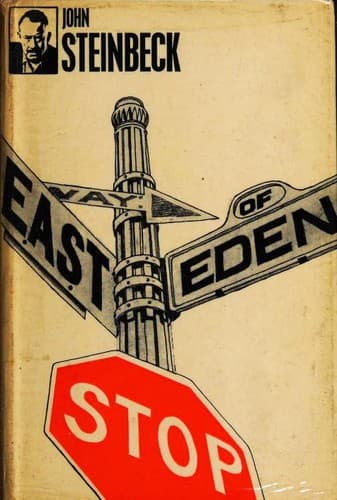
East of Eden
(1952)Two families in California's Salinas Valley play out the story of Cain and Abel across three generations, and the question that drives the novel is whether human beings are fated to repeat the patterns of sin and violence, or whether the Hebrew word 'timshel,' meaning 'thou mayest,' grants them the freedom to choose their own moral destiny. John Steinbeck considered this his magnum opus, the novel that contained everything he knew about good, evil, and the American character.
Steinbeck organized his most ambitious novel around a single Hebrew word, 'timshel,' and the interpretation of that word becomes the book's moral center: if God's command to Cain is 'thou shalt' (a promise of triumph over sin) or 'do thou' (an order), the meaning is passive, but if it means 'thou mayest,' it grants free will, and free will is the only thing that makes moral choice meaningful. Cathy Ames, who becomes Kate, is one of the most disturbing villains in American fiction: a woman Steinbeck describes as a 'monster' born without a moral sense, and whether this characterization is brilliant (a portrait of genuine sociopathy) or problematic (a misogynistic reduction of female agency to pure evil) has been debated since publication. The Chinese American servant Lee, who teaches himself Hebrew to investigate the meaning of 'timshel,' is the novel's intellectual hero and one of Steinbeck's most fully realized characters. Samuel Hamilton, based on Steinbeck's own maternal grandfather, embodies the warmth and wisdom that Steinbeck associated with the Salinas Valley itself. The novel's sweep, covering decades and generations, gives it the quality of an American Genesis.
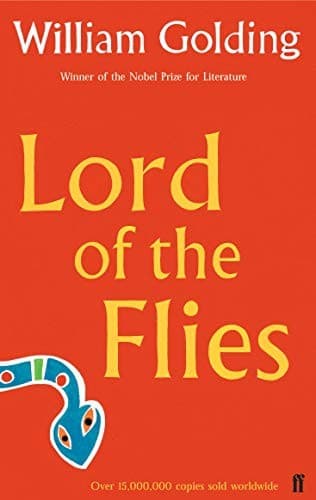
Lord of the Flies
(1954)A group of British schoolboys is stranded on a deserted island after their plane is shot down during a war, and without adults or rules, their attempt at self-governance collapses into tribal warfare, superstition, and murder. William Golding wrote an unforgettable allegory about the fragility of civilization and the darkness that lies beneath its surface.
Golding stripped away every comfort of the adventure story tradition (Robinson Crusoe, The Swiss Family Robinson, The Coral Island) by showing that children, freed from the constraints of adult society, do not build a paradise but destroy themselves. Ralph's struggle to maintain democratic order against Jack's charismatic authoritarianism is a microcosm of political history, and the speed with which the boys descend from rules and cooperation to face paint and blood sacrifice is Golding's most disturbing argument: civilization is not natural but imposed, and when the imposition is removed, the default state is not freedom but violence. Simon, the novel's Christ figure, who understands that the 'beast' the boys fear is their own nature, is killed in a frenzy that is the novel's most devastating scene, made worse by the fact that even Ralph and Piggy participate. The final scene, where a naval officer arrives and the boys' war is suddenly contextualized as children playing at the same violence their rescue represents, is a master stroke of irony that prevents the reader from feeling superior to the characters.
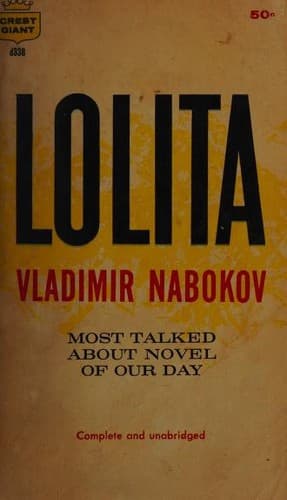
Lolita
(1955)A middle-aged European professor named Humbert Humbert describes, in elaborate, seductive, and self-justifying prose, his obsession with a twelve year old American girl whom he calls Lolita, and the novel follows his manipulation, kidnapping, and sexual abuse of her across a nightmarish road trip through 1950s America. Vladimir Nabokov wrote the most controversial and one of the most beautifully written novels of the twentieth century, a work that forces the reader to confront the relationship between aesthetic beauty and moral horror.
Nabokov's central achievement is making Humbert's prose so dazzling that the reader is seduced by it, and then forcing that same reader to recognize that this seduction is exactly how predators operate: Humbert controls the narrative as completely as he controls Lolita, and his wit, erudition, and stylistic brilliance are the tools of his abuse. The novel is, among other things, a study of how language can be used to obscure, beautify, and justify atrocity. Lolita herself, glimpsed only through Humbert's controlling narration, is a heartbreakingly ordinary American child whose agency, preferences, and suffering are systematically erased by the man who claims to love her. Nabokov's America, a landscape of motels, diners, and highways observed with the alien precision of a European exile, is one of the great portraits of the country at midcentury. The novel was refused by five American publishers and first published in Paris by Olympia Press, which typically published erotica, before becoming one of the most acclaimed novels in the English language.
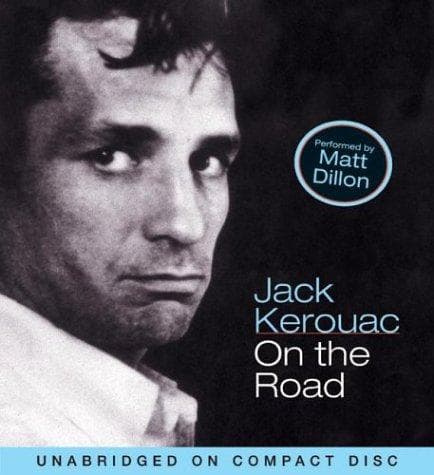
On the Road
(1957)Sal Paradise and Dean Moriarty crisscross America in a series of frantic, jazz-fueled road trips, chasing an ecstatic experience that always seems to be just around the next bend, in the next city, with the next woman, and the novel pulses with the energy of young men who believe that movement is meaning. Jack Kerouac wrote the Beat Generation's bible, a book that made an entire generation want to hit the highway and find out what was on the other side.
Kerouac's prose style, which he called 'spontaneous prose' and which was influenced by jazz improvisation, represents one of the great experiments in American writing: the sentences tumble forward with the breathless energy of a saxophone solo, and the rhythm of the language enacts the restlessness it describes. Dean Moriarty (based on Neal Cassady) is one of the most magnetic and destructive characters in American fiction: a man of limitless energy and zero responsibility whose charisma pulls everyone into his orbit and whose trail of abandoned wives, children, and friends reveals the cost of freedom pursued without conscience. The America the novel describes, a landscape of truck stops, jazz clubs, migrant camps, and open highways, is both romantically beautiful and honestly depicted as a place of poverty, racial inequality, and human need. The novel's influence on American culture extends far beyond literature: it helped create the youth culture of the 1960s, the idea of the road trip as a rite of passage, and the notion that authenticity is found not in institutions but in movement and experience.
Things Fall Apart
(1958)Okonkwo, a respected leader in an Igbo village in what is now Nigeria, has built his life on strength, hard work, and the fear of becoming like his gentle, unsuccessful father, and when European missionaries and colonial administrators arrive, his world and his sense of self collapse together. Chinua Achebe wrote the novel that gave Africa its own voice in world literature and answered, permanently, the question of who gets to tell Africa's story.
Achebe's achievement was twofold: he depicted pre-colonial Igbo society in its full complexity, with its rituals, its justice system, its art, and its internal contradictions, refusing to present it as either a paradise or a primitive darkness, and he showed the destruction of that society by colonialism with a devastating clarity that Western novels about Africa had never attempted. Okonkwo is a tragic hero in the classical sense: his greatest strength (his determination never to show weakness) is also his fatal flaw, and the novel traces how a man who cannot bend is broken by forces that require adaptation. The novel's prose is deceptively simple, blending English with Igbo proverbs ('When the moon is shining the cripple becomes hungry for a walk') in a way that creates a narrative voice that feels authentically African without exoticizing itself. The novel was written explicitly in response to European literature about Africa, particularly Conrad's Heart of Darkness, and Achebe's depiction of a functioning, complex African civilization before colonialism is itself an act of cultural resistance.
To Kill a Mockingbird
(1960)In a small Alabama town during the Depression, a lawyer named Atticus Finch defends a Black man falsely accused of raping a white woman, and the story is told through the eyes of his six year old daughter Scout, whose innocence provides a lens through which the town's racism, courage, and complexity are refracted with devastating clarity. Harper Lee wrote the novel that shaped how America thinks about justice, empathy, and moral courage.
Lee's narrative strategy of filtering the story through Scout's perspective is the novel's most powerful device: Scout sees everything but understands only part of it, and the gap between her perception and the reader's comprehension creates a dramatic irony that makes the novel's themes feel discovered rather than taught. Atticus Finch became the moral ideal for an entire generation of lawyers and citizens, a man who does the right thing not because it will succeed but because it must be done, and his instruction to Scout that you cannot truly understand someone 'until you climb into his skin and walk around in it' is the novel's definition of empathy. Boo Radley's story, which runs parallel to the trial, transforms from a childhood ghost story into a meditation on how we fear what we do not understand. The trial itself, in which the evidence clearly exonerates Tom Robinson and the jury convicts him anyway, is one of the most powerful depictions of structural racism in American fiction. The novel won the Pulitzer Prize and has sold over forty million copies.
Catch-22
(1961)Captain Yossarian, a World War II bombardier stationed on a Mediterranean island, wants desperately to stop flying combat missions, but the only way to be grounded is to be declared insane, and anyone who asks to be grounded is obviously sane because wanting to avoid death is the definition of rational behavior. That's the catch: Catch-22. Joseph Heller wrote the funniest, angriest, and most subversive American war novel, a book that gave the English language a phrase for any bureaucratic absurdity that traps people in impossible situations.
Heller's nonlinear structure, which jumps backward and forward in time and gradually reveals that the comedy conceals genuine horror, mirrors the disorientation of combat and the way trauma resists chronological ordering. The novel is hilarious on every page, with dialogue exchanges that achieve the precision of vaudeville routines, but each comic scene contains a seed of darkness that blooms as the novel progresses, until the final chapters reveal that the laughter has been a coping mechanism for atrocity. Milo Minderbinder, the mess officer who builds a syndicate so powerful that he contracts to bomb his own squadron for profit, is one of the great satirical creations in American fiction: a capitalist so pure in his devotion to the market that he cannot distinguish between supplying food and supplying death. Colonel Cathcart, who keeps raising the number of required missions to impress his superiors, embodies the institutional indifference to individual life that is the novel's true enemy. The phrase 'Catch-22' entered the language so completely that most people who use it have never read the novel.
The Bell Jar
(1963)Esther Greenwood, a brilliant young woman from Massachusetts, wins a summer internship at a fashion magazine in New York City, and instead of the glamour she expected, she descends into a depression so severe that the world narrows to a bell jar, a sealed glass vessel in which she can see everything but cannot breathe. Sylvia Plath wrote the defining novel about mental illness and female identity in mid-century America.
Plath's prose is remarkable for its precision: she describes the onset and experience of depression with a clinical clarity that is both literary and therapeutic, capturing the way that color drains from the world, decisions become impossible, and the self retreats behind glass. Esther's intelligence is part of her suffering; she sees the contradictions of the 1950s feminine ideal (be smart but not too smart, be sexual but not too sexual, want a career but want a husband more) with a clarity that offers no escape, because the problem is not individual but structural. The novel's treatment of electroshock therapy, first administered incompetently and then by a compassionate doctor, reflects Plath's own experience and provides one of the few honest depictions of psychiatric treatment in mid-century fiction. The bell jar as a metaphor for depression has entered the cultural vocabulary because it captures something that more clinical descriptions miss: the feeling of being separated from life by a transparent barrier that others cannot see.
Seven generations of the Buendía family rise and fall in the mythical Colombian town of Macondo, and the story encompasses civil wars, banana plantations, plagues of insomnia and forgetting, flying carpets, women ascending to heaven while hanging laundry, and a family tree so tangled with repetition that the same names and the same mistakes recur across a century until the final Buendía deciphers the prophecy that has been encoding the family's fate all along. Gabriel García Márquez wrote the novel that invented magical realism and that reads like the fever dream of an entire continent.
García Márquez's achievement was creating a narrative mode in which the miraculous and the mundane exist on the same plane: a woman ascends to heaven, a man is followed everywhere by yellow butterflies, it rains for four years, and these events are narrated with the same matter-of-fact precision as the planting of crops and the start of a war. This technique, magical realism, became the dominant mode of Latin American fiction and influenced writers worldwide. The novel is also a compressed history of Colombia (and, by extension, Latin America), encoding the violence of civil wars, the exploitation of banana companies backed by the U.S. military, and the cyclical nature of political power in a continent where progress is always undermined by the return of old patterns. The Buendía family's tragedy is that they are doomed to repeat themselves, and the novel's structure (circular, repetitive, with names and events echoing across generations) enacts this doom formally. The final sentence, in which the reader discovers that the novel itself is the manuscript that the last Buendía is reading, is one of the great metafictional moments in literature.
Beloved
(1987)Sethe, a formerly enslaved woman living in Cincinnati after the Civil War, is haunted by the ghost of the baby daughter she killed to prevent her from being returned to slavery, and when a mysterious young woman named Beloved appears at her door, the past and present collide in a reckoning that threatens to consume everyone it touches. Toni Morrison wrote the most important American novel of the late twentieth century, a work that confronts the legacy of slavery with a power that no previous novel had achieved.
Morrison's refusal to present slavery as a historical curiosity or a moral lesson is the novel's most radical quality: she depicts its specific, physical horrors (the bit, the whipping, the sexual abuse, the separation of mothers from children) with a visceral intensity that makes the reader understand slavery not as an institution but as an assault on individual human bodies and psyches. Sethe's act of killing her daughter is presented not as murder but as the most extreme expression of maternal love imaginable, and the novel asks whether such an act can be comprehended within any moral framework, or whether slavery itself destroyed the categories of right and wrong. The prose style is one of the most distinctive in American fiction: Morrison writes in fragments, repetitions, and incantations that mirror the way trauma disrupts linear memory, and the narrative gradually assembles itself from shards of story the way Sethe's community gradually assembles itself from the wreckage of slavery. Denver, Sethe's surviving daughter, provides the novel's hope: she is the generation that must find a way to live with the past without being consumed by it.
The Color Purple
(1982)Celie, a young Black woman in rural Georgia in the 1930s, writes letters to God because she has no one else to talk to, describing a life of abuse, poverty, and silence that gradually transforms, through the love of other women and the discovery of her own creative power, into a story of liberation and joy. Alice Walker wrote a novel of such emotional power that it transcends its particular setting and speaks to anyone who has ever been told they do not matter.
Walker chose the epistolary form (letters to God, and later to Celie's sister Nettie) not merely as a narrative device but as a statement about voice: Celie begins the novel barely literate, her letters full of grammatical errors and simple vocabulary, and the evolution of her writing over the course of the novel mirrors the evolution of her self-understanding. The abuse Celie endures from her stepfather and later from her husband, Mister, is rendered without sensationalism, which makes it all the more devastating. Shug Avery, the blues singer who becomes Celie's lover and liberator, is one of the great characters in American fiction: confident, sensual, and unapologetically herself, she shows Celie that pleasure, beauty, and self-expression are not reserved for other people. The novel's theology, expressed in Celie's letters and in Shug's famous declaration that God is not 'he' or 'she' but 'it,' and that God is found not in churches but in the color purple in a field, offers a vision of the divine that is radically inclusive. Walker's use of Black Southern dialect is not affectation but insistence: this voice, this language, this life, is worthy of literature.
Midnight's Children
(1981)Saleem Sinai is born at the exact moment of India's independence, midnight on August 15, 1947, and discovers that all 1,001 children born in that first hour share telepathic powers, each child a symbol of the new nation's possibilities and its dangers. Salman Rushdie wrote the novel that reinvented the postcolonial novel, a kaleidoscopic, funny, tragic, and impossibly ambitious reimagining of India's first decades told by an unreliable narrator whose body is literally crumbling as he writes.
Rushdie created a new kind of English prose for Midnight's Children: sprawling, digressive, polyphonic, flavored with Hindi and Urdu, packed with puns, allusions, and Bombay street slang, it moves at the speed of oral storytelling and creates a linguistic texture that is itself an argument about India's multiplicity. Saleem's narrative is structured around the conceit that his personal history and India's national history are identical: his birth coincides with independence, his family's dramas parallel the country's political crises, and his body deteriorates as the nation's democratic ideals are eroded, creating a metaphor so sustained that it transforms autobiography into national epic. The novel's magical realism draws on Indian storytelling traditions rather than Latin American models, and its political satire, particularly of the Emergency period under Indira Gandhi (thinly disguised as 'The Widow'), is both hilarious and devastating. The novel won the Booker Prize in 1981 and was later awarded the 'Booker of Bookers' (best Booker winner of the prize's first twenty five years) and the 'Best of the Booker' (best winner of the first forty years).
The Republic
(-375)Socrates and his companions spend an evening debating the nature of justice, the structure of the ideal state, the education of rulers, the danger of art, and the relationship between reality and appearance, and the conversation produces the most famous philosophical image in Western thought: the allegory of the cave, in which prisoners mistake shadows on a wall for reality. Plato wrote the foundational text of Western philosophy, and nearly every philosophical question debated since begins as a footnote to this dialogue.
Plato's method, the dialogue form, is itself a philosophical argument: by presenting ideas through conversation rather than assertion, he demonstrates that truth emerges through questioning, contradiction, and mutual examination rather than from authority. The cave allegory, in which prisoners chained since birth see only shadows cast by objects they cannot see, illuminated by a fire they cannot reach, is the single most influential thought experiment in philosophical history, raising questions about perception, education, and the nature of reality that remain unresolved. The Republic's vision of the ideal state, governed by philosopher-kings who have ascended from the cave and seen the Form of the Good, has been read as everything from a genuine political program to an ironic provocation, and the debate about Plato's intentions continues. His critique of democracy, which he compares unfavorably to aristocratic rule, remains provocative and uncomfortable in an era that treats democracy as self-evidently superior. The dialogue's discussion of justice, which begins with the question 'Is it better to be just or to appear just?', is the starting point for virtually all subsequent ethical philosophy.
The Art of War
(-500)A Chinese military strategist distills the principles of conflict into thirteen chapters of compressed, aphoristic wisdom covering planning, maneuvering, terrain, intelligence, deception, and the ultimate goal of winning without fighting. Sun Tzu wrote the oldest and most influential treatise on strategy ever composed, and its principles have been applied to business, sports, law, and personal relationships for two and a half millennia.
Sun Tzu's genius was recognizing that warfare is primarily psychological and informational rather than physical: the general who understands his enemy's weaknesses, controls the flow of information, and positions his forces before battle begins has already won. The text's compression is its power; each line is dense with implication, and sentences like 'All warfare is based on deception' and 'Know your enemy and know yourself; in a hundred battles you will never be in peril' have become proverbs precisely because they apply far beyond the battlefield. The treatise's most radical insight is that the supreme excellence of a general is not winning battles but winning without fighting, through strategic positioning, diplomatic maneuvering, and psychological dominance. This philosophy of minimal force and maximum preparation has influenced military thinking from Napoleon to the Viet Cong, and its application to business strategy (the corporate world loves to quote Sun Tzu) reflects the text's universality.
The Prince
(1532)A Florentine diplomat, dismissed from his position and exiled by the Medici family, writes a treatise advising rulers on how to acquire and maintain political power, arguing that a successful prince must be prepared to act immorally when circumstances require it, and that the appearance of virtue is more useful than virtue itself. Niccolò Machiavelli gave his name to an adjective, and 'Machiavellian' has been a synonym for cunning political ruthlessness ever since.
Machiavelli's revolution was separating political philosophy from moral philosophy: previous thinkers described how rulers should behave according to Christian virtue, while Machiavelli described how rulers actually behave and what works. His advice, that it is better to be feared than loved (but never hated), that a prince must learn how not to be good, and that successful cruelty is cruelty applied once and decisively rather than gradually and indefinitely, shocked Renaissance readers but established the foundation for modern political science. The brevity and directness of his prose gives the text an urgency that academic political theory rarely achieves: Machiavelli writes as a practitioner addressing practitioners, not as a theorist addressing theorists. Whether The Prince is sincere advice, biting satire, or a job application (Machiavelli wrote it hoping to win back the favor of the Medici who had exiled him) has been debated for five centuries, and this ambiguity is part of its enduring fascination. The text remains essential reading for anyone who wants to understand how power works.
Meditations
(180)A Roman emperor writes a private journal that was never intended for publication, recording his attempts to apply Stoic philosophy to the daily challenges of ruling an empire, managing his own anger and grief, and accepting the inevitability of death. Marcus Aurelius wrote the most practical philosophy book ever composed, a text that reads less like a treatise and more like a conversation with someone working through the same anxieties you have.
The Meditations is unique in philosophical literature because it was written for an audience of one: Marcus Aurelius was talking to himself, and the result is a text that is remarkably free of the performance and abstraction that characterize most philosophical writing. His concerns, how to remain calm under pressure, how to deal with difficult people, how to accept what you cannot change, how to remember that you will die, are universal, and his advice is concrete enough to be applied directly. The Stoic framework, which teaches that you can control your responses even when you cannot control events, has influenced cognitive behavioral therapy and is the philosophical basis for much of the modern self-help movement. The most striking quality of the Meditations is its honesty: Marcus does not present himself as a sage who has mastered his emotions but as a man who struggles daily and must remind himself, again and again, of the principles he believes in. This vulnerability makes the text feel like a friend's journal rather than a lecture.

The Communist Manifesto
(1848)Two German philosophers argue that all of human history is the history of class struggle, that capitalism will inevitably destroy itself through its own contradictions, and that the working class must seize the means of production to create a classless society. Karl Marx and Friedrich Engels wrote a pamphlet of fewer than fifty pages that would reshape the political landscape of the twentieth century and that remains one of the most debated texts in the world.
The Manifesto's power lies in its rhetorical force: Marx and Engels wrote not in the cautious language of academic philosophy but in the urgent, declamatory prose of revolutionary prophecy, and sentences like 'A spectre is haunting Europe' and 'The proletarians have nothing to lose but their chains' have the quality of secular scripture. The text's analysis of capitalism, particularly its observation that the bourgeoisie 'cannot exist without constantly revolutionising the instruments of production' and that globalization spreads capitalist relations across the world, reads as remarkably prescient from the vantage point of the twenty-first century. The Manifesto is not a description of communism as it was later practiced (Marx would have been horrified by the Soviet Union), but a critique of capitalism's internal contradictions: its tendency toward monopoly, its creation of the very class that will overthrow it, and its reduction of all human relationships to economic transactions. Whether you agree with Marx's conclusions or not, engaging with his analysis of capitalism is essential for understanding the political vocabulary of the modern world.
On the Origin of Species
(1859)A naturalist who spent five years sailing around the world and twenty more years thinking about what he saw presents the theory that species are not fixed creations but evolve over vast periods of time through a process of natural selection, in which organisms better adapted to their environment survive and reproduce. Charles Darwin wrote the most important scientific book ever published, a work that changed humanity's understanding of its own place in the natural world.
Darwin's achievement was not merely proposing the theory of evolution (others, including his own grandfather, had suggested similar ideas) but supporting it with such an overwhelming accumulation of evidence, drawn from geology, embryology, comparative anatomy, artificial selection, biogeography, and decades of personal observation, that the scientific community was largely convinced within a generation. The prose is remarkably accessible for a scientific text: Darwin writes with a naturalist's eye for vivid detail and a storyteller's instinct for narrative, and his famous 'tangled bank' passage at the end of the book, which describes the complexity and beauty of a patch of ordinary ground, is one of the great passages of English prose. The book's most revolutionary implication, that human beings are part of the same process and share ancestors with all other living things, was one that Darwin himself was reluctant to state explicitly (he reserved it for his later work, The Descent of Man), but it was understood immediately and has been the most contested aspect of the theory ever since.
Thus Spoke Zarathustra
(1885)A prophet named Zarathustra descends from his mountain retreat after ten years of solitude to teach humanity about the Übermensch (the 'overman' or 'superman'), the death of God, the eternal recurrence of all things, and the need to create new values in a world where the old ones have lost their meaning. Friedrich Nietzsche wrote a philosophical novel in the style of a biblical prophecy, and its ideas, often misunderstood and sometimes catastrophically misappropriated, remain among the most provocative in Western thought.
Nietzsche chose the form of a literary narrative rather than a philosophical treatise because he believed that his ideas could not be separated from the way they were expressed: the style, with its parables, songs, and prophetic declarations, enacts the very will to create new values that the text advocates. The concept of the Übermensch is not, as later distortions claimed, a racial or biological ideal but a challenge to individuals to transcend the mediocrity of conventional morality and create meaning through their own will and creativity. The 'death of God' is not a triumphant atheist declaration but a diagnosis of a cultural crisis: if the foundation of Western values has collapsed, what will replace it? Nietzsche's answer, that human beings must become creators of value rather than followers of inherited ones, places an enormous burden on the individual that the text does not pretend is easy to bear. The concept of eternal recurrence, which asks whether you could accept living your exact life over and over for eternity, is one of the great existential thought experiments.
The Second Sex
(1949)A French philosopher examines the entire history of how women have been defined as 'the Other,' secondary to men's subjectivity, through biology, psychology, myth, literature, and lived experience, and argues that femininity is not a natural condition but a social construction. Simone de Beauvoir wrote the foundational text of modern feminism, and her declaration that 'One is not born, but rather becomes, a woman' changed how the world understands gender.
Beauvoir's central argument, that women's oppression is not natural but constructed through culture, education, and social expectation, was revolutionary in 1949 and remains the intellectual foundation of feminist thought. She drew on existentialist philosophy (particularly the work of Sartre, her lifelong partner) to argue that women have been denied the existential freedom to define themselves, forced instead into roles (wife, mother, object of desire) that serve male interests. The book's comprehensiveness is staggering: Beauvoir examines female experience from childhood through old age, covering education, marriage, motherhood, sexuality, religion, and intellectual life, and each chapter demonstrates how social structures rather than biology determine women's condition. Her literary analysis, which examines how male writers (including D.H. Lawrence, Stendhal, and Montherlant) have constructed femininity in fiction, pioneered the field of feminist literary criticism. The Second Sex is not merely a historical document; its analysis of how gender roles are internalized remains acutely relevant.
Thinking, Fast and Slow
(2011)A Nobel Prize-winning psychologist summarizes decades of research into the two systems that govern human thought: System 1, which is fast, intuitive, and emotional, and System 2, which is slow, deliberate, and logical, and demonstrates how the interplay between these systems produces the cognitive biases that shape our judgments, decisions, and beliefs. Daniel Kahneman wrote the book that changed how we understand our own minds.
Kahneman's work, conducted over decades in collaboration with Amos Tversky, demonstrated that human beings are not the rational actors that economists and philosophers assumed: we are systematically biased in predictable ways, overweighting losses relative to gains, anchoring our judgments to irrelevant numbers, substituting easy questions for hard ones, and believing ourselves to be more consistent, rational, and knowledgeable than we actually are. The book's genius is making these technical findings accessible and personally relevant: reading it is a humbling experience because you recognize your own thought patterns in the biases Kahneman describes. The concepts of loss aversion, anchoring, the availability heuristic, and the planning fallacy have entered common usage because they name experiences that everyone has but few can articulate. Kahneman's work has had practical implications far beyond psychology, influencing economics (behavioral economics emerged directly from his research), medicine (improving diagnostic accuracy), law (revealing biases in sentencing), and public policy (the 'nudge' movement).
A father and son ride a motorcycle across the American West while the narrator, a former university professor who suffered a mental breakdown, uses the maintenance of his motorcycle as a framework for exploring the nature of quality, the divide between classical and romantic understanding, and the question of what makes life worth living. Robert Pirsig wrote a philosophical road trip that became one of the bestselling books of the twentieth century.
Pirsig's central question, 'What is Quality?', sounds simple but opens into a philosophical inquiry that connects motorcycle repair to ancient Greek philosophy, scientific methodology to romantic feeling, and technical skill to moral virtue. His argument that the classical (rational, analytical) and romantic (intuitive, aesthetic) modes of understanding are not opposites but complementary aspects of a single reality was both a critique of the academic philosophy that had driven him to a breakdown and a genuine attempt at synthesis. The motorcycle itself is the book's master metaphor: maintaining a machine properly requires attention, care, and a kind of love that Pirsig calls Quality, and this same attention, applied to any activity, transforms it from mechanical routine into meaningful engagement. The father-son relationship, which is strained by the narrator's history of mental illness and his son Chris's own emerging emotional difficulties, provides an emotional grounding that prevents the philosophy from becoming abstract. The book was rejected by 121 publishers, more than any other bestselling book in history.
Malcolm X, born Malcolm Little, traces his journey from a childhood marked by racial violence, through a life of crime and imprisonment, to his conversion to the Nation of Islam and his rise as one of the most powerful and controversial voices in the American civil rights movement, and finally to his break with the Nation and his pilgrimage to Mecca, which transformed his understanding of race and religion. Alex Haley captured one of the most extraordinary transformations in American history.
The autobiography's power comes from its refusal to sanitize any stage of Malcolm's life: the street hustling, the prison years, the incandescent anger of his Nation of Islam speeches, and the quiet, revolutionary openness of his final months are all presented with equal honesty, and the trajectory from each phase to the next is shown to be not contradiction but evolution. Malcolm's voice, transcribed by Haley with remarkable fidelity, is one of the most compelling in American literature: sharp, analytical, self-aware, and capable of both devastating anger and unexpected tenderness. The pilgrimage to Mecca, where Malcolm encountered Muslims of every race and was forced to revise his entire worldview, is one of the great intellectual and spiritual turning points in autobiographical literature. The book's influence extends far beyond literature: it has shaped the thinking of civil rights leaders, hip-hop artists, filmmakers, and political activists for generations. Spike Lee's 1992 film introduced Malcolm to a new generation, but the autobiography remains the essential text.

A historian surveys the entire history of Homo sapiens, from the Cognitive Revolution seventy thousand years ago through the Agricultural Revolution, the unification of humankind through empire and religion, the Scientific Revolution, and into the future, asking how a physically unremarkable ape became the most powerful and destructive force on the planet. Yuval Noah Harari wrote a book that made the biggest possible subject, the story of our species, accessible and provocative for millions of readers.
Harari's central argument, that what distinguishes Homo sapiens from other species is our ability to create and believe in shared fictions (money, nations, religions, human rights, corporations), is a genuinely original framework that reframes everything from ancient empires to modern capitalism. His claim that the Agricultural Revolution was 'history's biggest fraud,' in which humans traded freedom, varied diets, and leisure for back-breaking labor and narrower lives, is one of the book's most provocative theses and a useful corrective to the assumption that civilization is synonymous with progress. The book's willingness to ask uncomfortable questions, such as whether happiness has increased over the course of human history or whether Homo sapiens' cognitive revolution led inevitably to the extinction of every other human species, gives it an intellectual edge that popular history books often lack. Harari writes with a clarity and wit that makes complex ideas feel urgent and personal.
Anne Frank, a thirteen year old Jewish girl hiding from the Nazis in a secret annex above her father's office in Amsterdam, keeps a diary for two years, recording the daily life, fears, frustrations, and hopes of eight people living in cramped quarters with the constant threat of discovery and death. The diary is the most intimate and human record of the Holocaust ever written.
Anne's diary achieves its power not through depicting atrocity (the camps are the horror that exists outside the annex's walls, approaching but never arriving within the diary's pages) but through presenting a fully alive adolescent consciousness in the process of becoming: she fights with her mother, develops a crush on Peter van Pels, examines her own character with pitiless honesty, and expresses ambitions to become a writer, all while knowing that the people hunting her are very close. The intimacy of the diary form creates a relationship between reader and writer that is unique in Holocaust literature: you are not reading about Anne Frank, you are reading her thoughts, and the knowledge of what happened after the last entry gives every hopeful sentence an additional weight of tragedy. Her entry declaring that 'in spite of everything I still believe that people are really good at heart' is one of the most quoted sentences of the twentieth century, and its sincerity, given the context, is either the most inspiring or the most heartbreaking statement imaginable.
A Room of One's Own
(1929)Virginia Woolf delivers a series of lectures at Cambridge arguing that women have been prevented from producing literature not by lack of talent but by lack of money and privacy, and she imagines a 'Shakespeare's sister' who possessed her brother's genius but was denied education, independence, and the room of her own in which to write. The essay is the foundational text of feminist literary criticism and one of the most brilliant pieces of argumentative prose in English.
Woolf's argument is both structural and imaginative: she traces the material conditions (money, space, freedom from domestic obligation) that writing requires and demonstrates that women have been systematically denied every one of them, and then she creates the fictional Judith Shakespeare to make the abstract argument heartbreakingly concrete. Judith, who possesses William's genius but is denied his opportunities, ends up pregnant, desperate, and dead by suicide, and Woolf's point is not that this particular woman existed but that the social conditions that would produce her fate certainly did exist and continued to exist in 1929. The essay's prose style is itself an argument: Woolf writes with a conversational freedom, moving between anecdote, historical research, literary analysis, and fiction, that demonstrates the kind of intellectual liberty she is advocating for. Her observation that 'a woman must have money and a room of her own if she is to write fiction' has become one of the most quoted sentences in feminist thought because it reduces a complex political argument to a simple, undeniable material claim.
Man's Search for Meaning
(1946)A psychiatrist who survived Auschwitz and three other concentration camps reflects on his experiences and develops a therapeutic approach, logotherapy, based on the premise that the primary human drive is not pleasure or power but the search for meaning. Viktor Frankl wrote one of the most influential books of the twentieth century, a slim volume that has helped millions of readers find purpose in the midst of suffering.
Frankl's account of the camps is remarkable for what it chooses to focus on: not the horror (which he treats with deliberate restraint) but the psychological responses to the horror, cataloging how prisoners adapted, broke down, or found reserves of inner strength that sustained them. His central observation, that those who survived were often those who had something to live for (a loved one, an unfinished task, a purpose beyond survival itself), led to his therapeutic method and to the book's most quoted sentence: 'He who has a why to live for can bear almost any how.' The book's second half, which outlines the principles of logotherapy, is less famous but equally important: Frankl argues that meaning can be found in three ways, through work (creating something), through love (experiencing someone), and through suffering (finding dignity in unavoidable pain), and this framework has provided comfort to people facing illness, loss, and despair. The book's power lies in its refusal to sentimentalize: Frankl does not claim that suffering is good, only that it can be made meaningful.
The New Jim Crow
(2010)A legal scholar argues that the American criminal justice system, particularly the War on Drugs, functions as a system of racial control comparable to Jim Crow, creating a permanent undercaste of Black and brown citizens who, once convicted of felonies, are legally denied voting rights, jury service, housing, and employment. Michelle Alexander wrote the book that changed the national conversation about mass incarceration and racial justice.
Alexander's argument is distinguished by its structural rather than individual focus: she demonstrates that mass incarceration is not the result of Black criminality or even of overtly racist policies, but of a system designed to function in racially discriminatory ways at every stage, from policing (who gets stopped) to prosecution (who gets charged) to sentencing (who goes to prison) to reentry (who is permanently excluded from civic life). Her comparison to Jim Crow is not metaphorical but structural: like the earlier system, mass incarceration operates through ostensibly race-neutral laws (drug statutes, mandatory minimums, three-strikes rules) that in practice affect Black communities disproportionately. The book's most provocative contribution is the concept of the 'racial bribe,' in which poor white Americans are given just enough social status advantage over Black Americans to prevent the cross-racial class solidarity that would threaten the economic status quo. Alexander's work directly influenced the Black Lives Matter movement and criminal justice reform efforts across the United States.
Silent Spring
(1962)A marine biologist documents the devastating effects of synthetic pesticides, particularly DDT, on the natural environment, showing how these chemicals move through ecosystems, accumulating in the tissues of animals and humans, killing wildlife, and poisoning the landscapes they were supposed to protect. Rachel Carson wrote the book that launched the modern environmental movement and led directly to the creation of the Environmental Protection Agency.
Carson's achievement was making the invisible visible: the chemicals she described were odorless, tasteless, and marketed as safe, and their effects (thinning eggshells in birds, cancer in humans, the death of entire insect populations) operated on timescales and through mechanisms that were invisible to casual observation. Her prose combined scientific precision with literary beauty, and chapters like 'A Fable for Tomorrow,' which describes a town where spring arrives in silence because the birds have all been killed by pesticides, are as powerful as any fiction. The chemical industry mounted a massive campaign to discredit Carson personally, calling her hysterical, unscientific, and a communist, and the gendered nature of these attacks has been widely analyzed by historians. President Kennedy ordered a Science Advisory Committee investigation of the claims in Silent Spring, and the committee's report vindicated Carson on virtually every point. The book led to the ban on DDT in the United States and to the creation of the EPA in 1970.
Educated
(2018)Tara Westover grew up in a survivalist family in rural Idaho, never attended school, worked in her father's junkyard, and endured physical abuse from a brother while her parents, driven by fundamentalist religious beliefs and conspiracy theories, refused to seek medical treatment for serious injuries. She taught herself enough mathematics to pass the ACT, entered Brigham Young University at seventeen, and eventually earned a PhD from Cambridge. Her memoir is a story about the transformative power of education and the terrible cost of breaking free from the people who raised you.
Westover's memoir achieves its power through the precision of its observations: she describes her childhood not with the retrospective judgment of someone who escaped but with the bewildered fidelity of someone reconstructing experiences she did not have the framework to understand at the time. The junkyard accidents (her father's reckless operation of heavy machinery causes burns, falls, and near-death experiences that are treated at home rather than in hospitals), the brother's escalating violence, and the family's refusal to acknowledge reality are presented with a clarity that is more devastating than anger. The education that gives the memoir its title is not merely academic but existential: learning history, encountering new ideas, and developing the critical tools to question her upbringing are depicted as both liberation and loss, because each step away from her family's worldview is also a step away from her family. Westover's refusal to demonize her parents, even as she documents their failures, gives the memoir a moral complexity that elevates it above simple escape narrative.
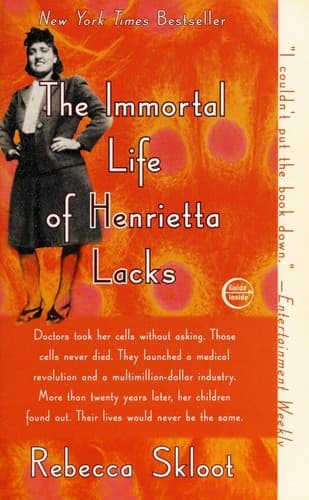
In 1951, a poor Black tobacco farmer named Henrietta Lacks was treated for cervical cancer at Johns Hopkins Hospital, and her cancer cells, taken without her knowledge or consent, became the first human cells to survive and multiply indefinitely in a laboratory. Known as HeLa cells, they became one of the most important tools in medical research, contributing to the polio vaccine, gene mapping, and countless other breakthroughs, while Lacks' family remained unaware and uncompensated. Rebecca Skloot spent a decade researching and writing the book that told Henrietta's story.
Skloot wove together three narratives: the scientific history of HeLa cells and their contribution to modern medicine, the biographical story of Henrietta Lacks and her family, and the ethical questions raised by the use of human tissue without consent, and the intersection of these three threads creates a book that is simultaneously a science story, a family portrait, and a moral argument. The Lacks family's experience, discovering decades later that their mother's cells were being bought and sold by laboratories while they could not afford health insurance, is a microcosm of racial inequality in American medicine. Skloot's relationship with Deborah Lacks, Henrietta's daughter, provides the book's emotional center: Deborah's desperate need to understand what happened to her mother and what the cells meant gives the scientific narrative a human urgency that transforms it from journalism into literature. The book raised questions about informed consent, the ownership of biological materials, and the racial dimensions of medical research that led to policy changes at the National Institutes of Health.
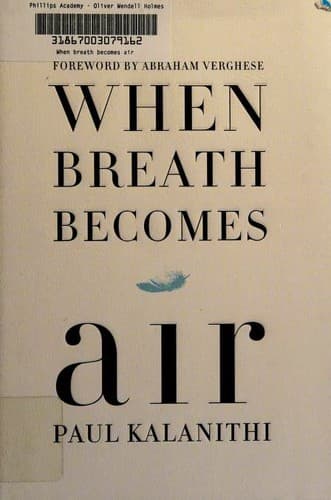
When Breath Becomes Air
(2016)A neurosurgeon on the verge of completing his residency is diagnosed with stage IV lung cancer at age thirty-six, and in the months that remain, he writes a memoir that moves between his early fascination with literature and meaning, his decision to pursue medicine, his experience of being a doctor who becomes a patient, and his confrontation with the question that drove both his vocations: what makes a life worth living? Paul Kalanithi wrote one of the most moving books about mortality ever published.
Kalanithi brought two rare qualifications to writing about dying: a literary education (he studied English literature at Stanford and Cambridge before medical school) that gave him the language to articulate experiences that most people find inexpressible, and a neurosurgeon's intimate knowledge of the brain and body that prevented him from retreating into platitudes. His description of the moment when the CT scan reveals his cancer, and he shifts from being the doctor reading the scan to the patient whose scan it is, is one of the most precisely rendered transitions in memoir. The book does not offer comfort or wisdom about death; instead, it documents a man thinking clearly and beautifully under the most extreme pressure, making decisions about what to do with his remaining time (continue operating, start a family, write) that are neither heroic nor despairing but simply, achingly human. The epilogue, written by his wife Lucy after his death, provides the emotional completion that the memoir itself, by definition, could not.
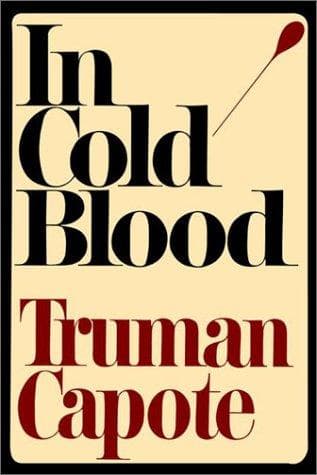
In Cold Blood
(1966)On November 15, 1959, two drifters entered a farmhouse in Holcomb, Kansas, and murdered four members of the Clutter family for a few dollars and a radio. Truman Capote spent six years researching and writing his account of the crime, the investigation, the capture, the trial, and the execution, creating a work that he called a 'nonfiction novel' and that remains the undisputed masterpiece of the true crime genre.
Capote invented a form: he applied the techniques of literary fiction (scene construction, dialogue, interior monologue, symbolic imagery) to a factual narrative, and the result is a book that reads like a novel but carries the weight of documentary truth. His portrait of the Clutter family, built through interviews with their neighbors and friends, creates such a vivid sense of the victims' lives that their murders register not as true crime sensationalism but as genuine tragedy. The dual portrait of the killers, particularly Perry Smith, whom Capote came to know intimately over the course of years, raises profound questions about the relationship between childhood trauma, mental illness, and violence, and Capote's sympathy for Smith, which is evident without being exculpatory, complicates the reader's moral response. The execution scene, described with devastating precision, forces the reader to confront the reality of capital punishment with an immediacy that abstract arguments about the death penalty rarely achieve. The book established true crime as a legitimate literary genre.
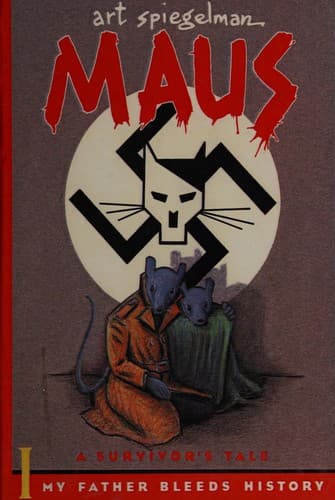
Maus
(1986)A cartoonist interviews his father about surviving the Holocaust, depicting Jews as mice, Nazis as cats, Poles as pigs, and Americans as dogs, and the result is both one of the most powerful depictions of the Holocaust ever created and one of the most honest portraits of a difficult parent-child relationship in any medium. Art Spiegelman proved that comics could address the most serious subjects in literature.
Spiegelman's animal metaphor does something paradoxical: by abstracting the victims and perpetrators into mice and cats, he makes the horror more rather than less accessible, because the simple, expressive drawings bypass the defenses that realistic photography can trigger and reach an emotional register that is almost childlike in its directness. The dual narrative, alternating between Vladek's wartime survival and Art's present-day struggle to record his father's story, creates a meditation on how trauma transmits across generations: Vladek's experiences made him the difficult, miserly, prejudiced man Art grew up with, and Art's guilt about resenting his father while asking him to relive his worst memories is handled with painful honesty. The formal innovations, including a chapter called 'Prisoner on the Hell Planet' drawn in an expressionist style that ruptures the animal metaphor, demonstrate that Spiegelman was not merely telling a story but interrogating the very possibility of representing the Holocaust. The book won a special Pulitzer Prize in 1992, the first graphic novel to receive a Pulitzer in any category.
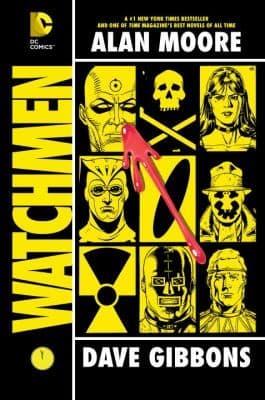
Watchmen
(1986)In an alternate 1985 where Richard Nixon is still president and the world is on the brink of nuclear war, costumed vigilantes have been outlawed, and a retired group of former heroes is drawn back together when one of their number is murdered. The investigation reveals a conspiracy that forces each character to confront the gap between heroic ideals and human frailty. Alan Moore and Dave Gibbons deconstructed the superhero genre and created one of the most ambitious works of fiction in any medium.
Moore and Gibbons used the superhero genre to ask questions about power, morality, and human nature that the genre had previously avoided: what kind of person would actually put on a costume and fight crime? Their answers (a fascist, a sociopath, a narcissist, a neurotic, and a god who has lost interest in humanity) are both devastating critique and genuine character study. The structure is extraordinary: nine-panel grids create a visual rhythm that controls pacing with the precision of a metronome, and recurring motifs (the smiley face, the doomsday clock, the recurring image of a blood-spattered badge) create a symbolic density that rewards rereading. Dr. Manhattan, the only character with actual superpowers, experiences all moments simultaneously and has detached from human concerns, making him the most frighteningly plausible depiction of what godlike power would actually do to a human mind. Ozymandias's climactic moral choice, and the reader's inability to dismiss his reasoning, is one of the great ethical provocations in modern fiction. The book is regularly cited alongside novels by readers who have never picked up another comic.
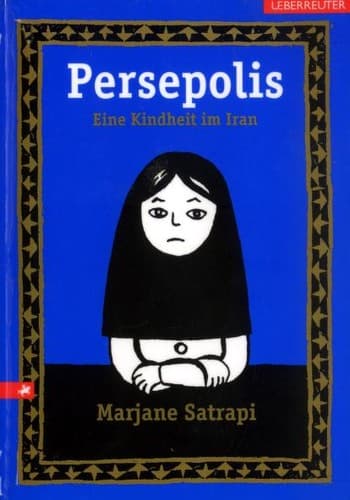
Persepolis
(2000)Marjane Satrapi tells the story of growing up in Tehran during the Islamic Revolution and the Iran-Iraq War, from a childhood of protest and punk rock under the Shah's fall to adolescence in Vienna as an exile, and back to Iran as a young adult trying to reconcile her Western-influenced identity with her Iranian heritage. The stark black and white art strips away everything except the emotional essentials.
Satrapi's decision to tell a story of revolution, war, and exile in simple black and white drawings was a formal choice of profound effectiveness: the clean lines and flat shapes force the reader to fill in the emotional complexity that realistic art would provide automatically, creating an engagement that is active rather than passive. Her childhood perspective on the Revolution is invaluable because it captures the excitement, confusion, and terror of political upheaval without the retrospective tidiness of adult analysis: young Marjane wants to be a revolutionary and a prophet, wears a punk bracelet under her veil, and processes her uncle's execution with the incomprehension of a child who has not yet learned to separate personal loss from political conviction. The memoir's honesty about exile is equally powerful: Satrapi's years in Vienna are marked by loneliness, failed relationships, and a drug-fueled depression that is presented without self-pity. The two-volume structure (Persepolis and Persepolis 2) creates a complete portrait of a woman caught between cultures, between political ideologies, and between the person her family wants her to be and the person she is becoming.

Fun Home
(2006)Alison Bechdel examines her relationship with her father, a closeted gay man who ran a funeral home, taught high school English, and meticulously restored their Victorian house, and who died (probably by suicide) four months after Alison came out as a lesbian. The memoir is structured around literary references, particularly James Joyce and Marcel Proust, and uses the architecture of the family home as both a literal and metaphorical framework.
Bechdel's formal innovation was treating the graphic memoir with the structural rigor of literary criticism: each chapter is organized around a literary text (The Odyssey, The Wind in the Willows, Joyce's Portrait of the Artist, Proust's Remembrance), and these references are not decorative but functional, providing frameworks through which Bechdel makes sense of her family's secrets and her own identity. The drawing style is precise and architectural, reflecting both her father's obsession with the family house and the memoirist's need to reconstruct the past with documentary accuracy. The relationship between Alison and Bruce Bechdel is the book's emotional center: they are mirror images of each other (both gay, both literary, both obsessive), but where Alison found the courage to live openly, Bruce could not, and the memoir asks whether his death was a consequence of the closet that confined him. The panel layouts themselves carry meaning: family scenes are framed like the rooms of a house, creating the sense that every domestic space contains hidden chambers.
Saga (Volume 1)
(2012)Two soldiers from opposite sides of a galactic war fall in love and have a child, and every power in the universe wants the family dead because their very existence proves that the war's foundational hatreds are not as absolute as the governments claim. Brian K. Vaughan and Fiona Staples created a space opera about parenthood, immigration, and the radical act of choosing love over loyalty to your tribe.
Vaughan and Staples combined the epic scope of Star Wars with the emotional intimacy of a family drama, and the result is a comic that uses science fiction's freedom (alien species, faster-than-light travel, magical technology) to explore subjects that realistic fiction often handles more cautiously: interracial marriage, the refugee experience, the commodification of conflict, and the way that parenthood transforms your relationship to risk. Staples' art is lush and distinctive, blending traditional illustration with digital coloring to create alien worlds that feel simultaneously exotic and lived-in, and her character designs (Marko's ram horns, Alana's wings, the spider-bodied bounty hunter The Will) are instantly iconic. The narration by Hazel, the couple's daughter, looking back from an unspecified future, creates a tension between the urgency of the present-tense adventure and the retrospective knowledge that whatever happens, the narrator survived to tell it. The series' willingness to depict sex, birth, breastfeeding, and the mundane challenges of keeping a baby alive during a space chase gives it a physical reality that most science fiction avoids.
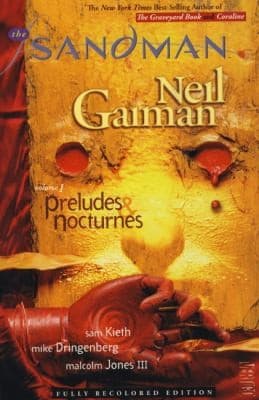
Dream, one of the seven Endless (primal beings who embody fundamental aspects of existence), is captured by an occultist in 1916 and imprisoned for seventy-two years. Upon his escape, he must recover his tools of office and rebuild his kingdom, the Dreaming, and his journey takes him from Hell to a diner where a madman uses one of Dream's artifacts to destroy a room full of ordinary people. Neil Gaiman began an epic that would span mythology, literature, and the outer boundaries of what comic books could achieve.
Gaiman took a moribund DC Comics character (the Sandman had been a minor superhero) and reimagined him as an entity of cosmic significance, using the framework of a horror comic to explore mythology, literature, and the nature of storytelling itself. The first volume establishes the tone: each issue shifts genre (horror, fantasy, superhero, psychological thriller) while maintaining a consistent vision of a universe in which stories are the fundamental fabric of reality. The diner issue (issue 6, '24 Hours'), in which a villain slowly destroys the lives of a group of strangers using Dream's ruby, is one of the most disturbing single issues in comic book history, a masterclass in psychological horror that demonstrates Gaiman's willingness to confront genuine darkness. The series, which ran for seventy-five issues, grew into one of the most ambitious and literary works in the medium, drawing on sources from Shakespeare to Japanese mythology to African American folklore, and the first volume is the gateway to that achievement.
A lonely, socially paralyzed middle-aged man receives a letter from the father who abandoned him as a child and travels to Michigan to meet him, and the story interweaves his present-day awkwardness with his grandfather's childhood in the 1890s, creating a multigenerational portrait of American masculinity, loneliness, and the inheritance of emotional damage. Chris Ware created one of the most formally innovative works of art in any medium.
Ware's formal invention is staggering: the page layouts function as architectural blueprints, diagrams, and emotional maps simultaneously, using the spatial properties of the comic book page in ways no previous artist had imagined. A single page might contain dozens of tiny panels arranged in a pattern that mirrors a building's floor plan, or a sequence might be read in multiple directions, or a cut between past and present might be indicated by the color palette shifting from warm to cold. The emotional content is rendered with devastating understatement: Jimmy is so withdrawn, so unable to connect, that his failures to communicate (with his father, with a potential love interest, with anyone) are heartbreaking precisely because they are so small. The grandfather's storyline, set against the 1893 World's Columbian Exposition in Chicago, provides historical depth and reveals the origins of the emotional repression that has been passed down through the family like a genetic disease. The book won the Guardian First Book Award in 2001, the first graphic novel to win a major literary prize in the UK.
Blankets
(2003)Craig Thompson recalls growing up in a strict fundamentalist Christian family in rural Wisconsin, his first love during a stay at a church camp, and the long winter they spent together when she invited him to visit her family, and the story becomes a meditation on faith, art, sexuality, and the passage from childhood certainty to adult ambiguity. Thompson drew every panel by hand in brush and ink, and the result is 592 pages of visually stunning graphic memoir.
Thompson's visual storytelling is extraordinary: snow blankets become bedsheets become the white of the page itself, and the flow between panels creates a reading experience that is closer to music than to prose, with rhythms of silence and crescendo that generate emotion through form rather than exposition. The central relationship between Craig and Raina is rendered with an intimacy and specificity that makes their winter together feel universal: the awkward conversations, the tentative physical contact, the overwhelming intensity of first love, and the quiet devastation when distance and time do what they always do. Thompson's depiction of his fundamentalist upbringing is neither hostile nor nostalgic: he shows the warmth and community of the church alongside the guilt, fear, and intellectual suffocation it produced, and Craig's gradual loss of faith is presented as both liberation and genuine loss. The book's length is essential to its effect; at 592 pages, it replicates the expansive, unending quality of a Wisconsin winter and of the adolescent experience of time.
March (Trilogy)
(2013)Congressman John Lewis tells the story of his involvement in the civil rights movement, from his childhood on an Alabama sharecropping farm through the Nashville sit-ins, the Freedom Rides, the March on Washington, Bloody Sunday at the Edmund Pettus Bridge, and the passage of the Voting Rights Act, drawing on his own experience as one of the Big Six leaders of the movement. Andrew Aydin co-wrote and Nate Powell illustrated a graphic memoir that makes history vivid and urgent.
Lewis's decision to tell his story in graphic novel form was inspired by a 1957 comic book called 'Martin Luther King and the Montgomery Story' that influenced his own decision to join the movement, and March continues that tradition of using sequential art to make political history accessible to young readers. Powell's art, rendered in dramatic black and white with expressionistic brushwork, captures both the quotidian details of organizing (the training sessions for nonviolent protest, the careful planning of sit-ins) and the explosive violence of the state's response (fire hoses, police dogs, beatings). Lewis's narration, framed by the morning of Barack Obama's inauguration in 2009, gives the trilogy a narrative arc that connects the movement's sacrifices to their eventual political achievement. The trilogy won the National Book Award for Young People's Literature, the first graphic novel to win the prize, and its publication during the Black Lives Matter era gave it additional relevance as a document of an earlier generation's struggle for racial justice.
A Contract with God
(1978)Four interconnected stories set in a 1930s Bronx tenement building explore the lives of Jewish immigrants and their neighbors: a pious man who loses his faith after the death of his adopted daughter, a street singer who gains and loses everything, a predatory superintendent who meets his match, and a group of summer vacationers whose holiday reveals their pretensions and desires. Will Eisner coined the term 'graphic novel' with this pioneering work.
Eisner, who had been creating comics since the 1930s and is considered one of the founding fathers of the American comic book, returned to the medium at age sixty-one with a work that deliberately positioned itself as literature rather than entertainment. His expressionistic ink wash drawings, which use rain, shadow, and architectural detail to create an atmosphere of urban melancholy, established a visual vocabulary for serious graphic storytelling that subsequent artists have drawn on for decades. The first story, 'A Contract with God,' in which Frimme Hersh, a devout man, challenges God after the death of his daughter and discovers that his covenant with the divine has no binding power, is a meditation on faith and suffering that connects the Jewish immigrant experience to the deepest questions of theodicy. Eisner's decision to call the work a 'graphic novel' was partly a marketing strategy (he wanted bookstores rather than comic shops to stock it), but the term stuck and transformed the industry by giving creators and readers a vocabulary for comics that aspire to literary seriousness.
Best Classic Books and Movies for Adults — The Essential Canon
The definitive list of classic books every adult should read and must-watch movies of all time. From literary masterpieces like “One Hundred Years of Solitude” and “Beloved” to cinematic landmarks like “The Godfather” and “2001: A Space Odyssey,” these are the works that define human storytelling at its finest.