Tweens
Ages 11–13
Deeper stories for maturing minds and tastes
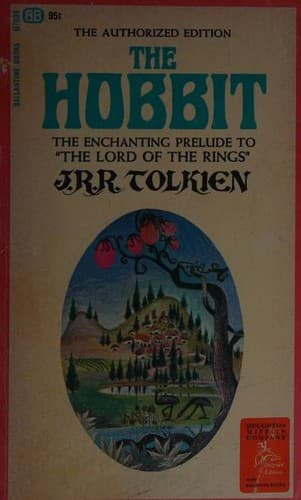
The Hobbit
(1937)A comfort-loving hobbit is swept out of his cozy hole and into an epic quest to reclaim a mountain full of treasure from a dragon. Tolkien's prose shifts from warm and funny to genuinely thrilling as Bilbo discovers courage he never knew he had. The riddle contest with Gollum alone is worth the entire journey.
J.R.R. Tolkien essentially invented the modern fantasy quest with this book, and every dragon, dwarf, and magical ring in popular culture owes it a debt. The genius of the story is its protagonist: Bilbo is not a warrior or a chosen one, just a fussy little homebody who rises to the occasion, which makes his bravery feel earned rather than destined. Tolkien's world-building, from the songs the dwarves sing in Bilbo's kitchen to the desolation of Smaug's lair, creates a place so detailed it feels like history rather than invention. The riddle scene in Gollum's cave is one of the most tense and perfectly constructed scenes in all of children's literature, a mental duel where the stakes feel life or death because they are.
The Call of the Wild
(1903)A pampered dog named Buck is stolen from a California estate and thrown into the brutal world of Yukon sled teams during the gold rush. London writes with raw, muscular energy that puts you right in the frozen wilderness alongside Buck as he discovers the ancient instincts buried beneath his domesticated life. This is a survival story that grabs you by the scruff and never lets go.
Jack London wrote this in just thirty days, and that furious energy pulses through every page. The book works on two levels simultaneously: it is a gripping adventure about a dog learning to survive in the wild, and it is a philosophical meditation on the thin line between civilization and savagery. London's descriptions of the Yukon landscape are so vivid and physical that you can feel the cold seeping through the pages. Buck's transformation from house pet to pack leader mirrors something deep in human psychology, which is why the book resonates with readers who have never seen snow, let alone a sled dog.
Holes
(1998)Stanley Yelnats is sent to a brutal juvenile detention camp in the Texas desert where boys spend every day digging holes in a dried-up lake bed, supposedly to build character. The real reason is far more sinister, and unraveling it means untangling a mystery that stretches back over a hundred years across three connected storylines. Sachar makes the puzzle pieces click together with the precision of a Swiss watch.
Louis Sachar weaves together three separate timelines spanning more than a century, and the way each thread connects to the others is so clever that rereading the book reveals layers you missed entirely the first time. The story tackles heavy themes like systemic injustice, racism, and the cycles of poverty, yet it does so through a plot so entertaining that the medicine goes down without readers even noticing. Stanley's friendship with Zero, the quietest and most overlooked boy at camp, becomes the emotional core of the book, showing how genuine human connection can break curses both literal and figurative. The Newbery committee recognized what readers already knew: this is one of those rare books that works perfectly for every kind of reader.
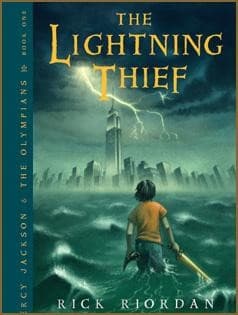
Twelve-year-old Percy Jackson discovers he is the son of Poseidon and gets swept into a quest to prevent a war among the Greek gods, who are very much alive and living in modern America. Riordan writes action scenes with the pace of a blockbuster movie and cracks jokes that land perfectly even when monsters are attacking. The Greek myths come alive in ways that make you want to learn more about the originals.
Rick Riordan originally created Percy as bedtime stories for his son, who has ADHD and dyslexia, and he made those traits into Percy's superpowers, reframing them as signs of a demigod brain wired for ancient Greek and combat reflexes. This was revolutionary in children's literature: a hero whose learning differences are genuinely presented as strengths rather than obstacles to overcome. Riordan's deep knowledge of Greek mythology shines through every page, and he has a gift for finding the humor and absurdity in ancient stories without ever making them feel silly. The book launched a franchise that has brought classical mythology to millions of kids who might never have encountered it otherwise, and teachers regularly report that it is the single most effective gateway to getting reluctant readers hooked.
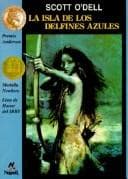
A twelve-year-old girl named Karana is stranded alone on a remote Pacific island and must learn to survive entirely on her own, building shelter, hunting food, and finding companionship with the wild animals around her. O'Dell writes with quiet, precise beauty about the rhythms of nature and the daily work of staying alive. The loneliness Karana endures makes her small triumphs feel enormous.
Scott O'Dell based this on the true story of Juana Maria, a Nicoleno woman who lived alone on San Nicolas Island off the California coast for eighteen years. The book stands apart from other survival stories because it is not about conquering nature but about learning to live within it, as Karana's relationship with the island shifts from adversary to home. O'Dell's prose is spare and elegant, trusting young readers to appreciate silence and solitude as meaningful experiences rather than problems to be solved. The Newbery Medal it received in 1961 recognized a book that treated a young Indigenous girl's intelligence and resilience with a seriousness that was rare for its era.
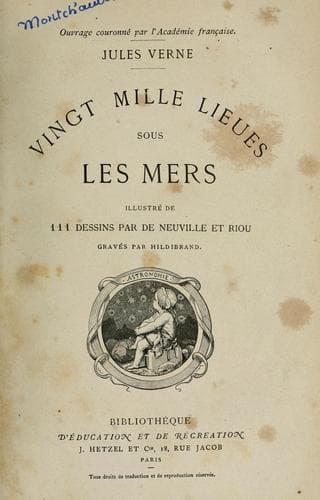
Captain Nemo, a brilliant and mysterious renegade, takes his unwilling passengers on an extraordinary submarine voyage through the world's oceans aboard the Nautilus. Verne fills every chapter with wonders: underwater forests, sunken cities, giant squids, and the frozen Antarctic. The sheer imagination on display here is staggering for a book written before submarines even existed.
Jules Verne predicted submarine technology, scuba diving equipment, and underwater exploration with astonishing accuracy decades before any of it existed, earning him a legitimate claim as the father of science fiction. Captain Nemo is one of literature's great complex figures, a man who has rejected human civilization entirely and built his own world beneath the waves, both noble in his love of the ocean and terrifying in his hatred of the surface world. Verne's detailed descriptions of marine life and ocean geography are so precise that oceanographers have noted their scientific accuracy. The novel asks questions about technology and power that feel more relevant now than they did in 1870, as humanity continues to wrestle with how to use its most powerful inventions.
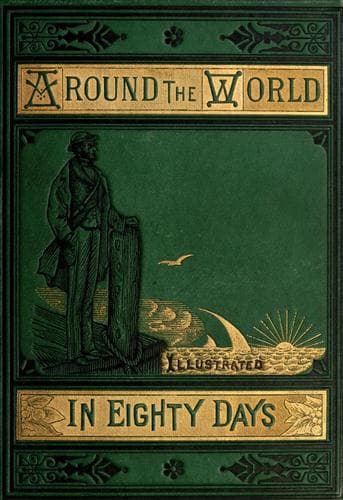
The unflappable Phileas Fogg bets his entire fortune that he can circle the globe in eighty days, using every mode of transport available in 1872, from steamships to elephants. His loyal valet Passepartout provides comic relief while a dogged detective pursues them, convinced Fogg is a bank robber. The pacing is relentless, and every delay and near miss keeps you turning pages.
Verne originally serialized this novel in a newspaper, and readers followed Fogg's journey with the same breathless excitement as a modern audience binge-watching a series, with some even placing real bets on whether the fictional character would make it. The book is a masterclass in pacing, giving readers just enough breathing room between crises to appreciate the exotic locations before the next disaster strikes. Fogg himself is a fascinating character study: a man so rigidly precise and emotionally controlled that the question of the novel is not just whether he will make it around the world, but whether the journey will crack his shell and reveal a human being underneath. The famous twist ending, which hinges on a detail about time zones, still catches first-time readers off guard even though the concept is well known today.
The Phantom of the Opera
(1910)A disfigured musical genius haunts the labyrinthine cellars beneath the Paris Opera House, obsessed with a young soprano named Christine whose voice he has trained from the shadows. Leroux writes with gothic intensity, layering mystery upon mystery as the Phantom's world of underground lakes and hidden passages slowly reveals itself. The atmosphere is so thick you can practically hear the organ music.
Gaston Leroux was a journalist who actually explored the Paris Opera House's underground lake and massive cellars, and that firsthand knowledge gives the novel an eerie authenticity that pure invention could never achieve. The Phantom, Erik, is one of fiction's great tragic figures: a man whose genius and sensitivity are trapped behind a face so horrifying that the world rejected him from birth, driving him into literal and emotional darkness. Leroux structures the novel as a faux investigation, presenting himself as a reporter piecing together the "true" events, which gives the story an unsettling documentary quality. The book inspired the longest-running musical in Broadway history, but the original novel is darker, stranger, and more psychologically complex than any adaptation.
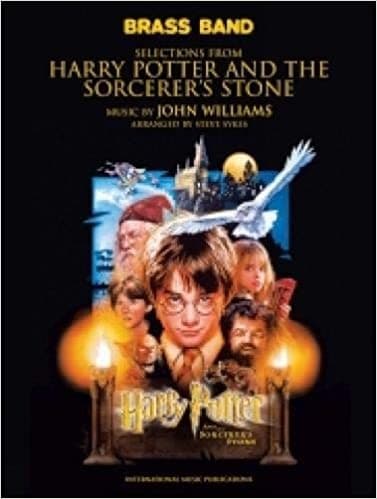
An orphaned boy living in a cupboard under the stairs discovers he is famous in a hidden magical world and receives an invitation to attend Hogwarts School of Witchcraft and Wizardry. Rowling builds her wizarding world with such warmth and detail that readers feel homesick for a place they have never been. From the Sorting Hat to Quidditch to Every Flavor Beans, every page offers something to delight in.
J.K. Rowling's series turned an entire generation into devoted readers, with children lining up at midnight for a book release, something that had never happened on that scale before. The first novel works as a nearly perfect introduction to a richly imagined world, balancing wonder and danger in a way that lets younger readers feel thrilled without being overwhelmed. Rowling's greatest structural achievement is making Hogwarts feel like a real school with real classes and schedules, grounding the fantasy in a recognizable routine that makes the magical elements feel more believable. The mystery at the book's center is genuinely well constructed, with clues planted fairly throughout and a resolution that rewards attentive readers.
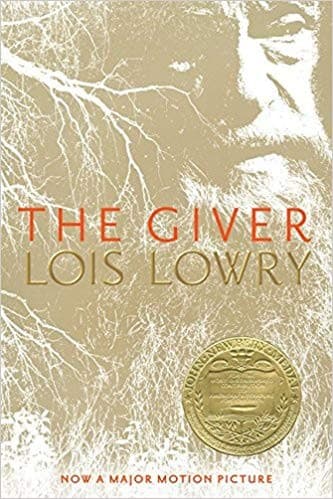
The Giver
(1993)Jonas lives in a seemingly perfect community where there is no pain, no conflict, and no choice, until he is assigned the role of Receiver of Memory and begins to see what his society has sacrificed in exchange for order. Lowry reveals the truth gradually, and the mounting horror of what "Sameness" really means is one of the most powerful reading experiences in children's literature. This is a book that changes how you think about freedom.
Lois Lowry managed to write a dystopian novel for young readers that is deeply unsettling without ever being gratuitous, trusting her audience to grasp implications rather than spelling out every horror. The genius of the structure is how it mirrors Jonas's own awakening: the early chapters feel flat and colorless on purpose, and as Jonas receives memories of music, color, and love, the prose itself seems to come alive. The ambiguous ending sparked fierce debates in classrooms across the country and taught an entire generation of readers that not every story ties up neatly. The book preceded the massive young adult dystopia trend by nearly two decades, and its restraint and subtlety still set it apart from imitators.
The Golden Compass
(1995)In a world where every person's soul walks beside them in animal form, a fierce and resourceful girl named Lyra sets out on a dangerous journey to the frozen North to rescue kidnapped children and uncover a conspiracy that reaches into the highest levels of power. Pullman writes action and atmosphere with equal skill, from the glittering spires of Oxford to the terrifying laboratories of Bolvangar. The armored bears alone are worth the price of admission.
Philip Pullman built one of the most original fantasy worlds in literature, where the concept of daemons, external animal manifestations of the human soul, is such an intuitive and emotionally resonant idea that readers finish the book wishing they had one. Lyra is a magnificently complicated heroine: a compulsive liar, a fierce friend, and a natural leader whose rough edges are never sanded down for the sake of likability. The novel grapples with enormous philosophical questions about consciousness, authority, and free will, trusting young readers to engage with ideas that many authors would consider too complex for the audience. Pullman's prose has a precision and richness that rewards careful reading, with every scene pulling double duty as both thrilling adventure and deeper exploration of the book's themes.
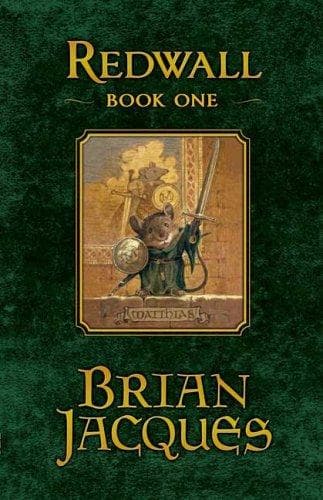
Redwall
(1986)A young mouse named Matthias must find the legendary sword of Martin the Warrior to defend the peaceful Redwall Abbey against Cluny the Scourge, a fearsome one-eyed rat warlord leading an army of vermin. Jacques fills the book with lavish descriptions of feasts, grand quests, riddles to solve, and battle scenes that crackle with energy. The abbey feels like a place you could live in, with its warm kitchens, ancient tapestries, and hidden passages.
Brian Jacques created an entire fantasy civilization populated by woodland creatures, with its own history, legends, songs, and an almost absurd devotion to describing food that makes readers genuinely hungry. Jacques was a milkman, truck driver, and longshoreman before he became an author, and he originally wrote Redwall stories for the students at the Royal Wavertree School for the Blind in Liverpool, which explains why his descriptions are so richly sensory and detailed. The clear moral framework of the Redwall world, where mice and otters and badgers defend their home against rats and weasels, gives young readers a satisfying good-versus-evil narrative without oversimplifying the emotions involved. The series eventually spanned twenty-two books, but the first novel remains the most beloved because Matthias's journey from shy novice to abbey champion is so perfectly paced.
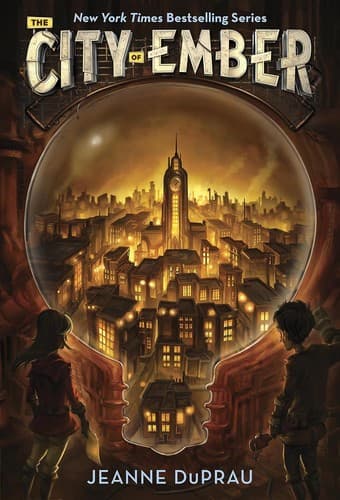
The City of Ember
(2003)The city of Ember was built deep underground as a refuge for humanity, with supplies meant to last exactly 200 years, and now the lights that keep the city alive are flickering out. Twelve-year-old Lina and her friend Doon discover fragments of instructions left by the original builders and race to decode them before the last generator fails. DuPrau creates an atmosphere of creeping dread as the blackouts grow longer and the food supplies dwindle.
Jeanne DuPrau's debut novel takes the classic dystopian setup and strips it down to its most elemental form: the lights are going out, and no one knows what lies above. The worldbuilding is remarkable in its specificity, from the way Ember assigns jobs by lottery on Assignment Day to the carefully rationed canned goods that are all that remain of the Builders' original provisions. Lina and Doon are compelling because their curiosity is genuine and their fear is real; they are not chosen ones fulfilling prophecy, just observant kids who notice things the adults have stopped questioning. The novel works as both a page-turning adventure and a meditation on what happens when a society becomes so dependent on its infrastructure that it forgets how to think about alternatives.
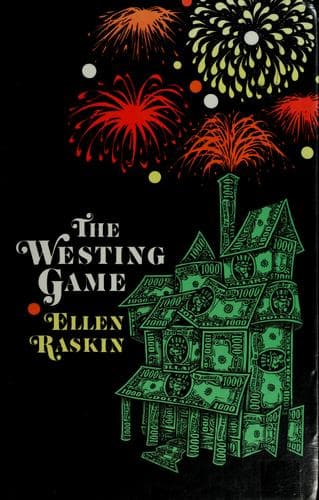
The Westing Game
(1978)Sixteen people are named as potential heirs to the fortune of eccentric millionaire Sam Westing, and to claim the inheritance, they must solve the puzzle of who among them is the murderer. Raskin parcels out clues with fiendish precision, pairing the heirs into teams and feeding each pair different information so that no one has the full picture. Rereading the book after you know the answer is almost more fun than reading it the first time.
Ellen Raskin constructed one of the most intricately plotted puzzles in all of literature, not just children's literature, and the level of craft involved becomes staggering once you realize how carefully every name, every detail, and every throwaway line was placed. The sixteen characters are drawn from different races, ages, and economic backgrounds, and Raskin uses the mystery framework to explore how people's assumptions about each other lead them astray. The book rewards intelligence and attention in its readers, treating them as partners in the puzzle rather than passive observers waiting for the solution. Its Newbery Medal in 1979 recognized a book that respected young readers' capacity for complexity in a way that few authors had attempted before.
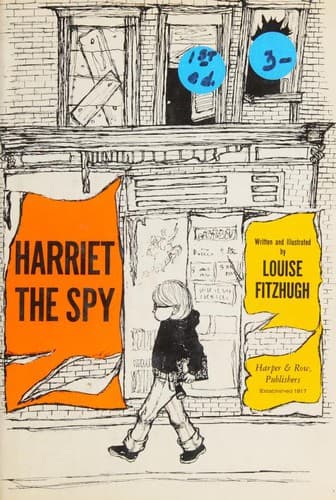
Harriet the Spy
(1964)Eleven-year-old Harriet M. Welsch prowls her Manhattan neighborhood on a daily spy route, recording brutally honest observations about everyone she sees in a private notebook, until her classmates find it and read every word. Fitzhugh writes Harriet with zero sentimentality: she is smart, prickly, obsessive, and often unkind, which makes her feel more real than most fictional children. The fallout from the notebook's discovery is social destruction on a middle school scale.
Louise Fitzhugh broke nearly every rule of children's literature in 1964 by creating a heroine who is neither nice nor particularly likable, yet utterly compelling. Harriet does not learn a tidy lesson about being kind; she learns that honesty without empathy is a weapon, and the book trusts readers to understand the difference. The New York City setting is rendered with such specificity that the book essentially invented the urban middle grade novel, treating the city as a character in its own right. Fitzhugh was decades ahead of her time in depicting a complex, flawed girl protagonist whose intelligence is both her greatest asset and the source of her problems.
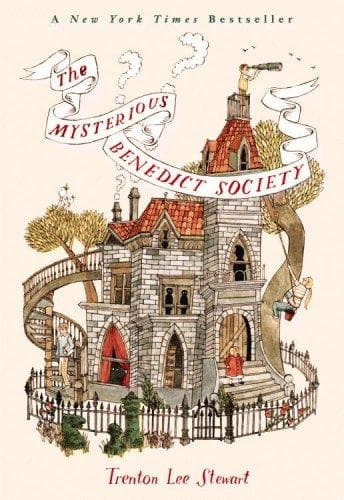
Four gifted children answer a newspaper ad reading "Are you a gifted child looking for special opportunities?" and pass a series of increasingly bizarre tests to be recruited by the eccentric Mr. Benedict for a secret mission at a sinister boarding school. Stewart fills every chapter with puzzles, codes, and brain teasers that readers can actually try to solve alongside the characters. The four kids each bring a completely different kind of intelligence to the team, and watching them complement each other is deeply satisfying.
Trenton Lee Stewart wrote a book that genuinely respects intelligence in all its forms, from Reynie's analytical reasoning to Sticky's photographic memory to Kate's physical resourcefulness to Constance's stubborn contrarianism. The villainous plot involving subliminal messages broadcast through television feels eerily prescient in an age of information overload and media manipulation. Stewart structures the book so that readers feel like a fifth member of the team, with enough information to puzzle out solutions before the characters do. The emphasis on cooperation over competition, and on different kinds of smart being equally valuable, gives the book an emotional warmth that elevates it beyond a simple puzzle adventure.
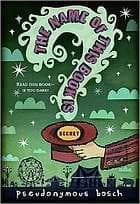
A narrator who refuses to tell you anything teams up with two kids investigating a dead magician's mysterious box, a sinister spa owner obsessed with immortality, and a secret so dangerous the author keeps trying to stop you from reading. Bosch breaks the fourth wall constantly, warning you to put the book down, redacting key details, and arguing with his own characters. The mystery itself is genuinely compelling, but the real pleasure is the narrator's escalating panic about how much he is revealing.
Pseudonymous Bosch (itself a pen name wrapped in a mystery) invented a new kind of children's novel by making the act of reading into a game between author and audience. The unreliable narrator device, borrowed from literary fiction and deployed with manic energy, turns every page into an interactive experience where readers must decide what to believe and what is misdirection. Beneath the postmodern playfulness, there is a surprisingly solid mystery involving real concepts from alchemy and synesthesia, grounded by two protagonists whose loneliness and intelligence make them easy to root for. The book proved that experimental, self-aware fiction could work for middle grade readers without ever talking down to them.
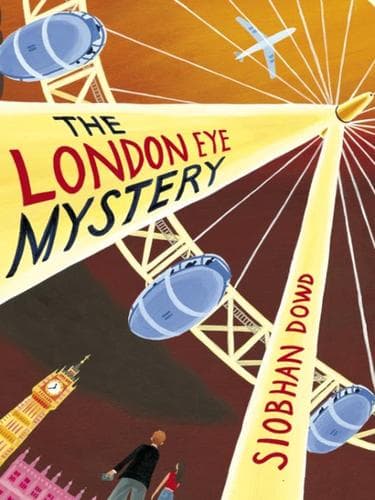
The London Eye Mystery
(2007)Ted's cousin Salim gets on the London Eye Ferris wheel and never comes off the other side, vanishing from a sealed capsule in full view of witnesses. Ted, whose brain works differently from other people's, approaches the impossible disappearance with relentless logic, cycling through eight possible theories until he cracks the case. Dowd writes Ted's neurodivergent perspective with such precision and empathy that the reader genuinely sees the world through his eyes.
Siobhan Dowd accomplished something rare: she wrote a mystery where the detective's neurodivergent mind is not a quirky superpower or a limitation to overcome, but simply a different way of processing the world that happens to be perfectly suited to this particular puzzle. Ted's narration is meticulous and literal, and Dowd uses that voice to defamiliarize London and family dynamics in ways that neurotypical narrators cannot achieve. The locked-room mystery at the book's center is genuinely well constructed, with a solution that is surprising yet entirely fair. Dowd wrote this book while battling terminal cancer, and the care and intelligence she poured into every page makes it feel like a gift to readers who think differently.
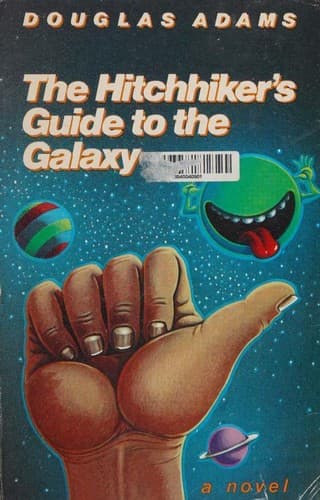
Earth is demolished to make way for a hyperspace bypass, and the last surviving human hitches a ride on a passing spaceship to discover that the universe is far stranger, funnier, and more bureaucratic than he ever imagined. Adams writes sentences so perfectly absurd that you have to read them twice, once to laugh and once to appreciate the craft. The answer to life, the universe, and everything is 42, and somehow that makes perfect sense.
Douglas Adams proved that science fiction and comedy are natural partners, using the vastness of space as a canvas for satire about bureaucracy, philosophy, and the human tendency to believe we are important. His prose style is utterly distinctive: no one before or since has combined the precision of P.G. Wodehouse with the cosmic scope of Arthur C. Clarke, producing sentences that are simultaneously hilarious and profound. The book began as a BBC radio series, and that origin shows in Adams's gift for timing, with jokes that build, pay off, and then unexpectedly pay off again pages later. Concepts from the book, from the Babel Fish to the number 42 to "Don't Panic," have become permanent fixtures in popular culture, understood even by people who have never read a word of Adams.
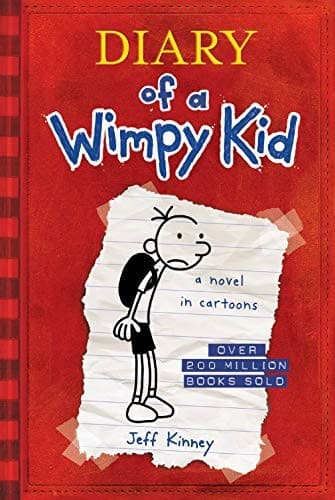
Diary of a Wimpy Kid
(2007)Greg Heffley chronicles his disastrous middle school life through diary entries and stick-figure cartoons, convinced he is destined for fame and fortune while consistently making the worst possible decisions. Kinney nails the specific, excruciating social dynamics of middle school with a precision that makes readers wince and laugh simultaneously. Greg is not a hero or a role model; he is every kid's worst impulses given a diary and a pen.
Jeff Kinney achieved something remarkable: he created a protagonist who is selfish, deluded, and frequently awful, yet so recognizably human that millions of kids see themselves in him and laugh at the recognition. The hybrid format of text and cartoon illustrations was revolutionary in children's publishing, opening the door for an entire generation of reluctant readers who did not see themselves in traditional novels. Kinney's understanding of middle school social hierarchy is almost anthropological in its accuracy, capturing the arbitrary cruelty, shifting alliances, and desperate status-seeking that define the experience. The series has sold over 250 million copies worldwide, making it one of the bestselling children's book series in history, because the humor works across cultures and languages.
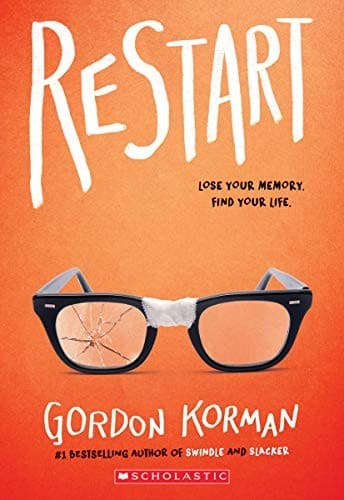
Restart
(2017)Chase Ambrose, the biggest bully in school, falls off his roof and wakes up with total amnesia, unable to remember who he was or what he did. As he rediscovers his life through the eyes of a complete stranger, he has to decide whether to become the person everyone expects him to be or someone entirely new. Korman toggles between multiple narrators, letting readers see Chase from every angle: the kids he terrorized, the friends who enabled him, and the kid he is trying to become.
Gordon Korman uses the amnesia premise not as a gimmick but as a genuine philosophical experiment, asking whether identity is something you are born with or something you choose every day. The multiple narrators are brilliantly deployed, because the reader knows more about Chase's past than Chase does, creating a tension where every kind act he performs is shadowed by the knowledge of who he used to be. Korman has written over a hundred books for young readers, and his comedy chops are sharp enough to keep the book funny even when it is dealing with the real damage bullying causes. The ending avoids easy answers about forgiveness, acknowledging that some people Chase hurt may never fully trust him again, which gives the book an emotional honesty that elevates it above a simple redemption story.
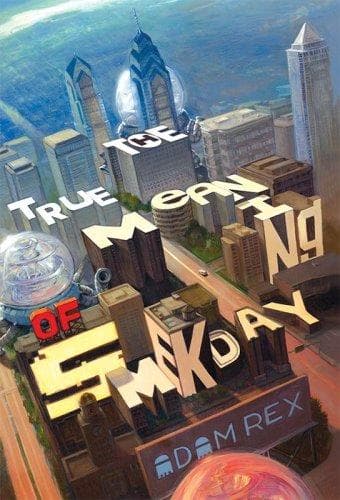
When an alien race called the Boov invades Earth and relocates all humans to Florida, eleven-year-old Gratuity "Tip" Tucci sets off on a road trip to find her abducted mother, accompanied by a fugitive alien named J.Lo who is terrible at everything except being accidentally endearing. Rex writes with manic comic energy, packing every chapter with absurd situations, sharp social commentary, and a friendship that sneaks up on you and hits you right in the heart. The book is laugh-out-loud funny on nearly every page.
Adam Rex pulled off something incredibly ambitious: he wrote a wildly entertaining alien invasion comedy that is simultaneously a pointed satire of colonialism, forced relocation, and the erasure of Indigenous cultures, drawing explicit parallels between the Boov's treatment of humans and European colonization of the Americas. Tip is a biracial girl (her mother is Barbadian) whose perspective as a person of color dealing with alien invaders adds layers of irony that most invasion stories completely miss. J.Lo, the alien, is one of the great comic creations in children's literature, mangling English in ways that are both hilarious and oddly poetic. The book trusts its young readers to understand satire and allegory without ever stopping to explain itself, which is a rare and admirable form of respect.
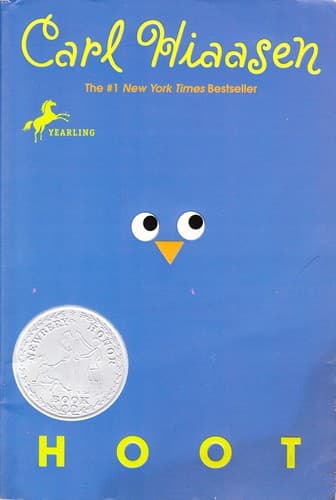
Hoot
(2002)New kid Roy Eberhardt follows a mysterious barefoot running boy into the Florida wilderness and stumbles into a battle to save a colony of endangered burrowing owls from a pancake restaurant chain that wants to bulldoze their habitat. Hiaasen, a veteran adult crime novelist, brings his signature blend of lunatic characters, righteous outrage, and sharp wit to a story that makes environmental activism feel like the most exciting thing a kid could do. The villains are deliciously incompetent, and the kids outsmarting them is deeply satisfying.
Carl Hiaasen had spent decades writing adult crime novels set in Florida before turning to young readers, and he brought all of his satirical firepower to bear on the story of corporate greed versus environmental responsibility. The book won a Newbery Honor not for being preachy about nature but for being genuinely thrilling, funny, and populated with characters who feel like they walked right out of the Florida swamp. Hiaasen's portrayal of the corrupt adults, from the bumbling construction foreman to the criminally negligent corporate executives, is so precisely observed that it teaches kids to recognize real-world hypocrisy without ever lecturing them. Mullet Fingers, the feral boy who lives in the wild and sabotages the construction site, is one of the great romantic outlaws in children's literature, a kid who has rejected the system entirely and found his own way to fight.
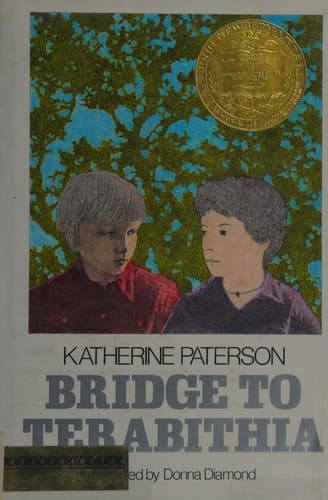
Bridge to Terabithia
(1977)Jess Aarons, a boy who pours his loneliness into drawing, forms an unlikely friendship with Leslie Burke, a fearless new girl who challenges everything he thinks he knows about himself. Together they create Terabithia, a magical kingdom in the woods across the creek, where they reign as king and queen. Paterson writes about the transformative power of imagination and friendship with such authenticity that the story feels like a memory rather than a novel.
Katherine Paterson wrote this book after her son's best friend was killed by lightning, and that raw, personal grief gives the story an emotional honesty that no amount of craft alone could produce. The first two thirds of the novel are a warm, funny, deeply observed portrait of rural childhood and the way a great friendship can crack open a kid's world, which makes what follows feel devastating rather than manipulative. Paterson refuses to soften or explain away the reality of loss, trusting young readers to sit with grief and find their own way through it, which is a profound act of respect. The Newbery committee recognized that the book does something almost no other children's novel had done: it treats death not as a plot device or a lesson but as the bewildering, unfair thing it actually is.
Tuck Everlasting
(1975)Ten-year-old Winnie Foster discovers a family who drank from a spring that granted them eternal life and must decide whether immortality is a gift or a curse. Babbitt writes with a lyrical simplicity that makes every sentence feel deliberate and necessary, like a poem that happens to tell a story. The question the book poses, whether you would choose to live forever, stays with readers long after the final page.
Natalie Babbitt took the oldest fantasy in human history, the dream of living forever, and examined it with the seriousness and care of a philosopher while wrapping it in a story accessible to a ten-year-old. The Tuck family is not glamorous or wise; they are weary, isolated people who have watched everyone they love grow old and die while they remain unchanged, and Babbitt makes their immortality feel like a prison rather than a paradise. The novel's structure is circular, mirroring its theme of cycles, opening and closing with the same August heat and the same toad at the crossroads. Babbitt's prose is among the most beautiful in all of children's literature, with passages about the wheel of life and the nature of time that read like meditation.
Number the Stars
(1989)Ten-year-old Annemarie Johansen must summon courage she did not know she had when her family undertakes a dangerous mission to smuggle her Jewish best friend Ellen out of Nazi-occupied Denmark. Lowry writes with restraint and precision, letting the terror of the occupation filter through a child's perspective where a German soldier's boots in the doorway carry the weight of an entire regime. The friendship between Annemarie and Ellen anchors the story in something personal and real.
Lois Lowry found exactly the right scope for introducing the Holocaust to young readers: a single family, a single friendship, and a single act of courage, rather than trying to convey the full scale of the horror, which would overwhelm readers of this age. The novel is based on true events; the Danish resistance really did smuggle nearly the entire Jewish population of Denmark to safety in Sweden, and Lowry grounds her fiction in that extraordinary historical reality. Annemarie's bravery is convincingly childlike; she is terrified and uncertain, not heroic in a storybook way, which makes her actions feel genuinely courageous rather than predetermined. The Newbery Medal recognized a book that handles one of history's darkest chapters with grace, honesty, and an unwavering focus on the human capacity for goodness under impossible circumstances.
The Logan family fights to hold onto their land and their dignity in Depression-era Mississippi, where the threat of racial violence is as constant as the red dust on the roads. Nine-year-old Cassie narrates with fierce intelligence, and her growing awareness of the injustice surrounding her family gives the novel its emotional engine. Taylor writes with controlled fury, making the reader feel both the warmth of the Logan family and the danger that presses in from every side.
Mildred D. Taylor drew directly from her own family's history to create the Logan family, and that personal connection gives the novel an authenticity that purely researched historical fiction rarely achieves. The book refuses to present its Black characters as victims waiting to be rescued; the Logans are landowners, strategists, and community leaders who fight for their rights with intelligence, solidarity, and an unshakeable sense of their own worth. Cassie's voice is one of the great achievements in children's literature, capturing a child's outrage at injustice with a clarity that cuts through any adult tendency to soften or rationalize what happened. The Newbery Medal recognized a book that filled a massive gap in children's literature by telling the story of the Jim Crow South from the perspective of those who endured it.
A Tree Grows in Brooklyn
(1943)Francie Nolan grows up in the tenements of early 1900s Williamsburg, Brooklyn, surrounded by poverty, a charming but alcoholic father, a tough and practical mother, and the fierce determination to make something of herself through education and imagination. Smith writes with the warmth and detail of someone remembering her own childhood, filling every chapter with the textures of a specific time and place. This is a book about how a love of reading and learning can be a lifeline when everything else is uncertain.
Betty Smith wrote from deep personal experience, having grown up in the same Brooklyn tenements she describes, and that autobiographical foundation gives the novel a specificity and emotional truth that resonate across generations. The relationship between Francie and her father Johnny, a singing waiter whose warmth and imagination cannot compensate for his alcoholism, is one of the most nuanced and heartbreaking parent-child portraits in American literature. Smith refuses to romanticize poverty; she shows its grinding daily reality alongside the moments of beauty and connection that make it survivable. The book sold 300,000 copies in its first six weeks and has never gone out of print, because the story of a smart kid fighting to rise above her circumstances speaks to something universal.
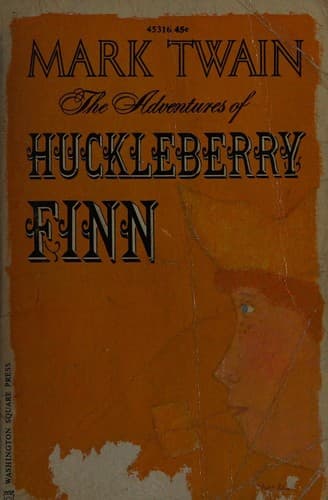
Huck Finn fakes his own death to escape his abusive father and sets off down the Mississippi River on a raft with Jim, an escaped slave, encountering con artists, feuding families, and the full spectrum of American society along the way. Twain writes in Huck's own voice, a gorgeous vernacular that captures the rhythms of speech along the river with perfect pitch. The moral heart of the book is Huck's growing realization that Jim is a full human being deserving of freedom, even as everything his society taught him says otherwise.
Ernest Hemingway famously said that all modern American literature comes from this one book, and while that is an exaggeration, it captures the way Twain's use of vernacular language and his unflinching social satire changed what American fiction could do. The central moral crisis of the novel, Huck's decision to help Jim escape slavery even though he believes he will go to hell for it, is one of the most powerful moments in literature, a child choosing compassion over every authority figure and institution in his world. Twain uses humor as a delivery system for devastating social criticism, exposing the hypocrisy of a society that considers itself civilized while enslaving human beings. The river itself becomes a character, and the passages describing dawn on the Mississippi are among the most beautiful nature writing in the English language.
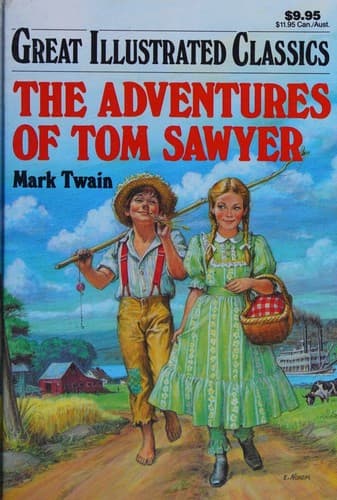
Tom Sawyer is a mischievous, imaginative boy growing up in a sleepy Missouri town along the Mississippi River, where he cons his friends into painting a fence, falls in love with Becky Thatcher, attends his own funeral, and witnesses a murder in a graveyard. Twain writes with infectious delight about the freedom and wildness of boyhood, capturing the way a child's imagination can transform a dusty small town into a kingdom of adventure. Every chapter feels like a new escapade that you wish you had lived yourself.
Mark Twain drew heavily from his own childhood in Hannibal, Missouri, to create the town of St. Petersburg, and that autobiographical foundation gives every scene the texture and warmth of genuine memory. The fence-painting scene is one of the most famous episodes in American literature because it captures something true about human psychology: people want what they cannot have, and the perception of value is as powerful as value itself. Twain's humor is generous and observational rather than cruel, finding comedy in the gap between how children see themselves, as dashing pirates and noble outlaws, and how the adult world actually works around them. The book essentially invented the American childhood adventure story, and its influence can be traced through generations of fiction, from Booth Tarkington to Stand by Me.
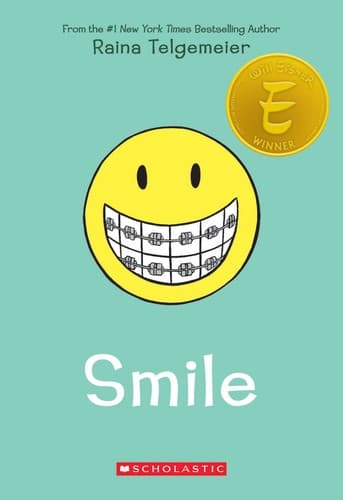
Smile
(2010)Raina falls face-first onto the pavement in sixth grade and knocks out her two front teeth, beginning a years-long dental nightmare of surgeries, braces, headgear, and fake teeth that coincides with the already brutal social landscape of middle school. Telgemeier draws with clean, expressive lines that capture every cringe, every humiliation, and every small victory with equal emotional precision. The book is compulsively readable and painfully relatable.
Raina Telgemeier almost single-handedly launched the modern middle grade graphic novel boom, proving to publishers that autobiographical comics for young readers could sell in enormous numbers and connect with audiences who had never picked up a graphic novel before. Her genius is in the details: the specific shade of embarrassment when a retainer falls out at lunch, the way friendship dynamics shift invisibly until you are suddenly on the outside, the confusing mix of dread and hope that defines every orthodontist appointment. The memoir format gives the story an emotional authority that fiction struggles to match, because readers know this actually happened to a real person who survived it and made art from it. Smile has sold over four million copies and permanently expanded what the children's book market considers commercially viable.
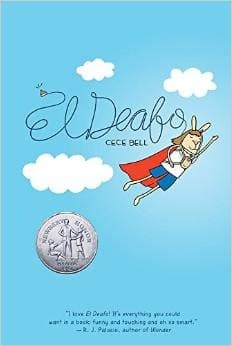
El Deafo
(2014)Cece loses most of her hearing at age four and starts school wearing a bulky hearing aid called a Phonic Ear, which she reimagines as a superpower that lets her hear things no one else can, like her teacher's voice from anywhere in the building. Bell draws all the characters as rabbits, which adds a layer of warmth and gentle humor to a story about feeling different and wanting desperately to belong. The book is funny, honest, and entirely free of self-pity.
Cece Bell transformed her childhood experience of hearing loss into a graphic memoir that is simultaneously specific to her disability and universal in its portrayal of the longing to fit in. The decision to draw characters as rabbits was inspired: the long ears become a visual metaphor for Cece's constant awareness of sound and silence, and the animal characters allow readers to focus on emotions rather than getting distracted by realistic depictions of disability aids. Bell's Phonic Ear really did allow her to hear her teacher from anywhere in the school, including the bathroom, which becomes one of the book's funniest and most humanizing running jokes. The Newbery Honor recognized a book that treats disability with neither pity nor false inspiration, simply as one part of a complicated, funny, fully realized life.
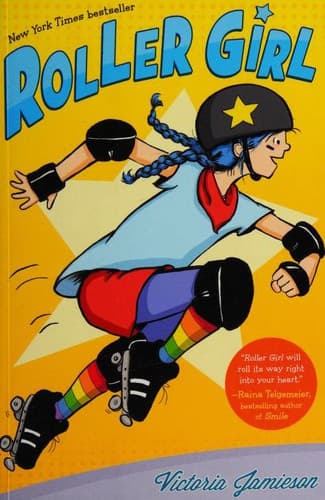
Roller Girl
(2015)Twelve-year-old Astrid falls in love with roller derby after attending a bout with her best friend Nicole, but when Nicole chooses ballet camp instead, Astrid has to navigate derby camp alone and face the terrifying possibility that she and her lifelong best friend are growing apart. Jamieson draws the roller derby scenes with kinetic energy, making you feel every hit, every fall, and every triumphant lap. The story captures that specific moment in growing up when you realize your best friend might not be your best friend forever.
Victoria Jamieson drew from her own experience as an amateur roller derby player to create action sequences that crackle with authentic energy and detail, and she uses the sport as a perfect metaphor for the bruising experience of finding your own identity separate from the people you have always defined yourself through. The friendship between Astrid and Nicole avoids the easy resolution of most children's books about growing apart; they do not become enemies, and they do not magically reconnect, but instead find a new, more honest version of their relationship that acknowledges they are becoming different people. Jamieson earned a Newbery Honor for a graphic novel that captures the specific, painful, necessary process of figuring out who you are when you stop being half of a pair. The roller derby community embraced the book as a genuine depiction of their sport's culture of empowerment and toughness.
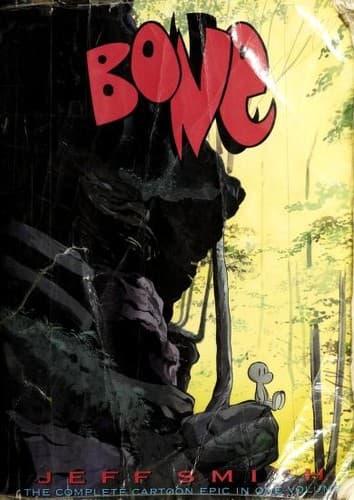
Bone: The Complete Saga
(1991)Three cartoon bone cousins, Fone Bone, Phoney Bone, and Smiley Bone, are chased out of their hometown and lost in a vast, mysterious valley populated by fearsome rat creatures, a warrior princess, dragons, and an ancient evil stirring beneath the mountains. Smith blends slapstick humor with sweeping epic fantasy, shifting between laugh-out-loud comedy and genuinely stirring adventure without ever losing its balance. Over 1,300 pages, the story builds from quirky comedy into one of the most satisfying fantasy epics in any medium.
Jeff Smith self-published the Bone series over thirteen years, maintaining complete creative control while building one of the most ambitious works in graphic novel history, a story that begins as a funny animal comic strip and gradually transforms into a Lord of the Rings scale epic without ever abandoning its sense of humor. The visual contrast between the simple, cartoonish Bone cousins and the richly detailed realistic world around them creates a unique aesthetic tension that somehow works perfectly, grounding the fantasy in recognizable comedy. Thorn's journey from farm girl to warrior queen is one of the great coming-of-age arcs in comics, and the relationship between Fone Bone and Gran'ma Ben is simultaneously hilarious and deeply moving. Smith proved that a single creator with a vision could produce a work of graphic literature that rivals anything from major publishers.
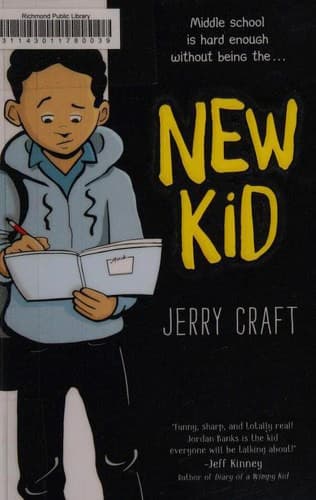
New Kid
(2019)Seventh grader Jordan Banks dreams of attending art school but is instead sent to a prestigious private academy where he is one of the few kids of color, navigating a world of microaggressions, well-meaning but clueless classmates, and the exhausting work of code-switching between school and his Washington Heights neighborhood. Craft draws with sharp, expressive detail, using the visual medium to show what Jordan cannot always say out loud. The book is funny, smart, and painfully honest about what it feels like to be the only one in the room who looks like you.
Jerry Craft became the first graphic novelist to win the Newbery Medal, and he did it with a book that does something most middle grade novels about race carefully avoid: it depicts everyday, mundane racism, the kind that is not dramatic enough for a Very Special Episode but grinds you down day after day. Craft uses the graphic novel format brilliantly, letting the art carry subtext that words alone cannot convey, such as a panel where Jordan imagines his classmates seeing him in a stereotypical way versus how he actually looks. The multiple friend groups and social dynamics in the book are drawn with the precision of someone who has observed these patterns firsthand, and Craft has spoken about basing many incidents on his own son's experiences at a similar school. The book avoids both the trap of making its white characters into villains and the equally harmful trap of suggesting that everything can be fixed with better communication, instead showing how systemic patterns persist even among well-intentioned people.
Best Classic Books and Movies for Tweens (Ages 11–13)
Books and movies for 11, 12, and 13 year oldsneed to match their growing sophistication. Our tween picks bridge the gap between children's and young adult content with must-read books for middle schoolerslike “The Hobbit” and “Harry Potter,” plus classic movies for tweenslike “Back to the Future” and “Spider-Man: Into the Spider-Verse.”