Kids
Ages 7–10
Adventure-filled classics for growing imaginations
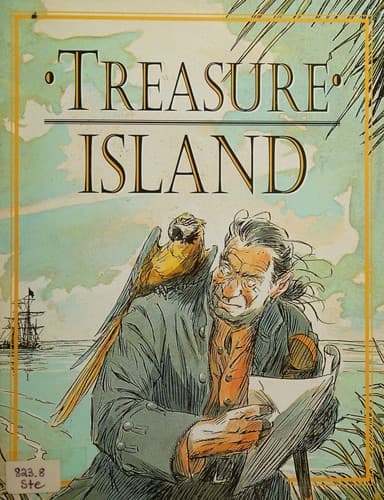
Treasure Island
(1883)A boy discovers a pirate's treasure map tucked inside a dead sailor's sea chest, and before he knows it, he's aboard a ship full of scheming cutthroats sailing for a distant island. The tension ratchets up with every chapter as alliances shift and betrayals lurk around every corner. This is the book that makes you want to unfold a map, grab a compass, and set sail.
Robert Louis Stevenson essentially invented the pirate adventure as we know it. Long John Silver is one of fiction's great villains precisely because he's so likable; he's charming, clever, and genuinely fond of young Jim Hawkins, which makes his treachery feel personal rather than cartoonish. Stevenson wrote the novel at a breakneck pace, originally serializing it in a children's magazine, and that urgency shows in the plotting. Every chapter ends on a hook that pulls you forward. The book also pioneered the idea of a child narrator thrust into a dangerous adult world, a template that adventure fiction has followed ever since. Nearly 150 years later, every pirate story exists in its shadow.

A family of six is shipwrecked on a lush tropical island and proceeds to build the most elaborate, inventive homestead imaginable, complete with a treehouse fortress, trained animals, and ingenious contraptions. Every chapter introduces a new problem to solve and a new corner of the island to explore. Reading it feels like being handed an unlimited construction set in paradise.
Johann David Wyss wrote this as a teaching tool for his own four sons, embedding lessons about natural history, resourcefulness, and cooperation into every adventure. The result is a book that respects children's intelligence while feeding their hunger for discovery. The family's approach to every crisis is methodical and creative: they don't just survive, they thrive, building a life that feels more appealing than the civilization they left behind. That fantasy of competence and self-sufficiency is what keeps generations of readers coming back. The novel also influenced an enormous range of survival fiction, from Verne to Paulsen, making it one of the foundational texts of the entire adventure genre.
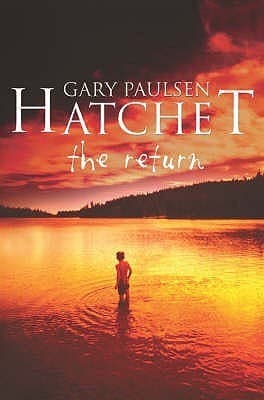
Hatchet
(1987)Thirteen-year-old Brian Robeson is stranded alone in the Canadian wilderness after a plane crash, armed with nothing but a small hatchet and his own wits. Every page is a visceral lesson in survival as Brian learns to build shelter, find food, and face down a moose and a tornado. The writing is so lean and immediate that you feel the mosquito bites and taste the raw turtle eggs.
Gary Paulsen drew directly from his own experiences living in remote wilderness to write Brian's story, and that authenticity is what separates Hatchet from other survival novels. The prose is stripped down to essentials, mirroring Brian's situation; there is no room for anything unnecessary. Paulsen understood that the real drama of survival is internal. Brian's slow transformation from a frightened city kid into someone who can read the forest like a language is compelling because it's earned through failure after failure. The scene where Brian finally manages to create fire from sparks off his hatchet is one of the most triumphant moments in children's literature. The book also handles Brian's emotional turmoil over his parents' divorce with surprising subtlety, weaving it into the survival narrative without letting it dominate.
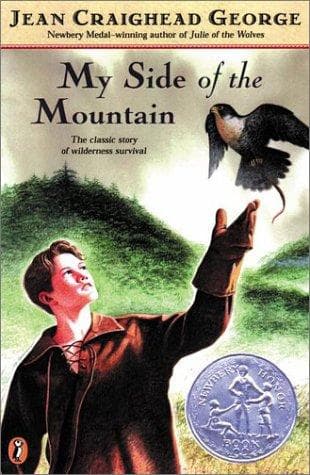
My Side of the Mountain
(1959)A boy named Sam Gribley runs away from his crowded New York City apartment to live alone on his family's abandoned land in the Catskill Mountains, where he hollows out a hemlock tree for shelter and trains a peregrine falcon named Frightful. The book reads like a field guide to self-reliance, packed with detailed descriptions of how Sam forages, hunts, and builds everything he needs from scratch. It makes wilderness living feel not just possible but deeply appealing.
Jean Craighead George was a trained naturalist, and her expertise transforms what could have been a simple runaway story into something richly educational and deeply felt. Sam's journal-style narration is calm, observational, and precise, giving readers the sense that they could follow his instructions and do this themselves. The relationship between Sam and Frightful is the emotional heart of the book, portrayed with the kind of specificity that only comes from real experience with falconry. George also resists the temptation to moralize; Sam's choice to live alone is treated with respect, and the complications that arise feel organic rather than punitive. The detailed illustrations of Sam's tools, shelters, and traps add another layer of engagement, inviting readers to study and replicate them.
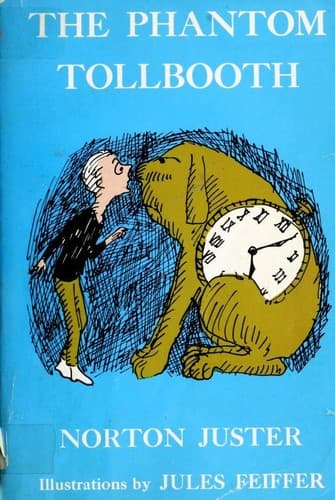
The Phantom Tollbooth
(1961)A bored boy named Milo drives a toy car through a mysterious tollbooth and finds himself in a land where words and numbers are literally at war, idioms come to life, and every destination is a pun waiting to be explored. He meets characters like the Humbug, the Spelling Bee, and the watchdog Tock as he journeys to rescue the princesses Rhyme and Reason. It's the rare book that makes learning feel like a wild, unpredictable adventure.
Norton Juster was an architect, not a professional children's author, and that outsider perspective gave him the freedom to write something genuinely original. The wordplay operates on multiple levels; young readers enjoy the surface humor while older readers catch the deeper satirical layers about education, curiosity, and the dangers of apathy. Jules Feiffer's illustrations are the perfect complement, scratchy and energetic and full of personality. The book's central argument, that boredom is a choice and the world is endlessly fascinating if you pay attention, lands without ever feeling preachy. Milo's journey through the Mountains of Ignorance to rescue Rhyme and Reason works as both a rollicking quest narrative and an allegory about the value of balanced thinking.
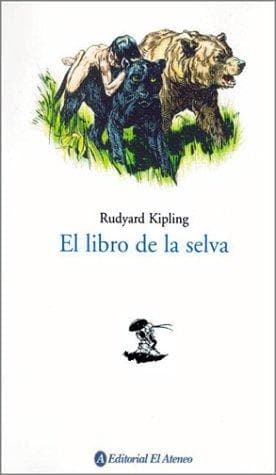
The Jungle Book
(1894)A human boy named Mowgli is raised by wolves in the jungles of India and learns the Law of the Jungle from Baloo the bear and Bagheera the panther while facing the murderous tiger Shere Khan. The stories pulse with the rhythms and dangers of the wild, from Mowgli's acceptance into the wolf pack to his final confrontation with Shere Khan. Beyond Mowgli, the collection includes standalone tales like Rikki-Tikki-Tavi, the mongoose who defends a family from cobras.
Kipling's prose has a muscular, incantatory quality that sets the book apart from gentler animal stories. The Law of the Jungle is presented as a genuine moral code, with real consequences for those who break it, giving the stories a weight that children instinctively respect. Mowgli's position between the human and animal worlds creates a tension that runs through every story; he belongs fully to neither, which makes his journey fundamentally about identity. The Rikki-Tikki-Tavi story is a masterclass in suspense, building to a climactic underground battle that rivals anything in adult fiction. Kipling also weaves Indian landscape and culture into the fabric of the stories with a vividness that transports readers completely.
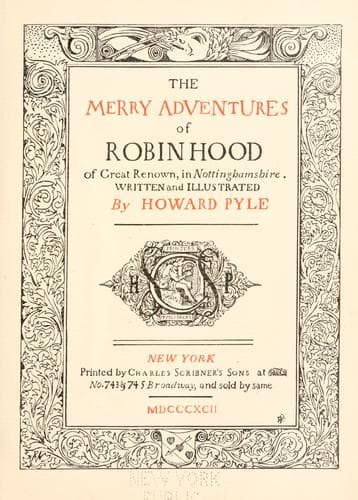
Robin Hood
(1883)Robin Hood and his Merry Men live as outlaws in Sherwood Forest, robbing the corrupt rich to help the poor, outwitting the Sheriff of Nottingham, and living by a code of honor and good fellowship. Howard Pyle's retelling brings medieval England to vivid life with archery contests, daring rescues, and feasts under the greenwood tree. Every chapter delivers a self-contained adventure that feeds into a larger, deeply satisfying saga.
Pyle took a scattered collection of medieval ballads and folk tales and shaped them into the coherent, swashbuckling narrative that became the definitive version of Robin Hood. His prose has a deliberate, archaic flavor that gives the stories the feel of legend without becoming unreadable. Pyle was also a gifted illustrator, and his pen-and-ink drawings set the visual template for Robin Hood that influenced every adaptation that followed. The character of Robin Hood as Pyle presents him, noble, generous, laughing in the face of authority, represents one of Western literature's most enduring archetypes of righteous rebellion. The stories also carry a genuine moral complexity; Robin operates outside the law, and Pyle never fully resolves the tension between justice and lawlessness.
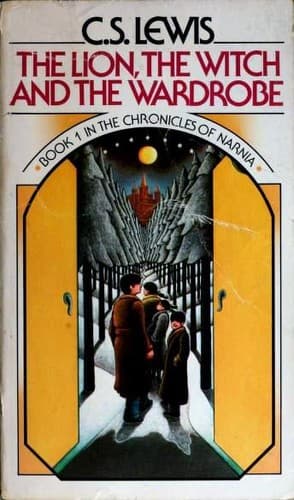
Four siblings evacuated to the English countryside during World War II discover that an old wardrobe leads to Narnia, a magical land trapped in eternal winter by the White Witch. As they journey deeper into Narnia, they meet talking animals, a prophetic beaver couple, and the great lion Aslan, who calls them to a battle that will decide the fate of the world. The story moves with the inevitability of myth while feeling as intimate as a family secret.
C.S. Lewis built Narnia from a single image that had been in his mind since he was sixteen: a faun carrying parcels and an umbrella through a snowy wood. That origin shows in the finished work, which has the clarity and strangeness of a dream. Lewis understood that children can handle moral weight, and the story's central sacrifice scene is genuinely devastating, even for readers who don't recognize its theological roots. Edmund's betrayal and redemption form one of the most psychologically honest arcs in children's literature; his motivation, petty greed for Turkish Delight, is painfully believable. The book's structure is deceptively simple, moving from the cozy domesticity of the Professor's house to the vast, dangerous landscape of Narnia with a pace that never falters.
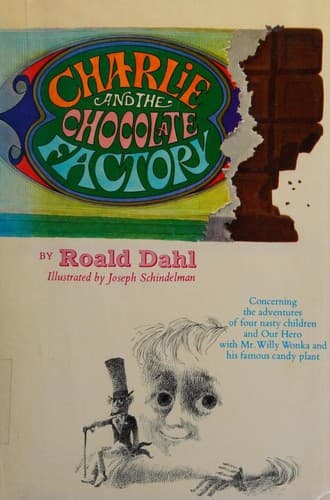
Charlie Bucket, the poorest boy in town, finds one of five Golden Tickets hidden in Wonka chocolate bars and wins a tour of the most extraordinary, secretive candy factory on Earth. Inside, Willy Wonka's inventions defy physics and good taste in equal measure while the four other children meet fates that are both hilarious and horrifying. The book crackles with anarchic energy and a gleeful willingness to punish greed, gluttony, and brattiness in the most inventive ways imaginable.
Roald Dahl had a rare gift for writing from the child's perspective without condescending, and this book is his most fully realized expression of that talent. Wonka's factory functions as a moral universe where the punishments fit the crimes with poetic precision: Augustus Gloop's gluttony sends him up the chocolate pipe, Violet Beauregarde's competitive gum-chewing turns her into a blueberry. Dahl's prose is lean, vivid, and wickedly funny, with a rhythm that makes it irresistible to read aloud. The Oompa-Loompas' moralizing songs walk a perfect line between genuine warning and satirical excess. Charlie himself is an unusual protagonist because his virtue is entirely passive; he wins by simply not being awful, which is either a gentle lesson in decency or a sly commentary on how the world actually rewards luck over merit.
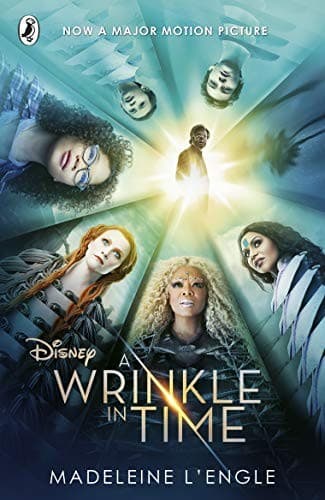
A Wrinkle in Time
(1962)Meg Murry, an awkward, angry girl who doesn't fit in at school, travels across the universe with her genius little brother Charles Wallace and her friend Calvin to rescue her physicist father from a planet controlled by a vast, evil intelligence called IT. The journey takes them through a "wrinkle" in time and space, guided by three mysterious celestial beings. It's a story that treats intelligence and nonconformity as superpowers rather than liabilities.
Madeleine L'Engle was rejected by twenty-six publishers before this book found a home, and that persistence paid off with one of the most original novels in children's literature. The book blends quantum physics, theology, and domestic family drama in a combination nobody had attempted before. Meg is a groundbreaking protagonist: she's impatient, self-doubting, and frequently angry, which makes her courage feel hard-won rather than effortless. The scene on Camazotz, where identical children bounce balls in perfect unison on identical lawns, remains one of the most chilling depictions of conformity in fiction. L'Engle trusted young readers to grapple with concepts like the tesseract and the nature of evil without dumbing them down, and the book rewards that trust by treating every reader as Meg's intellectual equal.
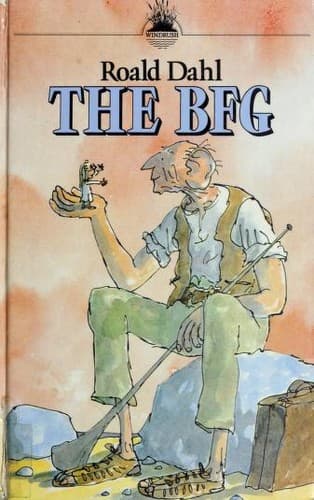
The BFG
(1982)Sophie, a young orphan, is snatched from her bed by a twenty-four-foot giant and carried off to Giant Country, where she discovers that her captor is the Big Friendly Giant, a gentle soul who catches dreams and delivers them to sleeping children. Together they must stop the other giants, monstrous brutes who gobble up human beings every night, and their plan involves the Queen of England herself. The book is tender, thrilling, and laugh-out-loud funny in equal measure.
Dahl considered The BFG his most personal book, and it shows in the warmth between Sophie and her enormous friend. The BFG's mangled, inventive language ("whizzpopping," "human beans," "delumptious") is one of Dahl's greatest creations, a complete dialect that children adopt instantly and parents find themselves using at the dinner table. The contrast between the BFG's gentleness and the other giants' savagery gives the book genuine stakes without sacrificing its playful tone. The sequence where Sophie and the BFG visit the Queen of England is comedy gold, grounded in such precise domestic detail that Buckingham Palace feels completely real. Dahl also named Sophie after his first granddaughter, and that personal connection gives the relationship between the two characters an emotional depth that transcends the book's fantastical premise.
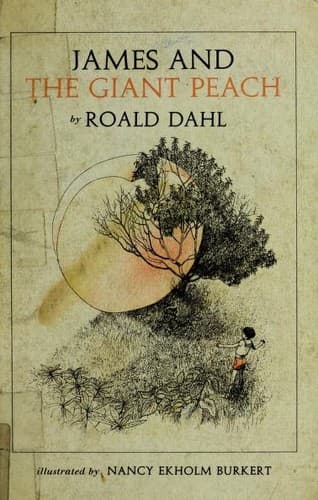
After his parents are killed by an escaped rhinoceros, young James Henry Trotter is sent to live with his two horrible aunts, Spiker and Sponge, who make his life miserable. When a mysterious old man gives James a bag of magical crocodile tongues, they accidentally transform a peach tree into a fruit the size of a house, and James crawls inside to find a crew of giant, talking insects ready for the adventure of a lifetime. The peach rolls into the sea, gets airborne via seagulls, and eventually crash-lands on the Empire State Building.
This was Dahl's first children's novel, and it already displays his signature blend of cruelty, wonder, and exuberant imagination. The aunts are memorably vile, drawn with the kind of exaggerated grotesqueness that children find both repulsive and satisfying, because the reader knows they'll get what's coming to them. Each insect aboard the peach has a distinct personality and purpose; the Centipede's bravado, the Earthworm's anxiety, and the Ladybug's maternal warmth create a found family that James desperately needs. The book moves with dream logic, lurching from one impossible set piece to the next, but Dahl's confident narration makes it all feel inevitable. The ending, with the peach pit installed in Central Park and children climbing through it, is one of the most satisfying conclusions in children's fiction.
Alice follows a White Rabbit down a hole and tumbles into a world where the rules of logic, size, and manners have all been cheerfully abolished. She meets a hookah-smoking Caterpillar, attends a tea party that never ends, plays croquet with flamingos, and faces a queen who orders executions for everything. The book reads like a fever dream orchestrated by a brilliant mathematician who found ordinary reality insufficiently interesting.
Lewis Carroll was a mathematics lecturer at Oxford, and Wonderland is, beneath its nonsense, a sustained assault on the logical fallacies and social absurdities of Victorian England. The genius of Alice is that she remains stubbornly rational in an irrational world, which creates comedy that works for children on a surface level and for adults as satire. Carroll's invented words and poems, from "Jabberwocky" to the Mock Turtle's school curriculum (Reeling, Writhing, and Uglification), have embedded themselves permanently in the English language. The book also pioneered the concept of the portal fantasy, a child entering a magical world through an everyday object, that would later give us Narnia, Oz, and countless others. Alice herself is one of literature's great characters: curious, polite, argumentative, and never willing to accept nonsense just because an authority figure insists on it.
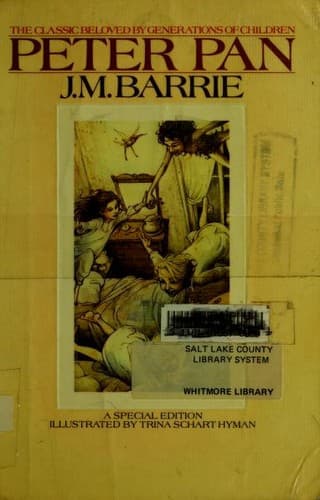
Peter Pan
(1911)Wendy, John, and Michael Darling fly to Neverland with Peter Pan, a boy who refuses to grow up, where they encounter mermaids, a tribe of Lost Boys, and the vengeful Captain Hook. The adventure is exhilarating, with sword fights, ticking crocodiles, and flights over moonlit London, but underneath it runs a bittersweet current about the cost of never growing up. It's simultaneously the most joyful and the most melancholy children's book ever written.
J.M. Barrie originally wrote Peter Pan as a play in 1904 before novelizing it, and the theatrical origin shows in the story's vivid set pieces and perfectly timed dramatic moments. Peter is a far more complex character than most adaptations suggest; he is selfish, forgetful, and casually cruel, which Barrie presents not as villainy but as the inevitable result of eternal childhood. The tension between Wendy's desire to grow up and Peter's refusal to do so gives the book an emotional depth that haunts adult readers. Barrie's prose moves between whimsy and genuine darkness with startling ease; Neverland is a place where children can be injured or killed, and the narrator acknowledges this matter-of-factly. The closing pages, in which Wendy grows up and Peter returns for her daughter instead, contain some of the most poignant writing in the English language.
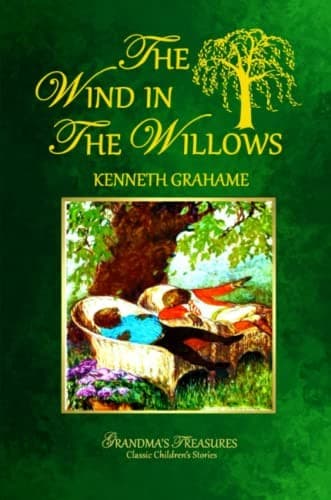
The Wind in the Willows
(1908)Mole abandons his spring cleaning, wanders up to the riverbank, and falls into friendship with Water Rat, gruff old Badger, and the magnificently reckless Mr. Toad, whose obsession with fast motorcars leads to jail, escape, and a pitched battle to reclaim his ancestral home. The book moves between cozy riverside idylls and slapstick adventure with complete ease. It's a story about friendship, home, and the quiet pleasures of messing about in boats.
Kenneth Grahame was a deeply unhappy man working as Secretary of the Bank of England when he wrote this, and the book reads as an escape into a world where friendship is reliable, nature is consoling, and even disaster can be put right with the help of loyal companions. Mr. Toad is one of the great comic characters in English literature: vain, impulsive, boastful, and so thoroughly entertaining that the reader forgives him everything. The chapter "The Piper at the Gates of Dawn" stands apart from the rest of the book as a mystical encounter with the god Pan that is unlike anything else in children's literature, touching and strange and wholly sincere. Grahame's prose style, rich, unhurried, saturated with the sights and sounds of the English countryside, rewards slow reading and rereading. The book captures something essential about the English character and landscape that no other work has matched.
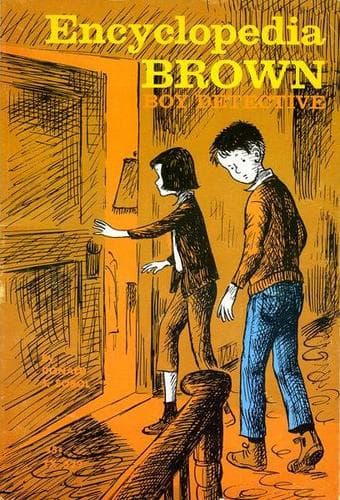
Leroy Brown, nicknamed Encyclopedia for his prodigious memory and deductive skills, solves ten short mysteries per book from his garage detective agency, charging twenty-five cents per case plus expenses. Each case gives you all the clues you need to solve it yourself before flipping to the back for the answer. It's interactive detective fiction that makes you feel genuinely clever when you crack one.
Donald J. Sobol created a format that no one has successfully improved upon in sixty years: the short, self-contained mystery with fair clues and a satisfying solution. Encyclopedia uses observation and logic rather than gadgets or luck, teaching readers that paying attention to details is a real superpower. The cases range from petty theft to broken alibis, and the solutions always hinge on a specific factual error or logical inconsistency that the reader can catch. Sobol wrote twenty-nine Encyclopedia Brown books over five decades, maintaining a remarkably consistent quality. The series also introduced Bugs Meany, one of children's literature's great recurring antagonists, whose schemes are always plausible enough to fool everyone except Encyclopedia.
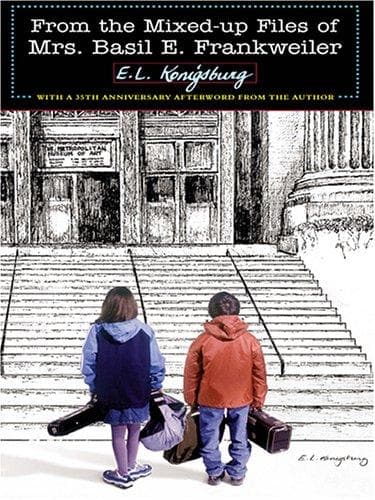
Claudia Kincaid, tired of the injustices of being the oldest child, convinces her brother Jamie to run away from home, and they hide out in the Metropolitan Museum of Art, sleeping in antique beds, bathing in the fountain, and becoming entangled in the mystery of a statue that may have been carved by Michelangelo. The museum comes alive after hours as their private kingdom, and the mystery pulls them deeper into a world of art history and obsessive research. It's every bookish child's fantasy of living inside a museum made real.
E.L. Konigsburg won the Newbery Medal for this book, and it deserved every ounce of that recognition. Claudia is a brilliantly drawn character: organized, slightly snobby, deeply dissatisfied with her ordinary suburban life, and hungry for something beautiful and meaningful. The mystery of the angel statue gives the story structure, but the real subject is Claudia's need to come home different from how she left, to have accomplished something that changes her sense of who she is. Konigsburg's narrative frame, told as a letter from the elderly Mrs. Frankweiler herself, adds warmth and perspective without undercutting the children's independence. The book's loving, detailed portrait of the Metropolitan Museum in the 1960s is so precise that children have used it as a guidebook, and the museum's security staff reportedly learned to watch for runaways after the book's publication.
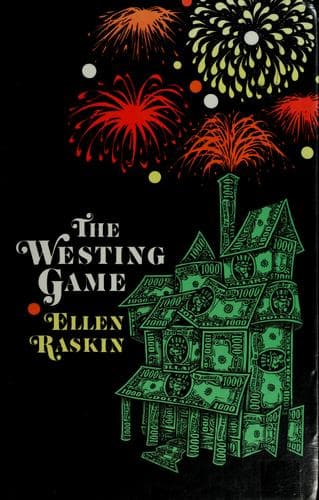
The Westing Game
(1978)When eccentric millionaire Sam Westing dies, sixteen heirs are gathered for the reading of his will and given a set of cryptic clues, paired into teams of two, and told that one of them is the murderer. As the heirs scheme, spy, and puzzle their way through the game, alliances shift and identities unravel in a plot that rewards the most attentive reader. It's an intricate puzzle box of a novel that demands to be reread.
Ellen Raskin constructed one of the most tightly plotted mystery novels ever written for any audience, not just children. Every character name, every clue, every seemingly random detail connects to the solution in ways that only become visible on a second reading. Raskin was a graphic designer before she was a novelist, and that visual, pattern-oriented thinking infuses the book's structure; the clues are literally laid out for inspection, inviting the reader to arrange and rearrange them. The sixteen heirs are drawn from a remarkably diverse range of backgrounds, and Raskin treats each one with specificity and respect, avoiding stereotypes even as she uses the conventions of the mystery genre. The book won the Newbery Medal in 1979, and it stands as proof that children's literature can be as formally ambitious and intellectually demanding as anything written for adults.
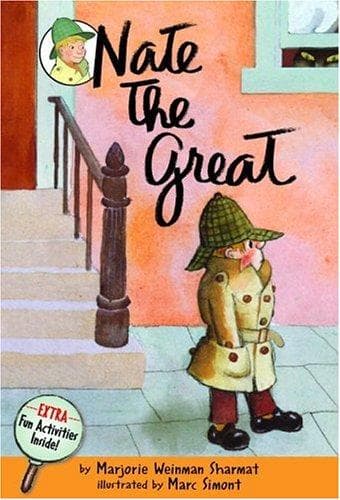
Nate the Great
(1972)Nate the Great is a boy detective who wears an oversized trench coat, eats pancakes constantly, and solves his friends' mysteries with deadpan logic and a bloodhound named Sludge. Each short book presents a single case, usually involving a lost object, that Nate works through methodically while narrating in a flat, hard-boiled style that parodies adult detective fiction. The books are funny, satisfying, and precisely calibrated for emerging readers.
Marjorie Weinman Sharmat created the perfect bridge between picture books and chapter books by writing genuine mysteries that are simple enough for early readers to solve on their own. Nate's deadpan first-person narration, full of short declarative sentences and deliberate understatement, gives the books a distinct comic voice that children recognize and love to imitate. The mysteries are fair; all the clues are present in the text and illustrations, and the solutions are logical rather than arbitrary. Sharmat also created a memorable cast of recurring characters, each with a specific personality that drives the plots: Rosamond and her cats, Annie and her dog Fang, the ever-suspicious Oliver. Over twenty-seven books in the series, the formula never grows stale because the mysteries remain inventive and the characters stay true to themselves.
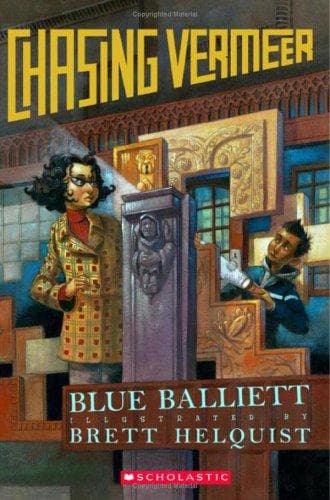
Chasing Vermeer
(1994)Petra and Calder, two sixth-graders at the University of Chicago Laboratory Schools, use pentominoes, pattern recognition, and sheer determination to investigate the theft of a Vermeer painting while the adult experts flounder. The mystery weaves through real art history and the real streets of Hyde Park, Chicago, with puzzles hidden in Brett Helquist's illustrations on every page. It's a book that makes you want to look more closely at everything.
Blue Balliett was a teacher at the Lab School where the book is set, and her insider knowledge gives the story an authentic, specific sense of place that generic school settings lack. The book's greatest innovation is its use of pentominoes, geometric puzzle pieces that Calder uses as a thinking tool, which turns abstract pattern recognition into something tangible and playable. Balliett treats art history with genuine seriousness, folding real details about Vermeer's techniques and the provenance of his paintings into the mystery without ever making it feel like a textbook. The partnership between Petra (intuitive, literary) and Calder (logical, mathematical) models two different ways of thinking that are equally valuable. Helquist hid a coded message in his illustrations throughout the book, adding a meta-puzzle layer that rewards extremely careful readers.
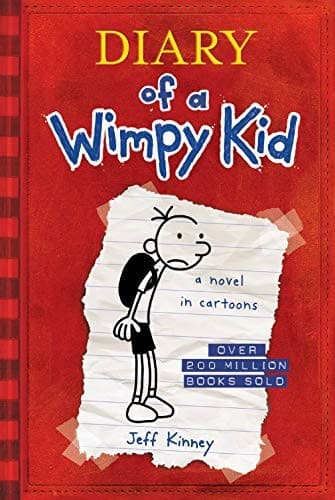
Diary of a Wimpy Kid
(2007)Greg Heffley chronicles the absurdities, humiliations, and small triumphs of middle school life in a journal filled with his own stick-figure cartoons. Every page captures the specific social anxieties of being twelve: the cafeteria hierarchy, the terror of the school dance, the brother who exists solely to make your life worse. It's painfully, hilariously accurate about what it feels like to be caught between childhood and adolescence.
Jeff Kinney spent eight years developing the book as a webcomic before it was published, and that long gestation produced something remarkably well-observed. Greg is not a hero; he's selfish, delusional, and frequently unkind, which is exactly what makes him funny and honest. Kinney's cartoon-and-text format lowered the barrier to entry for millions of children who found traditional novels intimidating, effectively creating a new category of illustrated fiction for middle-grade readers. The humor works because Kinney never exaggerates for effect; every humiliation Greg suffers is something real children have experienced. The series has sold over 275 million copies worldwide, making it one of the bestselling children's book series in history, and it accomplished this by being genuinely funny rather than merely popular.
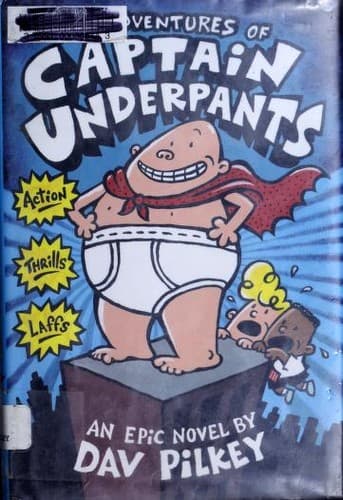
Captain Underpants
(1997)George and Harold, two fourth-graders who create homemade comic books, accidentally hypnotize their mean principal Mr. Krupp into believing he is Captain Underpants, a superhero who fights crime in nothing but a cape and briefs. The books are packed with flip-o-rama pages, intentional misspellings, and villains with names like Professor Poopypants. They are joyfully, defiantly silly, and they know exactly what they're doing.
Dav Pilkey wrote Captain Underpants as a direct response to the teachers who told him as a child that his sense of humor was disruptive and his drawings were a waste of time. That personal defiance gives the books an authentic, rebellious energy that children recognize immediately. Pilkey's Flip-O-Rama pages, which create simple animations when readers flip back and forth, add a physical, interactive element that makes reading feel like play. The books were among the most banned and challenged in America for years, which only increased their popularity with children who understood that anything adults wanted to keep from them must be worth reading. Pilkey also wove in a surprisingly effective reading comprehension strategy: the books' simple vocabulary and visual humor draw in reluctant readers, and the serialized format keeps them coming back. More than one literacy specialist has credited Captain Underpants with turning non-readers into readers.
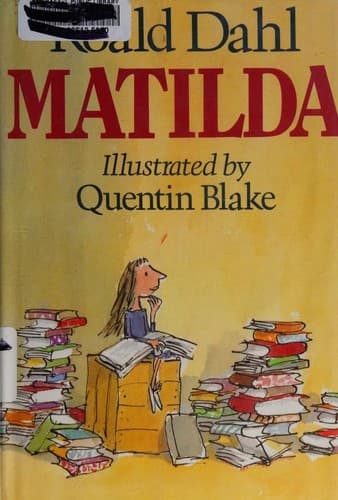
Matilda
(1988)Matilda Wormwood is a genius born into a family of proudly ignorant television addicts who see her love of books as a character flaw. At school, she faces the tyrannical Miss Trunchbull, a headmistress who throws children out of windows and locks them in a nail-studded closet called the Chokey. When Matilda discovers she has telekinetic powers, she uses them to fight back. It's a story about the triumph of brains over brutality, told with savage wit and deep affection.
Dahl channeled his own childhood misery at boarding school into Miss Trunchbull, creating one of children's literature's most terrifying and entertaining villains. Trunchbull's cruelty is so extreme that it becomes comic, which is Dahl's signature move: pushing darkness until it tips into absurdist laughter. Miss Honey, Matilda's teacher, provides the emotional counterweight, and the relationship between Miss Honey and Matilda is one of Dahl's warmest creations. The book's message is radical and uncompromising: some parents are terrible, some authority figures are monsters, and children are right to fight back against them. Quentin Blake's illustrations capture both the grotesque (Mr. Wormwood's greasy hair) and the tender (Matilda curled up with a book) with equal skill. The scene where Matilda uses her powers to terrorize the Trunchbull during a chalk lesson is Dahl at the peak of his plotting ability, a sequence of escalating chaos that builds to a perfect payoff.
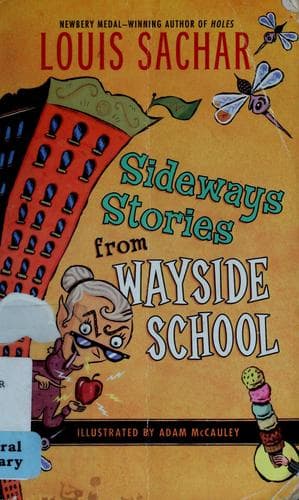
Wayside School was supposed to be one story tall with thirty classrooms side by side, but the builder made a mistake and built it thirty stories tall with one classroom on each floor. The children on the thirtieth floor, taught by the wonderful Mrs. Jewls, encounter a student who can only be seen sideways, a dead rat disguised as a student, and a teacher who turns children into apples. Each chapter is its own short, absurdist episode that follows dream logic to its most ridiculous conclusion.
Louis Sachar was working as a teacher's aide at an elementary school when he wrote this book, and his firsthand experience with the strange logic of children's social worlds informs every chapter. The humor operates on the principle of escalation: each story starts with a slightly off-kilter premise and then follows it with absolute seriousness to its most absurd possible conclusion. Sachar trusts children to follow logical absurdity without needing an explanation or a moral, which gives the book a liberating, anarchic energy. The thirty-chapter structure, one for each floor, creates a perfect format for classroom read-alouds, and teachers have been reading these stories aloud for nearly fifty years. The book also contains a quiet running joke about a nonexistent nineteenth floor that rewards attentive readers.
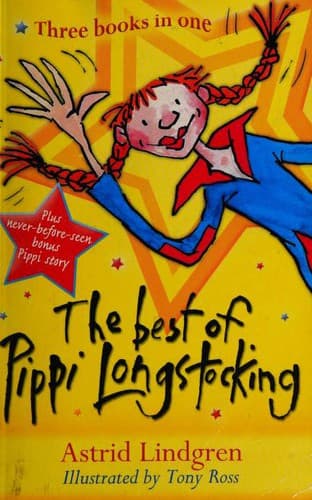
Pippi Longstocking
(1945)Pippi Longstocking lives alone in a ramshackle house with a horse on the porch and a monkey named Mr. Nilsson, no parents, no rules, and the strength to lift a horse with one hand. She befriends the well-behaved siblings Tommy and Annika next door and introduces them to a life of gleeful chaos: she outsmarts police officers, defeats professional wrestlers, and attends school exactly once before deciding it's not for her. She is freedom incarnate.
Astrid Lindgren wrote Pippi as a birthday present for her daughter, and the character's uninhibited joy has the quality of a wish fulfilled: what if a child had total power and total freedom and used them for nothing but kindness and fun? Pippi overturns every expectation of how a girl should behave, and she does it without anger or ideology, simply by being herself so completely that convention cannot touch her. Lindgren's genius was making Pippi strong without making her a bully; Pippi only uses her superhuman strength to help others or to resist adult authority figures who are themselves bullying. The contrast between Pippi's anarchic household and Tommy and Annika's orderly, conventional home creates comedy and social commentary in equal measure. The book was revolutionary when published in 1945 and remains so, because the desire for that kind of freedom never goes out of style.
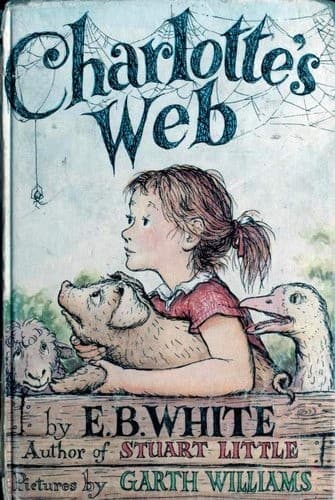
Charlotte's Web
(1952)Wilbur the pig is saved from slaughter first by a little girl named Fern, and then by Charlotte, a wise and talented spider who weaves words into her web to convince the farmer that Wilbur is too special to kill. The friendship between Wilbur and Charlotte is one of the most moving in all of literature, building quietly from acquaintance to devotion. It's a book about life, death, friendship, and the miracle of ordinary things, and it earns every one of those themes honestly.
E.B. White spent two years observing spiders in his barn before writing this novel, and that patience produced a book in which every detail feels earned and exact. White never condescends to his readers; Charlotte dies, and the book does not soften or explain away her death, trusting children to handle grief when it's presented with honesty and grace. The prose is a model of clarity, each sentence doing exactly what it needs to do and nothing more, which is why generations of writing teachers have held it up as an example of perfect style. Garth Williams's illustrations are inseparable from the text, capturing both the warmth of the barn and the delicacy of Charlotte's webs. The book has sold over 45 million copies and been translated into dozens of languages, and it consistently appears at the top of every list of the greatest children's novels ever written.
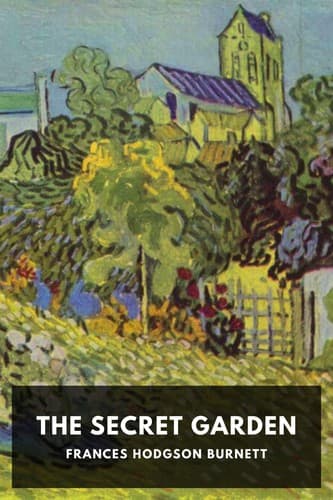
The Secret Garden
(1911)Mary Lennox, a spoiled and sickly orphan sent from India to her uncle's gloomy Yorkshire estate, discovers a walled garden that has been locked and neglected for ten years. As she works to bring the garden back to life, she transforms herself, befriends a local boy named Dickon who can charm any living thing, and coaxes her bedridden cousin Colin out of his sickroom. The book unfolds like spring itself, slow and inevitable and miraculous.
Frances Hodgson Burnett structured the novel as a double healing: Mary heals the garden, and the garden heals Mary. This reciprocal transformation is rendered with such botanical specificity and emotional precision that it never feels sentimental. Mary is an unusual heroine, beginning the book as genuinely unlikable, sour, demanding, and friendless, which makes her gradual softening all the more convincing. Burnett's descriptions of the Yorkshire moors and the garden itself are among the finest nature writing in English literature, grounding the story's themes of renewal in physical, sensory detail. Colin's recovery, rising from his bed and learning to walk in the garden, carries genuine power because Burnett earns it through dozens of small, credible steps rather than a single dramatic reversal. The book has inspired real gardens around the world and remains one of the most psychologically sophisticated novels ever written for children.
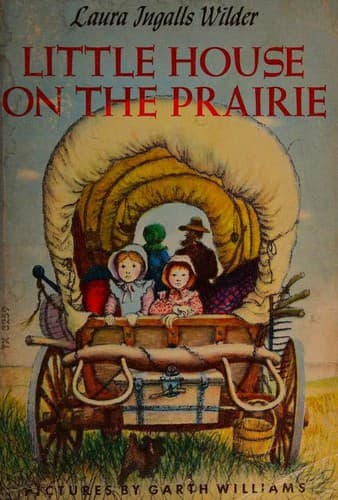
The Ingalls family packs up their covered wagon and travels from Wisconsin to the Kansas prairie, where Pa builds a log cabin, Ma makes a home out of nothing, and young Laura discovers both the beauty and the danger of life on the open grassland. Prairie fires, wolf packs, malaria, and encounters with Native Americans fill the pages alongside quieter moments of family warmth and frontier ingenuity. The book immerses you in a world where survival depends on skill, courage, and the people beside you.
Laura Ingalls Wilder drew on her own childhood memories to create a portrait of frontier life so vivid and specific that it has shaped how millions of Americans imagine the pioneer era. The domestic details are extraordinary: how Pa builds a door without nails, how Ma makes butter, how the family stretches every resource to its limit. Wilder's narrative voice is deceptively simple, a child's perspective that captures adult hardships without adult anxiety. The relationship between Pa and Laura anchors the emotional core of the series; Pa's fiddle playing by firelight is an image that burns itself into memory. Garth Williams's later illustrations added another iconic visual layer to the books. The series as a whole, nine books covering Laura's life from age four to her marriage, constitutes one of the great memoir projects in American literature.
Stuart Little
(1945)The Little family of New York City has a second son who happens to be a mouse, barely two inches tall, and from the moment Stuart is born, the world presents him with challenges scaled to his size: climbing out of a drainpipe, sailing a boat in Central Park, driving a tiny car up the Post Road in search of a lost bird named Margalo. The book is funny, gentle, and touched with a wanderlust that leaves both Stuart and the reader looking toward the horizon.
E.B. White wrote Stuart Little before Charlotte's Web, and the two books share White's gift for precise, luminous prose and his refusal to talk down to children. Stuart's situation is never explained; he is simply a mouse born to human parents, and White treats this fact with the same matter-of-fact acceptance he brings to everything in the book. The story's open ending, with Stuart heading north in search of Margalo without ever finding her, was controversial when it was published, but it is also what makes the book linger in memory. White understood that some of the best stories end not with resolution but with possibility. The Central Park boat race is a set piece of comic perfection, and Stuart's brief career as a substitute teacher produces one of the funniest classroom scenes in children's literature.
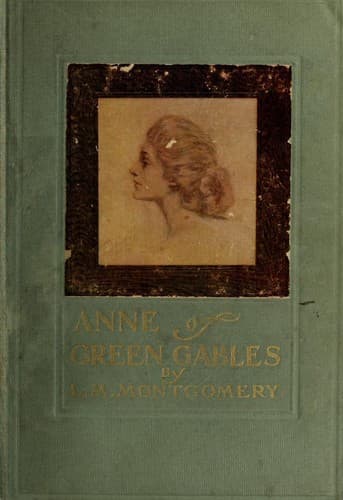
Anne of Green Gables
(1908)Marilla and Matthew Cuthbert of Green Gables send for an orphan boy to help on the farm but receive instead Anne Shirley, a red-haired, wildly imaginative girl who talks too much, gets into spectacular scrapes, and transforms the quiet lives of everyone around her with her fierce appetite for beauty and belonging. Anne names every tree and pond, dyes her hair green by accident, and turns a walk to school into an epic quest. She is one of the most alive characters in all of fiction.
L.M. Montgomery created in Anne a character who is simultaneously completely unique and universally recognizable. Anne's hunger for love and her terror of being sent back to the orphanage give the comedy real emotional stakes, grounding her extravagance in genuine need. Montgomery's descriptions of Prince Edward Island are so lush and specific that they have turned the real island into a literary pilgrimage site. The relationship between Anne and the taciturn, gruff Marilla is the book's greatest achievement, a slow warming that is all the more powerful for being understated; Marilla never becomes sentimental, and Anne never stops being difficult, and their love grows in the space between those two stubbornnesses. The book has been translated into more than 36 languages and remains one of the most beloved novels in Canadian and world literature.
Black Beauty
(1877)A handsome black horse tells the story of his own life, from a happy foalhood in the English countryside through a series of owners, some kind and some cruel, who illustrate the full range of how humans treat the animals in their care. The book takes you inside the experience of being a horse: the pain of a tight rein, the terror of a burning stable, the comfort of a gentle hand. It's an animal story that changed the real world.
Anna Sewell wrote Black Beauty as what she called "a little book for those who work with horses," and it succeeded beyond anything she could have imagined. The novel's impact on animal welfare legislation was direct and measurable; it led to the abolition of the bearing rein (a device that forced horses to hold their heads painfully high) and influenced the founding of animal protection organizations. Sewell's decision to tell the story from the horse's perspective was groundbreaking, forcing readers to see familiar cruelties from the victim's point of view. The prose is plain and declarative, which gives the suffering and kindness equal weight and avoids melodrama. Each change of ownership represents a different philosophy of human-animal relationships, making the book a systematic argument disguised as a narrative. Sewell died just five months after publication and never knew the full extent of her book's influence.
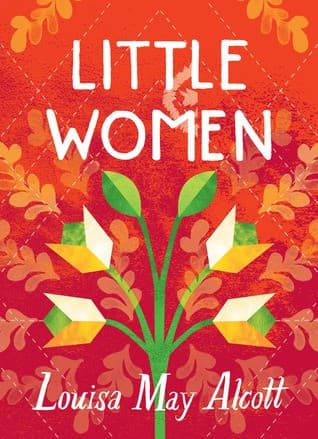
Little Women
(1868)Meg, Jo, Beth, and Amy March grow up in Civil War-era New England with their mother Marmee while their father serves as an army chaplain. The sisters fight, dream, fail, and support each other through poverty, illness, heartbreak, and the complicated business of becoming adults. Jo, the ambitious, hot-tempered writer at the center of the story, remains one of the most compelling characters in American fiction.
Louisa May Alcott drew on her own family life so directly that the novel reads as memoir disguised as fiction, and that authenticity gives it a warmth and specificity that purely invented stories rarely achieve. Jo March blazed a trail for female characters in fiction; she is angry, ambitious, uninterested in convention, and determined to make her living as a writer, and Alcott refuses to sand down her rough edges to make her more palatable. The death of Beth is one of the most devastating sequences in American literature, earned through the accumulated weight of hundreds of pages of family life. Alcott's publisher asked her to have Jo marry Laurie, and her refusal, on the grounds that Jo would never make that choice, is one of the great acts of artistic integrity in publishing history. The book invented the template for realistic domestic fiction and influenced everything from Anne of Green Gables to contemporary coming-of-age novels.
A Christmas Carol
(1843)On Christmas Eve, miserly Ebenezer Scrooge is visited by three spirits who show him Christmases past, present, and future, forcing him to confront the lonely, bitter life he has built and the suffering his greed inflicts on others. By Christmas morning, he is a changed man, throwing open his windows, buying the biggest turkey in town, and embracing the generosity he had spent a lifetime rejecting. The story is so embedded in Western culture that "Scrooge" and "Bah! Humbug!" need no explanation.
Dickens wrote A Christmas Carol in six weeks, driven by outrage over child poverty in industrial England, and the book's moral urgency is inseparable from its entertainment value. The three spirits create a structure of escalating emotional intensity that builds from nostalgia (Christmas Past) through empathy (Christmas Present) to terror (Christmas Yet to Come), and the payoff of Scrooge's transformation is earned by that careful escalation. The Ghost of Christmas Yet to Come, a silent, hooded figure pointing toward Scrooge's neglected grave, is one of the most powerful images in English fiction. Dickens single-handedly shaped the modern conception of Christmas as a season of generosity and family togetherness; before this book, Christmas was a minor holiday in England. Tiny Tim, Bob Cratchit, and Marley's ghost have become archetypes so familiar that they function as cultural shorthand, which is the surest mark of a classic.
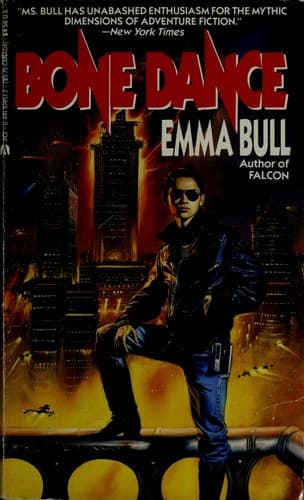
Bone
(1991)Three Bone cousins, cartoony white creatures who look like they wandered out of a comic strip, are lost in a vast, mysterious valley full of rat creatures, dragons, and an ancient evil stirring beneath the mountains. The series begins as lighthearted slapstick comedy and gradually deepens into a sweeping fantasy epic with real stakes and genuine emotional weight. It's like watching a Looney Tunes cartoon grow up into Lord of the Rings without ever losing its sense of humor.
Jeff Smith self-published Bone as a black-and-white comic book for thirteen years before Scholastic collected it in full-color editions that reached millions of new readers. The series works because Smith never abandons the comedy even as the stakes escalate; Phoney Bone's greedy schemes continue to cause trouble even as ancient prophecies unfold and armies march to war. Smith's artwork is remarkably versatile, shifting from the simple, expressive Bone characters to richly detailed forest landscapes and terrifying battle scenes within the same panel. Gran'ma Ben, the seemingly ordinary old woman who turns out to be a legendary warrior, is one of the great reveals in graphic novel history. The complete saga runs to over 1,300 pages and sustains its quality throughout, a feat of storytelling endurance that few graphic novels can match.
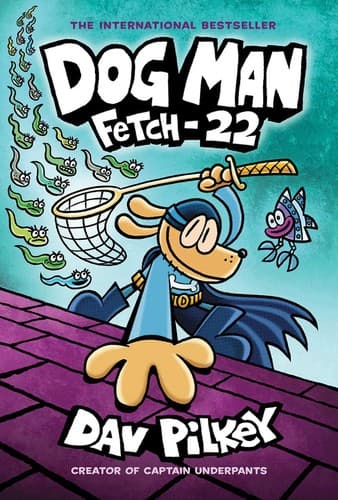
Dog Man
(2016)When a police officer and his police dog are both injured in the line of duty, a surgeon saves them by putting the dog's head on the officer's body, creating Dog Man, a crimefighting hero with the loyalty and instincts of a dog and the body of a man. The series is presented as a comic book created by George and Harold, the two kids from Captain Underpants, complete with intentional spelling errors, Flip-O-Rama pages, and a level of gleeful silliness that masks surprisingly sophisticated storytelling about empathy and redemption.
Dav Pilkey evolved significantly as a storyteller between Captain Underpants and Dog Man, and the result is a series that maintains the same anarchic humor while adding genuine emotional depth. Petey the Cat, the main villain, undergoes one of the most convincing and moving redemption arcs in children's literature, gradually transforming from antagonist to complicated antihero through his relationship with his clone-son, Li'l Petey. Pilkey's art style is deliberately childlike, which makes the visual storytelling accessible to even the youngest readers, while his panel compositions and pacing reveal the skill of a seasoned cartoonist. The books consistently explore themes of forgiveness, growth, and the possibility of change, wrapping these serious ideas in enough bathroom humor to ensure that children never feel like they're being lectured to.
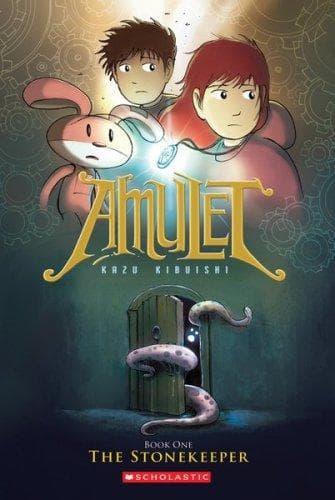
Amulet: The Stonekeeper
(2008)After their father dies in a car accident, Emily and Navin move with their mother to their great-grandfather's old house, where Emily discovers a mysterious amulet that pulls the family into Alledia, a dangerous underground world of demons, robots, and talking animals. Emily must learn to control the amulet's enormous power while rescuing her mother and navigating a world where nothing is quite what it seems. The art is cinematic and gorgeous, pulling you through the pages at movie speed.
Kazu Kibuishi worked in animation before turning to comics, and that background gives Amulet a visual fluency that rivals anything produced by a major studio. His color work, rendered digitally with a painterly touch, creates atmospheric depth that most graphic novels don't attempt. The story takes classic fantasy elements and grounds them in real grief; Emily's loss of her father and her desperate need to protect her remaining family give her magical quest genuine emotional weight. Kibuishi builds his world with the patience and detail of a novelist, introducing new layers of mythology and politics with each volume. The amulet itself is a fascinating narrative device because it is both a source of power and a potential source of corruption, forcing Emily to make increasingly difficult choices about how much of herself she's willing to sacrifice.
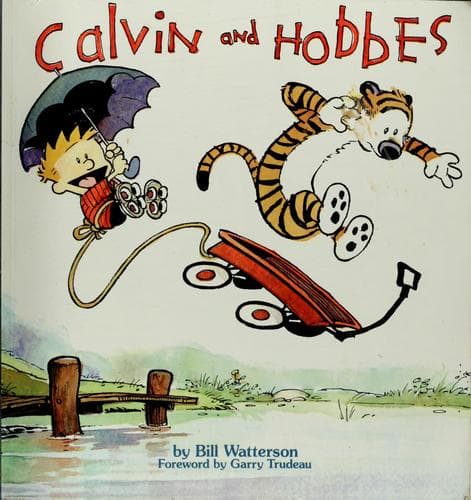
Calvin and Hobbes
(1985)Six-year-old Calvin and his stuffed tiger Hobbes (who is fully alive and opinionated when no adults are around) explore the backyard, wage wars with snowmen, torment the babysitter, and debate the meaning of life with equal enthusiasm. The strip moves effortlessly from slapstick to philosophy, from wagon rides down impossible hills to quiet moments of wonder in the woods at dusk. It is, by wide consensus, the greatest comic strip ever drawn.
Bill Watterson fought his syndicate for years to maintain creative control over Calvin and Hobbes, refusing all licensing and merchandising deals because he believed the characters belonged on the comics page and nowhere else. That integrity shows in every strip; Watterson poured everything into the work itself, and the result is a body of comics that rewards rereading at every age. His Sunday strips, painted in lush watercolors after he won the right to control their format, are masterpieces of visual storytelling. Calvin's imagination sequences, in which he becomes Spaceman Spiff or Stupendous Man, use the comics medium to blur the line between reality and fantasy in ways that no other art form could achieve. The strip's philosophical depth, Calvin and Hobbes discussing the existence of God or the nature of art while hurtling downhill in a wagon, never feels forced because it grows naturally from a child's genuine curiosity about the world.
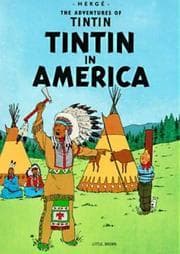
The Adventures of Tintin
(1929)Tintin, a young Belgian journalist with a white terrier named Snowy, travels the world investigating crimes, toppling conspiracies, and getting into hair-raising scrapes from the deserts of North Africa to the temples of South America to the surface of the moon. Captain Haddock, his irascible, whisky-loving companion, and the bumbling detectives Thomson and Thompson provide comedy alongside the adventure. The stories move with the precision and speed of the best action films.
Herge developed his ligne claire art style, characterized by clean, precise lines and flat, vivid colors, into one of the most distinctive and influential visual languages in comics history. Every panel is composed with architectural precision; backgrounds are meticulously researched and drawn, vehicles and buildings are accurate to their real-world counterparts, and the action sequences flow with cinematic clarity. Captain Haddock, introduced in the ninth album, transformed the series by giving Tintin a partner whose emotional volatility and colorful vocabulary ("Billions of blistering blue barnacles!") balanced Tintin's unflappable composure. Herge spent months researching each adventure, traveling to locations and studying local cultures, which gives even the most far-fetched plots a foundation of authentic detail. The series has sold over 250 million copies in more than 70 languages, and its influence on European comics, animation, and graphic storytelling is incalculable.
Best Classic Books and Movies for Kids (Ages 7–10)
The best books for 7, 8, 9, and 10 year olds spark imagination and build a lifelong love of reading. Our list includes essential chapter books for kids like “Charlotte's Web,” thrilling adventure books for elementary schoolerslike “Treasure Island,” and the best family moviesfrom “The Princess Bride” to “The Incredibles.” These are the classics that define childhood.