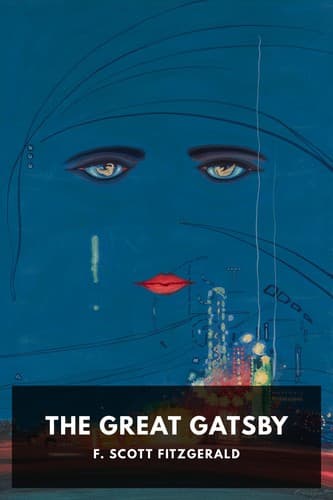
The Great Gatsby (1925)
About This Book
A mysterious millionaire throws extravagant parties at his Long Island mansion every weekend, all for the purpose of attracting the attention of a woman he loved and lost five years earlier, and the story of his pursuit is narrated by his neighbor, a young bond salesman from the Midwest who is simultaneously fascinated and repelled by the world of wealth he has entered. F. Scott Fitzgerald wrote the definitive novel about the American Dream and its failure, in prose so beautiful that every sentence feels like it was carved rather than written.
Why It's a Classic
Fitzgerald's prose style, which combines lyrical beauty with absolute precision, is the novel's primary achievement: sentences like 'So we beat on, boats against the current, borne back ceaselessly into the past' are not merely quotable but structurally essential, encoding the novel's themes of nostalgia, loss, and the impossibility of recapturing the past in their very rhythm. Jay Gatsby is the American Dream personified: a self-invented man who believes that with enough money and enough will, he can erase the past and remake reality, and his destruction reveals that the Dream itself is a beautiful lie. Nick Carraway's narration is deceptively simple; he presents himself as an honest observer, but careful readers notice his complicity, his attraction to Gatsby's romanticism, and his own moral evasions. The green light at the end of Daisy's dock, the eyes of Doctor T.J. Eckleburg on the billboard above the Valley of Ashes, and the parties that no one remembers being invited to have all entered the American symbolic vocabulary. The novel was a commercial disappointment in Fitzgerald's lifetime and only achieved its current status after World War II, when it was distributed to soldiers in Armed Services Editions.
Fun Fact
Fitzgerald considered several alternative titles, including 'Trimalchio in West Egg,' 'Among Ash-Heaps and Millionaires,' 'On the Road to West Egg,' and 'The High-Bouncing Lover,' before settling on The Great Gatsby, which he never fully liked. The novel sold only about 20,000 copies in Fitzgerald's lifetime, and he died in 1940 believing himself a failure. The Armed Services Editions program distributed 155,000 copies to soldiers during World War II, and the novel's popularity grew steadily after that. Fitzgerald wrote much of the novel while living on the French Riviera, and his marriage to Zelda Sayre, which was both glamorous and destructive, informed the novel's depiction of wealth and romantic obsession. The novel is now the most widely taught work of fiction in American high schools.
Parent Note
The novel contains alcohol consumption throughout (set during Prohibition), a hit-and-run death, a murder and a suicide, adultery, corruption, and the casual cruelty of the wealthy toward those who serve them. Racism appears briefly but revealingly (Tom Buchanan's advocacy of white supremacist literature). No explicit sexual content, though affairs are central to the plot. The language is mild. The novel is short (roughly 180 pages) and Fitzgerald's prose is accessible and beautiful. Suitable for readers fifteen and up. Essential American literature and a near-perfect novel.
Quick Facts
- Year
- 1925
- Type
- 📚 Book
- Category
- Classic Novels
- Age Group
- Adults (Ages 18+)