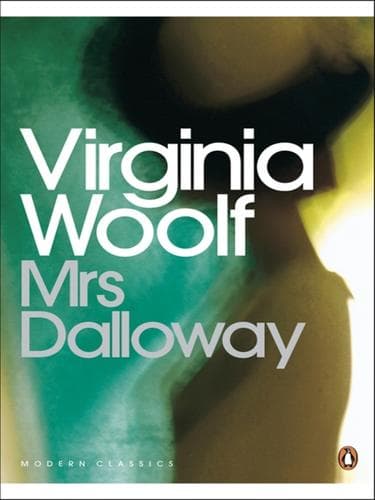
Mrs Dalloway (1925)
About This Book
On a single June day in London, Clarissa Dalloway, a society hostess, prepares for a party while memories, regrets, and encounters carry her back through decades of choices made and paths not taken, and her story is intercut with that of Septimus Warren Smith, a shell-shocked war veteran whose suffering the official world cannot or will not acknowledge. Virginia Woolf invented a new way of capturing consciousness on the page.
Why It's a Classic
Woolf's stream-of-consciousness technique does not merely represent thought; it demonstrates how consciousness actually works: associatively, non-linearly, with sensory impressions triggering memories that trigger other memories in an unbroken flow that the novel reproduces with uncanny fidelity. Clarissa's single day becomes a vessel for an entire life, as the sound of Big Ben, the sight of an old friend, and the scent of flowers in a shop carry her back to a summer at Bourton where she chose the safe, conventional Richard Dalloway over the passionate, demanding Peter Walsh, and the novel asks whether that choice was wise, cowardly, or both. Septimus Warren Smith, the counterpart Clarissa never meets, provides the novel's darkest truth: his traumatic experiences in the war have left him in a state of anguish that the medical establishment addresses with rest cures and condescension, and his fate reveals the violence that lies beneath the polished surface of postwar London. The final scene, where Clarissa learns of Septimus' death and feels a strange kinship with a man she never knew, is one of the most mysterious and moving moments in modern fiction.
Fun Fact
Woolf originally planned to end the novel with Clarissa's death at the party, but instead created Septimus as a character who would die in her place, a structural decision that deepens the novel's exploration of the relationship between life and death. Woolf suffered from mental illness throughout her life and drew on her own experiences with doctors and treatment in her depiction of Septimus' care. She wrote the novel in just over two years, and her diary entries from the period reveal both excitement about its innovations and anxiety about its reception. The novel was the first to use a technique Woolf called 'tunnelling': diving into a character's past while maintaining the present-tense flow of the narrative day.
Parent Note
The novel contains a suicide (described from the perspective of the person dying), shell shock (PTSD) depicted with distressing immediacy, themes of aging, regret, and the narrowing of possibilities, and a same-sex attraction between Clarissa and her childhood friend Sally Seton that is handled with delicacy and longing. The stream-of-consciousness style requires patient, attentive reading. No explicit violence or sexual content beyond the suicide. The novel is short (roughly 200 pages) but dense. Suitable for readers sixteen and up. A landmark of modernist literature and an essential text for understanding how the novel evolved in the twentieth century.
Quick Facts
- Year
- 1925
- Type
- 📚 Book
- Category
- Classic Novels
- Age Group
- Adults (Ages 18+)