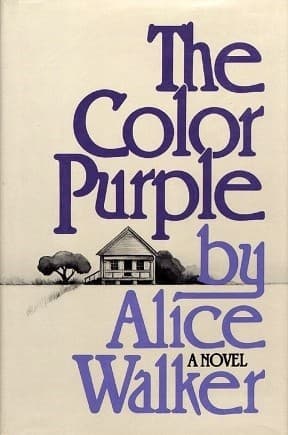
The Color Purple (1982)
About This Book
Celie, a young Black woman in rural Georgia in the 1930s, writes letters to God because she has no one else to talk to, describing a life of abuse, poverty, and silence that gradually transforms, through the love of other women and the discovery of her own creative power, into a story of liberation and joy. Alice Walker wrote a novel of such emotional power that it transcends its particular setting and speaks to anyone who has ever been told they do not matter.
Why It's a Classic
Walker chose the epistolary form (letters to God, and later to Celie's sister Nettie) not merely as a narrative device but as a statement about voice: Celie begins the novel barely literate, her letters full of grammatical errors and simple vocabulary, and the evolution of her writing over the course of the novel mirrors the evolution of her self-understanding. The abuse Celie endures from her stepfather and later from her husband, Mister, is rendered without sensationalism, which makes it all the more devastating. Shug Avery, the blues singer who becomes Celie's lover and liberator, is one of the great characters in American fiction: confident, sensual, and unapologetically herself, she shows Celie that pleasure, beauty, and self-expression are not reserved for other people. The novel's theology, expressed in Celie's letters and in Shug's famous declaration that God is not 'he' or 'she' but 'it,' and that God is found not in churches but in the color purple in a field, offers a vision of the divine that is radically inclusive. Walker's use of Black Southern dialect is not affectation but insistence: this voice, this language, this life, is worthy of literature.
Fun Fact
Walker has said that the characters of the novel 'came to her' and insisted on being written, and that the writing process felt more like transcription than creation. The novel won both the Pulitzer Prize and the National Book Award in 1983, making Walker the first Black woman to win the Pulitzer for fiction. Steven Spielberg's 1985 film adaptation was a commercial success but was criticized by some for softening the novel's depictions of abuse and its lesbian relationship. The 2005 Broadway musical adaptation won the Tony Award for Best Musical revival. The novel has been challenged and banned in numerous schools and libraries, primarily due to its depictions of sexual abuse, its lesbian content, and its language.
Parent Note
The novel contains rape (including the rape of a child by a family member), domestic violence, emotional abuse, sexual content (including a lesbian relationship that is central to the story), and the systematic dehumanization of Black women. The abuse is described in Celie's voice, which can make it feel even more immediate and painful. The novel's language is Black Southern dialect that is initially challenging but becomes natural quickly. The novel is roughly 290 pages. Suitable for readers sixteen and up. Essential American literature and a triumph of the human spirit over the most brutal conditions.
Quick Facts
- Year
- 1982
- Type
- 📚 Book
- Category
- Modern & Contemporary Literature
- Age Group
- Adults (Ages 18+)