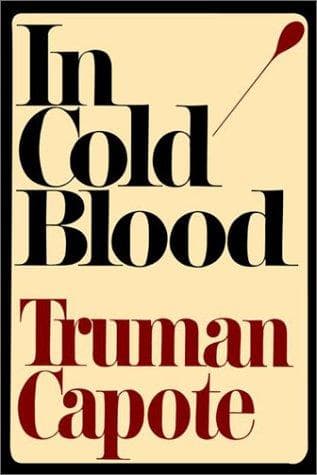
In Cold Blood (1966)
About This Book
On November 15, 1959, two drifters entered a farmhouse in Holcomb, Kansas, and murdered four members of the Clutter family for a few dollars and a radio. Truman Capote spent six years researching and writing his account of the crime, the investigation, the capture, the trial, and the execution, creating a work that he called a 'nonfiction novel' and that remains the undisputed masterpiece of the true crime genre.
Why It's a Classic
Capote invented a form: he applied the techniques of literary fiction (scene construction, dialogue, interior monologue, symbolic imagery) to a factual narrative, and the result is a book that reads like a novel but carries the weight of documentary truth. His portrait of the Clutter family, built through interviews with their neighbors and friends, creates such a vivid sense of the victims' lives that their murders register not as true crime sensationalism but as genuine tragedy. The dual portrait of the killers, particularly Perry Smith, whom Capote came to know intimately over the course of years, raises profound questions about the relationship between childhood trauma, mental illness, and violence, and Capote's sympathy for Smith, which is evident without being exculpatory, complicates the reader's moral response. The execution scene, described with devastating precision, forces the reader to confront the reality of capital punishment with an immediacy that abstract arguments about the death penalty rarely achieve. The book established true crime as a legitimate literary genre.
Fun Fact
Capote was accompanied to Kansas by his childhood friend Harper Lee (who had just completed To Kill a Mockingbird), and Lee helped him gain the trust of the local community. Capote developed an intense emotional relationship with Perry Smith during the years Smith spent on death row, and the nature of this relationship has been extensively debated by biographers. Capote claimed that the book was ninety-six percent accurate, but subsequent research has revealed numerous embellishments and inventions, particularly in the scenes depicting the killers' interior thoughts. The emotional toll of the project, particularly the execution of Smith and Hickock, contributed to the substance abuse and writer's block that plagued Capote for the rest of his life. He never completed another major work.
Parent Note
The book describes the murder of four people (including two teenagers) in detail, the emotional devastation of the community, the psychological profiles of the killers (including childhood abuse, head injuries, and mental illness), and their execution by hanging. The violence is not gratuitously described but is rendered with enough specificity to be disturbing. The book raises questions about capital punishment, mental illness, and the criminal justice system. No sexual content or strong language beyond what the subject requires. The book is roughly 340 pages and reads with the pace of a thriller. Suitable for readers sixteen and up. The definitive work of true crime literature.
Quick Facts
- Year
- 1966
- Type
- 📚 Book
- Category
- Non-Fiction / Memoir
- Age Group
- Adults (Ages 18+)