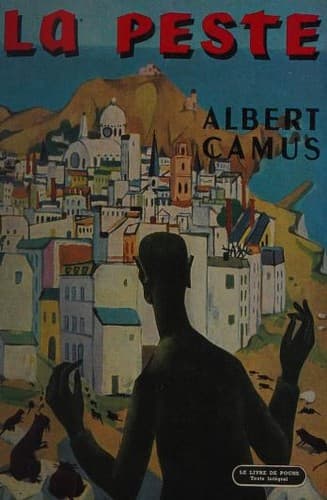
The Plague (1947)
About This Book
A plague arrives in the Algerian city of Oran, the gates are sealed, and the inhabitants must endure months of quarantine, death, and the slow erosion of everything they took for granted. Dr. Bernard Rieux organizes the response, not because he believes he can win but because the work of fighting suffering is the only meaningful response available. Albert Camus wrote an allegory about fascism, a meditation on solidarity, and a prophetic vision that millions of readers rediscovered during the COVID-19 pandemic.
Why It's a Classic
Camus used the plague as an allegory for the Nazi occupation of France, but the novel transcends its historical occasion because the questions it raises, how should people behave in the face of collective catastrophe, what obligations do we owe strangers, and what gives life meaning when death is arbitrary and inescapable, are universal. Dr. Rieux's stoicism is not indifference but a hard won philosophy: he fights the plague knowing that victories are temporary and that the bacillus never truly disappears, and his acceptance of this fact is the novel's definition of heroism. Father Paneloux's two sermons, one declaring the plague a punishment from God and the other struggling with that claim after watching a child die, track the collapse of religious certainty in the face of innocent suffering. Jean Tarrou's private war against the death penalty, and his belief that 'we are all plague-stricken,' provides the novel's most radical moral insight: that complicity in suffering is the default human condition, and the only ethical response is perpetual vigilance. The novel found millions of new readers during the COVID-19 pandemic, and its depiction of denial, hoarding, and gradual normalization of death proved uncannily accurate.
Fun Fact
Camus wrote the novel over five years, including the period of the German occupation, and the allegory of the plague as fascism was understood immediately by French readers who had lived through the experience. He insisted, however, that the novel was not only about fascism but about any situation in which human beings must confront mass suffering. Sales of the novel surged dramatically during the COVID-19 pandemic: in Italy, sales increased by several hundred percent in February 2020 alone. Camus dedicated the novel to his friend and resistance fighter, though the specific dedicatee remains debated. The novel's depiction of quarantine procedures, supply shortages, and public denial proved so relevant during the pandemic that numerous journalists wrote articles about its prescience.
Parent Note
The novel contains descriptions of plague symptoms (bubonic plague, including swollen lymph nodes and hemorrhaging), the death of a child described in harrowing detail, mass death, quarantine conditions, separation from loved ones, and the psychological toll of prolonged crisis. The violence is medical rather than criminal. No sexual content or strong language. The prose is measured and accessible. The novel is roughly 300 pages. Suitable for readers fifteen and up. Essential reading for understanding existentialist philosophy and remarkably relevant in the post-pandemic world.
Quick Facts
- Year
- 1947
- Type
- 📚 Book
- Category
- Modern & Contemporary Literature
- Age Group
- Adults (Ages 18+)