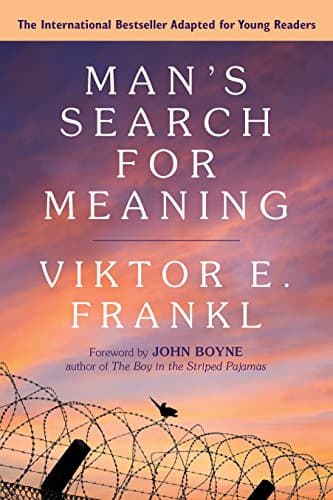
Man's Search for Meaning (1946)
About This Book
A psychiatrist who survived Auschwitz and three other concentration camps reflects on his experiences and develops a therapeutic approach, logotherapy, based on the premise that the primary human drive is not pleasure or power but the search for meaning. Viktor Frankl wrote one of the most influential books of the twentieth century, a slim volume that has helped millions of readers find purpose in the midst of suffering.
Why It's a Classic
Frankl's account of the camps is remarkable for what it chooses to focus on: not the horror (which he treats with deliberate restraint) but the psychological responses to the horror, cataloging how prisoners adapted, broke down, or found reserves of inner strength that sustained them. His central observation, that those who survived were often those who had something to live for (a loved one, an unfinished task, a purpose beyond survival itself), led to his therapeutic method and to the book's most quoted sentence: 'He who has a why to live for can bear almost any how.' The book's second half, which outlines the principles of logotherapy, is less famous but equally important: Frankl argues that meaning can be found in three ways, through work (creating something), through love (experiencing someone), and through suffering (finding dignity in unavoidable pain), and this framework has provided comfort to people facing illness, loss, and despair. The book's power lies in its refusal to sentimentalize: Frankl does not claim that suffering is good, only that it can be made meaningful.
Fun Fact
Frankl wrote the first version of the book in nine days in 1945, shortly after his liberation, driven by the need to process his experiences before they overwhelmed him. He originally published it anonymously, intending it as a contribution to psychotherapy rather than a personal memoir. His wife, mother, father, and brother all perished in the camps. The book has sold over sixteen million copies and has been translated into more than fifty languages. Frankl continued practicing psychiatry in Vienna until his death in 1997 at age ninety-two. He also became an accomplished mountain climber and earned his pilot's license at age sixty-seven.
Parent Note
The book describes concentration camp experiences including forced labor, starvation, disease, random executions, and the constant threat of death. Frankl's descriptions are restrained but the reality they convey is harrowing. The second half of the book, on logotherapy, is more academic in tone. No graphic violence or sexual content. The book is very short (roughly 150 pages) and accessible. Suitable for readers fifteen and up. One of the most recommended books in the world for anyone struggling with questions of meaning and purpose.
Quick Facts
- Year
- 1946
- Type
- 📚 Book
- Category
- Non-Fiction / Memoir
- Age Group
- Adults (Ages 18+)