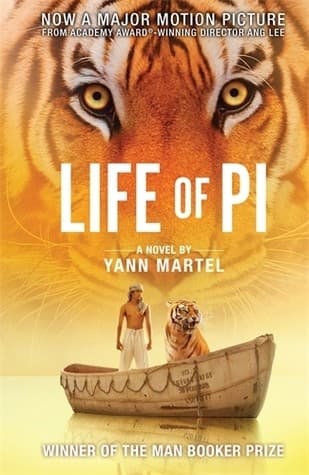
Life of Pi (2001)
About This Book
A sixteen year old boy survives 227 days on a lifeboat in the Pacific Ocean with a 450 pound Bengal tiger named Richard Parker, and the story of how he kept himself and the tiger alive is both a gripping survival tale and a philosophical puzzle about the nature of truth, faith, and storytelling itself. Yann Martel won the Booker Prize with a novel that asks whether the better story is the truer one.
Why It's a Classic
Martel constructed the novel as a trap for the reader: the survival narrative with the tiger is so vivid, so inventive, and so emotionally satisfying that when Pi offers an alternative, realistic version of events near the end, the reader is forced to choose which story to believe, and that choice reveals something about the reader rather than the text. The physical details of survival at sea, from collecting rainwater to fishing to establishing territorial boundaries with a tiger, are researched with meticulous care and described with such specificity that the fantastical premise becomes entirely believable. Pi's religious eclecticism (he practices Hinduism, Christianity, and Islam simultaneously, to the consternation of his elders) provides the philosophical framework: the novel suggests that faith, like fiction, is a choice to embrace a version of reality that gives life meaning. The carnivorous island episode, which introduces surrealism into an otherwise realistic survival story, signals Martel's deeper intentions: this is not just an adventure but a fable about why human beings tell stories.
Fun Fact
Martel was rejected by five London publishers before being picked up by Knopf Canada. The novel was partly inspired by a review Martel read of Moacyr Scliar's novella 'Max and the Cats,' about a Jewish man in a lifeboat with a jaguar, though the two works share nothing beyond the premise. The name 'Richard Parker' was deliberately chosen: it is the name of a real shipwreck survivor who was cannibalized by his fellow castaways in 1884 (the R v Dudley and Stephens case), and Edgar Allan Poe used the same name for a similar character in 'The Narrative of Arthur Gordon Pym.' Ang Lee's 2012 film adaptation won four Academy Awards, including Best Director.
Parent Note
The novel contains descriptions of animal death (a zebra, an orangutan, and a hyena die violently on the lifeboat), survival cannibalism (in the alternative story), the sinking of a ship with mass drowning, and the psychological toll of prolonged isolation. The alternative version of events near the end involves human violence that is disturbing to contemplate. Religious themes are handled respectfully across multiple faiths. No strong language or sexual content. Suitable for readers fourteen and up. The novel works beautifully as both an adventure story and a philosophical conversation starter.
Quick Facts
- Year
- 2001
- Type
- 📚 Book
- Category
- Adventure
- Age Group
- Adults (Ages 18+)