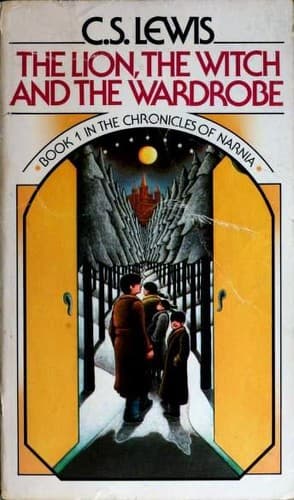
The Lion, the Witch and the Wardrobe (1950)
About This Book
Four siblings evacuated to the English countryside during World War II discover that an old wardrobe leads to Narnia, a magical land trapped in eternal winter by the White Witch. As they journey deeper into Narnia, they meet talking animals, a prophetic beaver couple, and the great lion Aslan, who calls them to a battle that will decide the fate of the world. The story moves with the inevitability of myth while feeling as intimate as a family secret.
Why It's a Classic
C.S. Lewis built Narnia from a single image that had been in his mind since he was sixteen: a faun carrying parcels and an umbrella through a snowy wood. That origin shows in the finished work, which has the clarity and strangeness of a dream. Lewis understood that children can handle moral weight, and the story's central sacrifice scene is genuinely devastating, even for readers who don't recognize its theological roots. Edmund's betrayal and redemption form one of the most psychologically honest arcs in children's literature; his motivation, petty greed for Turkish Delight, is painfully believable. The book's structure is deceptively simple, moving from the cozy domesticity of the Professor's house to the vast, dangerous landscape of Narnia with a pace that never falters.
Fun Fact
Lewis wrote the entire book in about two months but had been thinking about it for decades; the image of the faun in the snowy wood first came to him when he was sixteen years old. His friend J.R.R. Tolkien actually disliked the book, finding the mixture of mythological elements (fauns, Father Christmas, talking animals) messy and inconsistent. The famous wardrobe was inspired by a real piece of furniture built by Lewis's grandfather, which still exists today.
Parent Note
The story contains battle scenes and a powerful, emotionally intense sacrifice scene that may frighten sensitive younger readers. The Christian allegory is woven throughout but is not heavy-handed, and many children read the book without recognizing it. Most children ages 7 and up enjoy this book, either independently or as a read-aloud.
Quick Facts
- Year
- 1950
- Type
- 📚 Book
- Category
- Fantasy / Sci-Fi
- Age Group
- Kids (Ages 7–10)