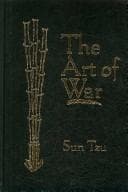
The Art of War (-500)
About This Book
Sun Tzu's ancient Chinese treatise on military strategy distills the principles of conflict into short, enigmatic chapters that read like a combination of philosophy and poetry. Each passage rewards rereading, revealing new layers of meaning about competition, preparation, and the nature of power. Two and a half thousand years after it was written, generals, coaches, CEOs, and chess players still reach for it when they need to think more clearly about any kind of contest.
Why It's a Classic
Sun Tzu's foundational insight, that the supreme art of war is to subdue the enemy without fighting, overturned the assumption that military success requires brute force and replaced it with a system built on intelligence, deception, and strategic patience. The text's brevity is part of its genius; each chapter is only a few pages long, which has allowed it to be interpreted and reinterpreted across cultures, centuries, and disciplines. Napoleon reportedly studied it, and both Mao Zedong and Ho Chi Minh credited it as a major influence on their guerrilla warfare strategies. In the modern world, the text has been adopted far beyond the military, appearing on reading lists for business strategy, sports coaching, litigation, and political campaigning. The book's applicability to any competitive situation is what has kept it in continuous circulation for over 2,500 years, making it arguably the most influential nonfiction text ever written.
Fun Fact
Scholars still debate whether Sun Tzu was a single historical person or a composite figure representing the military wisdom of an era. The oldest known manuscript was discovered in 1972 in a tomb in Yinqueshan, China, written on bamboo strips dating to the second century BCE. The Art of War did not become widely known in the West until a French Jesuit missionary translated it in 1772, and its influence on European military thought grew steadily from there.
Parent Note
The text discusses military strategy, including killing, deception, espionage, and the destruction of armies, all in abstract, philosophical terms rather than with graphic descriptions. Modern translations are short, often under 100 pages, and the aphoristic style makes individual chapters quick to read. There is no sexual content or profanity. The main challenge for teen readers is the density of the philosophical language and the need for historical context. It is appropriate for ages 12 and up, especially for teens interested in strategy, history, or leadership.
Quick Facts
- Year
- -500
- Type
- 📚 Book
- Category
- Non-Fiction / Biography
- Age Group
- Teens (Ages 14–17)