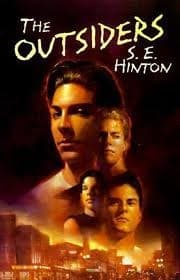
The Outsiders (1967)
About This Book
Ponyboy Curtis is a Greaser, one of the poor, long haired kids from the wrong side of town, and his world revolves around loyalty to his gang and survival against the wealthy Socs who terrorize them. When a fight goes fatally wrong, Ponyboy and his friend Johnny go on the run, and the stakes escalate from schoolyard rivalry to life and death. Hinton writes about class, brotherhood, and growing up with an emotional directness that hits like a punch.
Why It's a Classic
S.E. Hinton was sixteen years old when she wrote The Outsiders, frustrated by the sanitized teenage fiction available in the 1960s, and her youth gives the novel an authenticity that no adult author could have faked. The book essentially invented the young adult genre as we know it, proving that teenagers wanted to read about real problems, real violence, and real emotional stakes. Ponyboy's voice is distinctive and immediate, capturing the way teenagers actually think and talk without condescension or adult filtering. The novel's exploration of class division remains relevant; the Greaser and Soc conflict maps onto economic divides that have only deepened since 1967. The line 'Stay gold, Ponyboy,' drawn from Robert Frost's poem 'Nothing Gold Can Stay,' has become one of the most recognized phrases in young adult literature.
Fun Fact
Hinton published under her initials S.E. rather than Susan Eloise because her publisher feared that boys would not read a book written by a girl. She wrote the novel during her junior year of high school and revised it during her senior year, publishing it at age eighteen. Francis Ford Coppola directed the 1983 film adaptation after receiving a petition from a middle school class in Fresno, California asking him to make the movie, and the cast included future stars Matt Dillon, Patrick Swayze, Tom Cruise, Rob Lowe, and Emilio Estevez.
Parent Note
The novel contains gang violence, a stabbing death, underage smoking and drinking, and a fire rescue that has tragic consequences. The violence is described from a teenager's emotional perspective rather than graphically, but character deaths are genuinely affecting. There is no sexual content and minimal profanity. It is one of the most commonly assigned novels in middle school and is appropriate for ages 11 and up.
Quick Facts
- Year
- 1967
- Type
- 📚 Book
- Category
- Classics / Literature
- Age Group
- Teens (Ages 14–17)