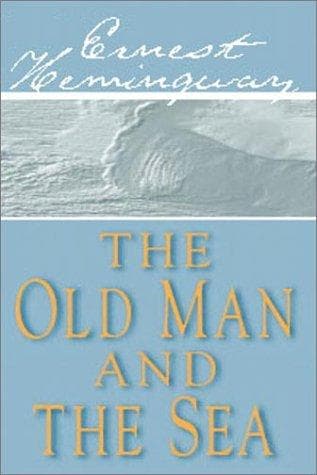
The Old Man and the Sea (1952)
About This Book
Santiago, an aging Cuban fisherman who has gone eighty four days without a catch, hooks a giant marlin far out in the Gulf Stream and fights it for three days, alone, with nothing but his hands, his will, and his memories. Hemingway strips storytelling down to its absolute essentials: one man, one fish, one ocean. The result is a meditation on endurance, pride, and what it means to be defeated without being destroyed.
Why It's a Classic
Hemingway won both the Pulitzer Prize and the Nobel Prize in Literature largely on the strength of this novella, which restored his literary reputation after a decade of critical disappointment. His prose style here achieves a purity that borders on the biblical, using simple words and short sentences to convey enormous emotional depth. Santiago's internal monologues, his conversations with the fish, and his memories of lions on African beaches create a portrait of a man who is fully alive in every moment, even as his body fails him. The novella is also Hemingway's fullest expression of his philosophy of grace under pressure, the idea that a person's character is revealed not by whether they win or lose but by how they conduct themselves in the struggle. At barely a hundred pages, it proves that great literature does not require length, only precision.
Fun Fact
Hemingway wrote the novella in eight weeks while living in Cuba, where he was a passionate deep sea fisherman who entered and sometimes won local tournaments. The story was based partly on an anecdote told to him by his Cuban fishing companion Carlos Gutierrez about an old man who hooked a giant marlin and lost it to sharks. The entire novella was first published in a single issue of Life magazine, which sold over five million copies in just two days.
Parent Note
The novella contains the killing of a large fish and several sharks, described in vivid physical detail including blood and injury to Santiago's hands. Santiago experiences exhaustion, dehydration, and physical pain throughout the extended battle. There is no sexual content, no profanity, and no interpersonal violence. The prose is accessible and the book is very short, making it one of the best entry points into literary fiction for reluctant readers. It is appropriate for ages 12 and up.
Quick Facts
- Year
- 1952
- Type
- 📚 Book
- Category
- Classics / Literature
- Age Group
- Teens (Ages 14–17)