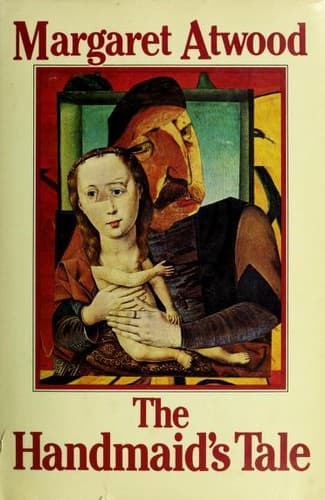
The Handmaid's Tale (1985)
About This Book
In the Republic of Gilead, a theocratic regime has replaced the United States, and fertile women are forced into reproductive slavery as 'Handmaids' to powerful men. Offred narrates her daily life of surveillance, ritual, and quiet resistance, remembering the freedoms she once took for granted. Atwood's prose is controlled and precise, building dread through accumulation of small, suffocating details.
Why It's a Classic
Margaret Atwood famously insisted that everything in the novel had a historical precedent, from forced surrogacy to the erasure of women's financial independence, and she drew on real events from across centuries and cultures. The genius of the novel is in its structure: Offred's fragmented, present tense narration forces the reader to piece together how democracy collapsed, revealing the process gradually and chillingly. Atwood captures the way authoritarian regimes rely not just on violence but on complicity, showing how ordinary people adapt to monstrous systems in order to survive. The 'Historical Notes' epilogue, set centuries in the future, adds a devastating layer of irony by showing academics treating Offred's suffering as an intellectual curiosity. The novel's imagery, particularly the red cloaks and white wings, has become one of the most recognized symbols of political protest worldwide.
Fun Fact
Atwood began writing the novel in West Berlin in 1984, within sight of the Berlin Wall, and the atmosphere of surveillance and division directly influenced the book. She wrote it on a rented German typewriter. The phrase 'Nolite te bastardes carborundorum,' which Offred finds scratched into her closet, is mock Latin that Atwood remembered from her school days; it roughly translates to 'Don't let the bastards grind you down.'
Parent Note
The novel contains a ritualized sexual assault scene (the 'Ceremony') that is central to the plot and described from the victim's perspective. There are also references to execution, forced pregnancy, and genital mutilation. Atwood handles these subjects with literary restraint, but the content is genuinely disturbing by design. It is best suited for mature teens 15 and up who are ready to engage with difficult themes about power, gender, and bodily autonomy.
Quick Facts
- Year
- 1985
- Type
- 📚 Book
- Category
- Fantasy / Sci-Fi
- Age Group
- Teens (Ages 14–17)