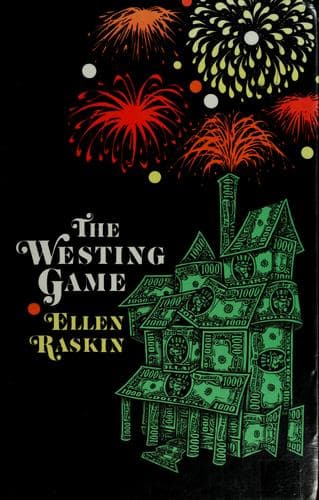
The Westing Game (1978)
About This Book
When eccentric millionaire Sam Westing dies, sixteen unlikely heirs are paired up and given cryptic clues to compete for his 200 million dollar fortune. The heirs include a teenager, a dressmaker, a judge, and a bookie, and each pairing seems deliberately designed to force unlikely people together. Ellen Raskin's puzzle box of a novel rewards careful readers who pay attention to every name, every clue, and every seemingly throwaway detail.
Why It's a Classic
Raskin constructed one of the most intricate and satisfying puzzle plots in all of fiction, a mystery where the clues are hidden in names, positions, physical descriptions, and even the apartment numbers of the characters. The novel won the Newbery Medal and has remained continuously in print for nearly fifty years because each rereading reveals new layers that were invisible the first time through. Raskin populates her cast with characters from diverse backgrounds, including Asian American, Black, and disabled characters, which was unusual and progressive for children's fiction in 1978. The solution requires the reader to question assumptions about identity itself, making the mystery both intellectually satisfying and thematically rich. It is one of those rare books that is genuinely better the second time, when you can see how every piece was placed with intention.
Fun Fact
Raskin, who was also an accomplished graphic designer and illustrator, designed the book's layout herself, integrating visual clues into the physical presentation of the text. She was terminally ill with a connective tissue disorder while writing The Westing Game and died just six years after its publication, at age 56. The game in the novel is loosely based on the structure of the board game Clue, combined with chess strategy.
Parent Note
The novel includes a bombing incident where a character is injured and a death that is central to the plot, both handled in a way appropriate for middle grade readers. There is no sexual content, minimal violence, and no profanity. The puzzle requires genuine attention and critical thinking, which makes it an excellent book for developing analytical reading skills. It is appropriate for ages 10 and up.
Quick Facts
- Year
- 1978
- Type
- 📚 Book
- Category
- Mystery
- Age Group
- Teens (Ages 14–17)